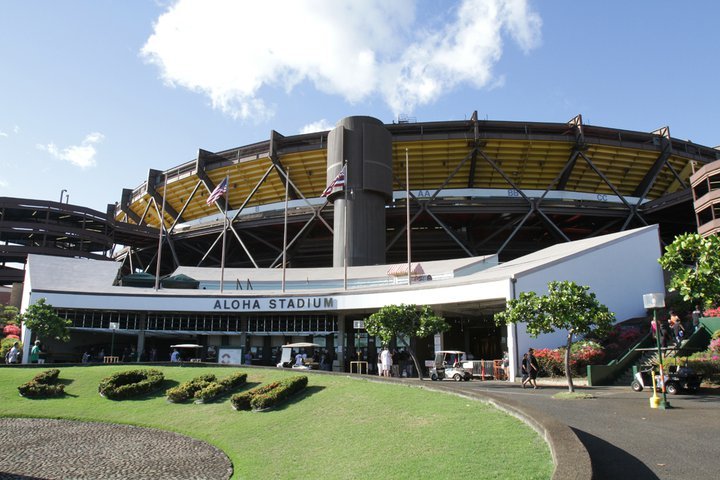
Aloha Stadium

Aloha Stadium

Honolulu, U.S.A.

Aloha Stadium stands not only as a massive arena for sports and concerts but as a reflection of Hawaii’s spirit: lively, communal, and deeply connected to local life. With a history marked by roaring football crowds, legendary concerts, and a bustling swap meet that draws islanders and visitors every week, this landmark bridges high-energy events with the laid-back rhythm of Honolulu’s daily culture. Here, world-class athletic competitions meet aisles of vintage treasures, creating a place where memories linger long after the stadium lights dim. A visit to Aloha Stadium offers much more than a glimpse of Hawaii’s sporting history—it invites guests into the heart of Oahu’s contemporary and cultural scene.

Visiting Info

Currency
Entrance fee
Free
Hours
Opening hours
Monday: Closed
Tuesday: Closed
Wednesday: 8:00 AM – 3:00 PM
Thursday: Closed
Friday: Closed
Saturday: 8:00 AM – 3:00 PM
Sunday: 8:00 AM – 3:00 PM

Contact Information

Location
Address
99-500 Salt Lake Blvd, Aiea, HI 96701, USA

Planning your visit

Before setting out for Aloha Stadium, make sure to map out the busy calendar of events and plan for crowds, especially on weekends. The stadium, once home to college football and the NFL Pro Bowl, still attracts large numbers for concerts, sports, and the famous swap meet. While parking is ample, traffic can get heavy. Early arrival helps. Aloha Stadium is close to Pearl Harbor and is easily reached by highway or city bus, making it accessible for most visitors. The atmosphere is welcoming for families, solo travelers, or groups. Most people stay a few hours, longer if exploring both an event and the legendary marketplace.

  • Best time to visit: Saturday or Wednesday mornings for the swap meet; evenings for stadium events; spring and fall for pleasant weather
  • How to get there: By car (H-1 or H-3 freeways, with on-site parking); TheBus from Waikiki (routes 20, 42); rideshares and taxis are convenient too
  • Accessibility: Wheelchair-friendly areas, ramps, and elevators; family restrooms and stroller access; seniors can find benches for rest
  • Average visit duration: Two to four hours, depending on activities

Must see stuff

Aloha Stadium's main draw is its sheer versatility. The stadium floor transforms from gridiron to concert floor, and three times a week, to a sprawling open-air market with hundreds of vendors. Around the stadium, concrete walkways pulse with energy, whether from tailgaters grilling local plate lunches or shoppers haggling over vintage Hawaiian shirts. The rust-red exterior, a familiar sight to sports fans across generations, hints at the stories kept within. While crowds flock to headline-grabbing games or music events, lesser-known corners, like shaded picnic areas and quirky swap meet stalls, offer their own charm.

  • Key sights or features: The iconic retractable roof structure (no longer moving, but architecturally unique); stadium field views; the bronze “Lei of Champions” sculpture at the main gate
  • Unique experiences: The Aloha Stadium Swap Meet & Marketplace (a bargain-hunter’s paradise with everything from fresh fruit to rare collectibles)
  • Photo-worthy locations: Stadium concourses at sunset; team mural walls; panoramic seating decks overlooking Honolulu
  • Cultural or historical facts: Once the home of the University of Hawaii Rainbow Warriors and the NFL Pro Bowl; a venue where Elvis Presley performed in the 1970s; the site where generations have gathered for festivals, fairs, and graduation ceremonies

Tips for your visit

A little preparation can turn a trip to Aloha Stadium from memorable to unforgettable. If possible, come early to beat traffic and catch cooler morning breezes. While parking is spread out, some lots require a bit of a walk, so comfortable shoes help. The swap meet is cash-heavy, though some vendors now take cards. Tents or umbrellas provide shade during hot, midday hours, but stadium policies often ask that larger items stay outside ticketed events. Bottled water is a must, especially in the tropical sun. Be sure to check event schedules and rules, as policies and entry routes sometimes change for big concerts or sports days. Locals value respect—be gracious when haggling at the marketplace, observe posted stadium guidelines, and always look out for keiki (children) darting about.

  • Best times to avoid crowds: Early morning on swap meet days; midweek before major games
  • What to bring: Sunhat, camera, reusable water bottle, comfortable shoes, a reusable shopping bag for market finds
  • Local etiquette or rules: Ask before taking photos at vendor stalls; don’t block walkways during events; follow posted noise and alcohol guidelines
  • Safety or comfort advice: Use sunscreen even on cloudy days; stay hydrated; stow valuables in zipped bags, as crowds can get busy

Similar Attractions