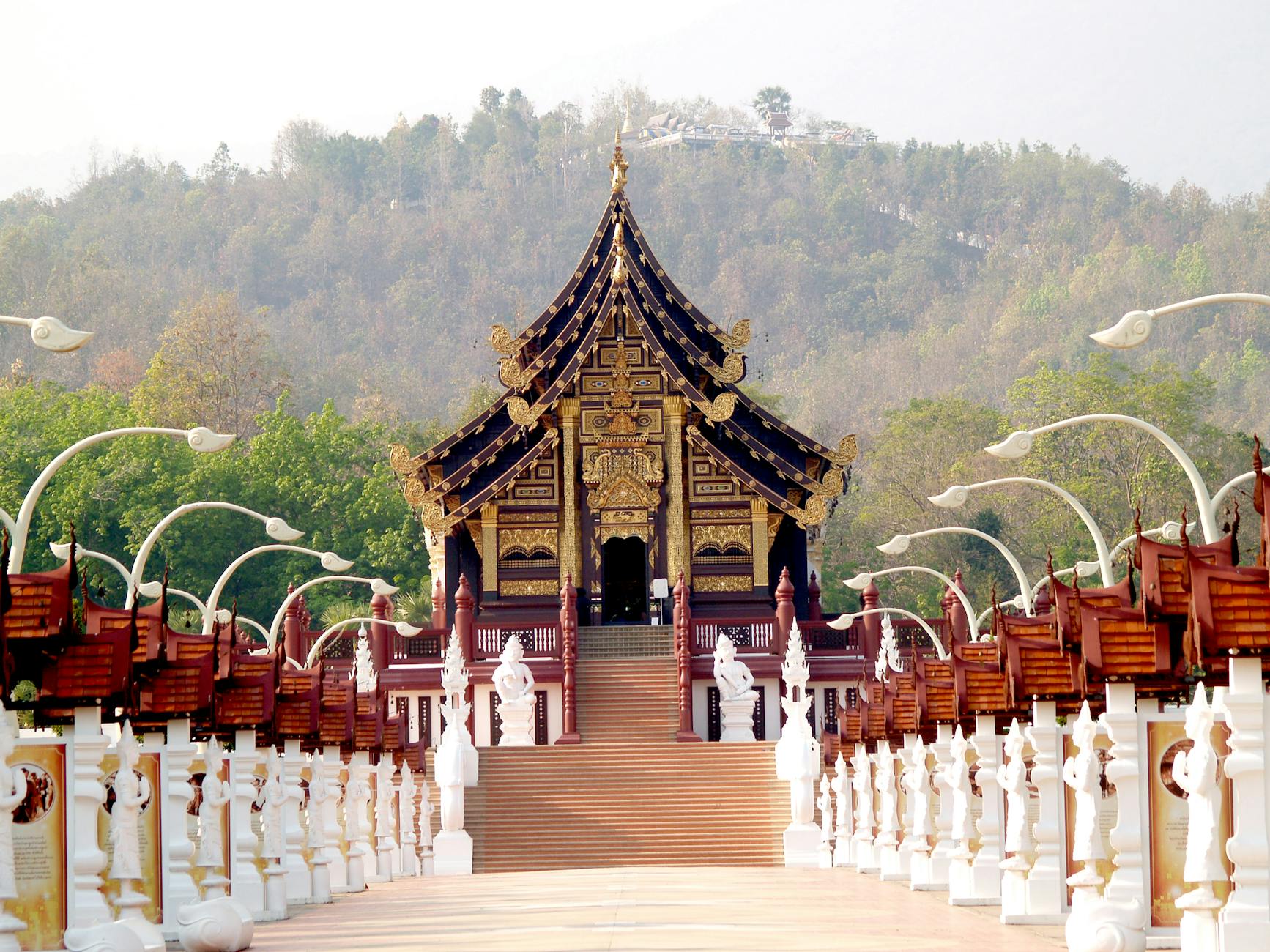
Stunning view of a traditional Thai temple at Royal Park Rajapruek, Chiang Mai.
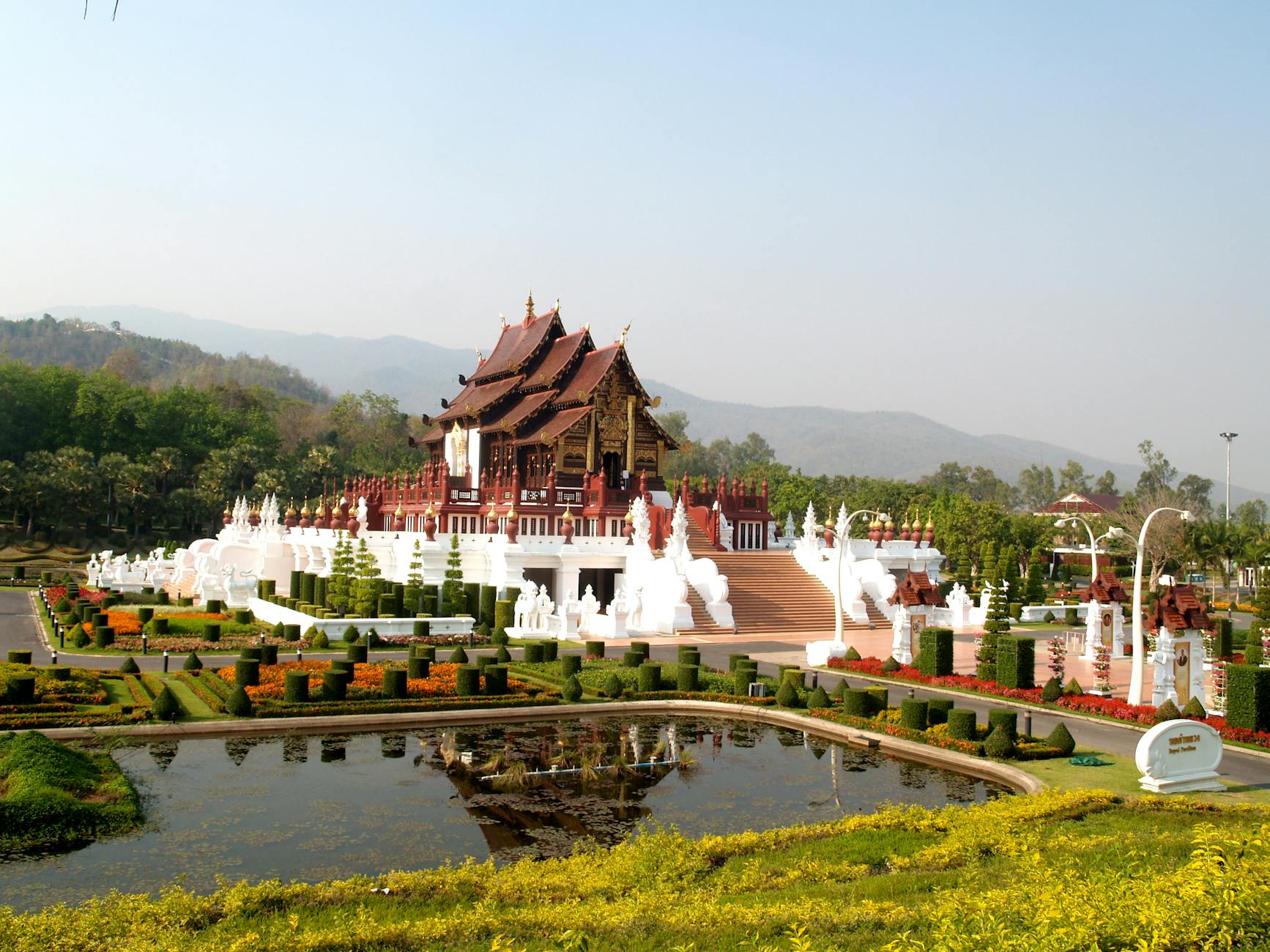
A beautiful Thai temple amidst lush gardens and a reflecting pond in daylight.

Royal Park Rajapruek

Chiang Mai, Thailand
i

Stunning view of a traditional Thai temple at Royal Park Rajapruek, Chiang Mai.

Photo by icon0 com

Sunlight pours through misty air, falling across sculpted gardens and gleaming pagodas. Energetic laughter drifts beside fountains, blending with the subtle perfume of orchids. Near Chiang Mai’s forested hills, Royal Park Rajapruek bursts with color and life year-round, offering botanica that celebrates local heritage and global diversity. This is no ordinary garden walk. It’s a living museum, a family-friendly landmark, and a place to breathe in northern Thailand’s creative heart.

Visiting Info

Currency
Entrance fee
200 THB
Hours
Opening hours
Monday: 8:00 AM – 6:00 PM
Tuesday: 8:00 AM – 6:00 PM
Wednesday: 8:00 AM – 6:00 PM
Thursday: 8:00 AM – 6:00 PM
Friday: 8:00 AM – 6:00 PM
Saturday: 8:00 AM – 6:00 PM
Sunday: 8:00 AM – 6:00 PM

Contact Information

Location
Address
334, Mae Hia, Mueang Chiang Mai District, Chiang Mai 50100, Thailand

Planning your visit

Planning a trip to Royal Park Rajapruek takes just a little thought, but the rewards stretch far beyond the grounds. Located about 10 kilometers southwest of Chiang Mai’s Old City, the park sits near several natural and cultural attractions. The landscape shows its best side between November and February, when cool weather brings thousands of blooms to life and crowds remain manageable. Weekends and local holidays may see more visitors—perfect for people-watching but busier in shaded trails. Tickets are affordable and easily purchased on arrival. Children, seniors, and those with limited mobility will find paved paths and shuttle options throughout.

  • Best time to visit: November–February, early morning or late afternoon for pleasant temperatures and soft light.
  • How to get there: Red songthaews (shared trucks) from Chiang Mai’s city center; ride-hailing apps or car rentals for flexibility; limited public transport nearby.
  • Accessibility: Wheelchair-friendly walkways, electric shuttle buses available; shaded pavilions for resting; stroller- and family-friendly.
  • Average visit duration: 2–4 hours to see highlights, up to a full day for plant lovers or photographers.
Must see stuff

Whether drawn by epic gardens or rare cultural glimpses, Royal Park Rajapruek has a highlight for every visitor. Centuries-old tradition meets modern design along winding lanes, where displays tell stories from all over Thailand and the world. At the heart stands Ho Kham Luang, an elegant teak pavilion crowned by steep, gilded roofs and surrounded by reflecting pools. Beyond, themed gardens present rare orchids, vertical forests, and international flora—each corner revealing something new. Scattered sculptures, intricate topiary, and fountains pepper the park, waiting for a lucky pause and a photo. For younger explorers, the insect museum and playful artwork delight and educate. Every November, the International Horticultural Exposition brings fresh displays and special cultural performances.

  • Ho Kham Luang Royal Pavilion: A grand, Lanna-style building with ornate details and striking reflections, perfect for photos and a taste of northern Thai architecture.
  • Orchid Pavilion and Greenhouse: Home to rare and endemic orchids, many in full bloom from late autumn through winter.
  • World Gardens: Landscapes and plants from around 30 countries, each plot reflecting its nation’s gardening style.
  • Festival of Flowers: Seasonal displays—especially the winter flower festival—fill the air with fragrance and color.
  • Photo-worthy scenes: Mirror pools with mountain backdrops, rainbow-flowered archways, and sunset over the fields.
  • Cultural facts: Opened for King Bhumibol’s Golden Jubilee in 2006; plants from across Thailand represent the kingdom’s rich biodiversity.

Tips for your visit

A little local knowledge goes far at Royal Park Rajapruek. Early risers catch morning light and dew on the lotus ponds, with fewer crowds—especially on weekdays. Afternoon shade offers comfort on hotter days but expect more families and tour groups after lunch. Walking shoes are a must, as the grounds stretch far beyond the main attractions. Don’t forget water and sunscreen; while lush, the open areas can get warm by midday. Most signs include English; still, picking up the free map near the main entrance saves time. Dining options inside are limited, but small cafes serve refreshing juices and snacks. Friendly staff at the shuttle stops gladly offer directions—and a smile. Local etiquette asks for respectful dress near shrines and the royal pavilion; hats and modest clothing fit best.

  • Best times to avoid crowds: Weekday mornings or late afternoons; avoid festival days for a quieter stroll.
  • What to bring: Refillable water bottle, hat, sunscreen, camera or smartphone, comfortable sneakers.
  • Etiquette: Dress modestly around the Ho Kham Luang; quiet voices in meditation areas.
  • Safety and comfort: Look out for slippery paths after rain; take breaks in shaded rest stops.