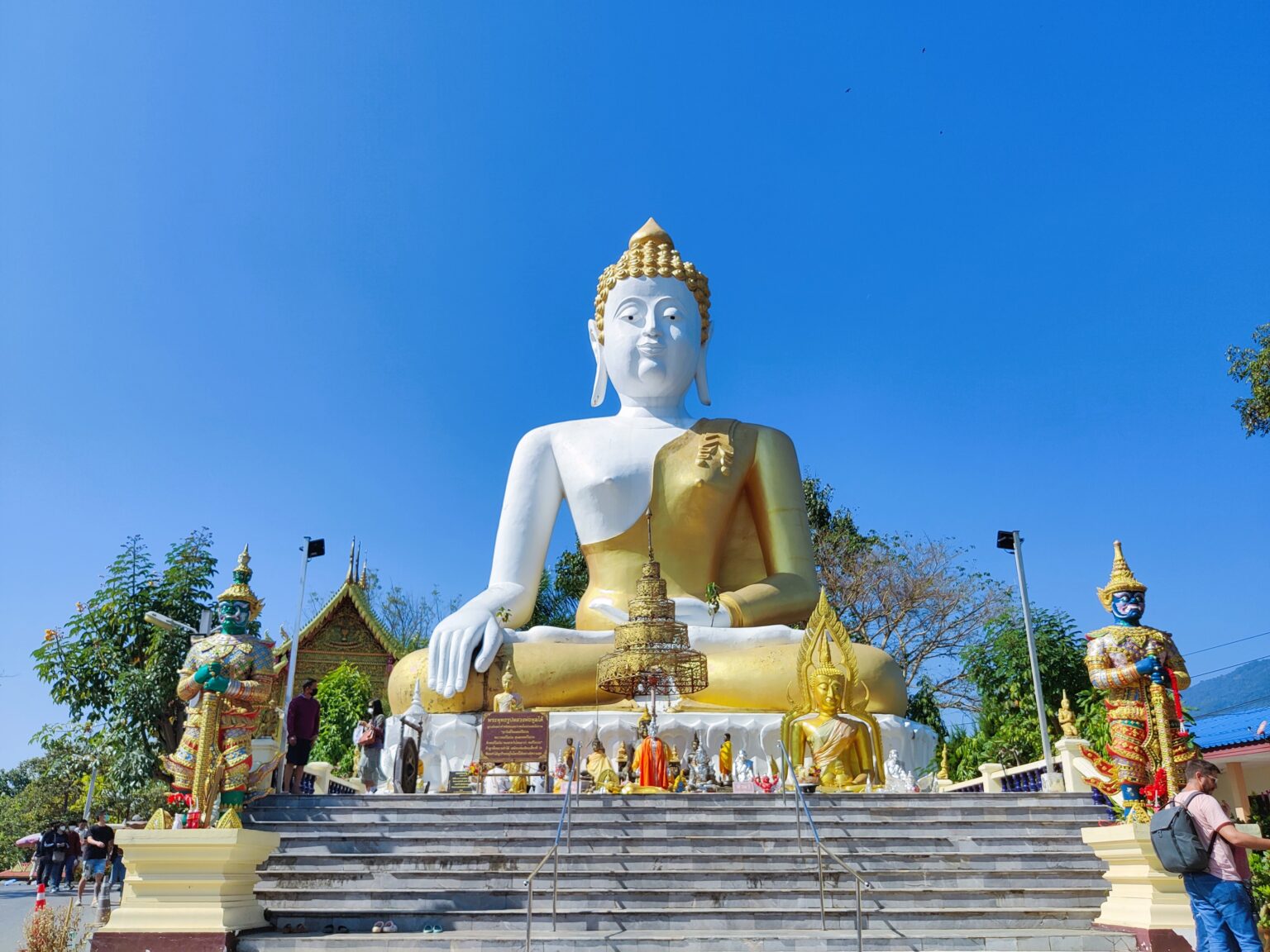
Beautiful view of Wat Phra That Doi Kham

Wat Phra That Doi Kham

Chiang Mai, Thailand
i

Beautiful view of Wat Phra That Doi Kham

Gold-tipped spires rise above a curtain of green, their echoed chimes winding through the tropical air. Monk’s chants curl beneath ancient eaves. A patchwork of incense, sunlight, and flower petals leads to the storied heart of Wat Phra That Doi Kham—one of Chiang Mai’s most soul-stirring temples, where faith, history, and mountain mists converge for a remarkable experience.

Visiting Info

Currency
Entrance fee
30 THB
Hours
Opening hours
Monday: 6:00 AM – 6:00 PM
Tuesday: 6:00 AM – 6:00 PM
Wednesday: 6:00 AM – 6:00 PM
Thursday: 6:00 AM – 6:00 PM
Friday: 6:00 AM – 6:00 PM
Saturday: 6:00 AM – 6:00 PM
Sunday: 6:00 AM – 6:00 PM

Contact Information

Location
Address
Mae Hia, Mueang Chiang Mai District, Chiang Mai 50100, Thailand

Planning your visit

To make the most of a trip to Wat Phra That Doi Kham, thoughtful timing matters. Perched atop a gentle mountain just beyond Chiang Mai’s city edge, the temple is easily reached but best enjoyed when crowds thin and the air cools. Early mornings offer a quieter, almost magical calm, while afternoons can bring greater numbers, especially on weekends or key Buddhist holidays. No formal tickets are required; donations are gratefully accepted at the main gate.

  • Best time to visit: Early morning or late afternoon, November to February for cooler weather and fewer showers.
  • How to get there: Local songthaews (shared red taxis) traverse the winding road from central Chiang Mai. Private cars, scooters, or taxi apps are also reliable; parking is ample at the base of the hill.
  • Accessibility: Families and seniors should note the gentle but lengthy staircase (over 300 steps) leading up. A separate road allows vehicles to reach the top directly for easier access.
  • Average visit duration: Plan for 1.5 to 2 hours, more if lingering for meditation or exploring food stalls nearby.

Must see stuff

Between the lush foothills and Chiang Mai’s buzzing plains, the temple’s terraces reveal a spectrum of experiences. Vivid murals, looming statues, and miraculous legends anchor the routines of local devotees and curious visitors alike. Above all, a gentle sense of welcome pervades every gilded corner.

  • Giant Buddha Statue: The towering sitting Buddha—gleaming white and gold—watches serenely from the main terrace, visible from miles below and a true regional icon.
  • Main Chedi: The ancient Lanna-style pagoda, cloaked in golden foil, enshrines Buddhist relics and draws pilgrims hoping for blessings in life and luck.
  • Prayer Bells and Flower Stalls: Traditional bells invite visitors to ring for merit, while vibrant marigold garlands fill the main plaza with fragrance and color.
  • Panoramic Views: Expansive vistas take in paddy fields, Chiang Mai skyline, and the endless green of Doi Suthep-Pui National Park.
  • Meditation Corners: Quiet corners and shaded pavilions offer spaces for reflection, favored by both monks and travelers seeking calm away from Chiang Mai’s bustle.
  • Cultural lore: Locals bring white jasmine garlands to offer to the temple’s guardian spirits, following folk traditions believed to bring prosperity and happiness.

Tips for your visit

With a little local know-how, a visit transforms from memorable to unforgettable. While sunrise draws fewer crowds and softer light for photos, midday heat can make the steps challenging. Dress modestly, and bring respectful curiosity—monks and local families gather for worship throughout the day, and friendly vendors often share firsthand tales of the temple’s storied past.

  • Best times to avoid crowds: Early mornings on weekdays, especially outside of Thai national holidays.
  • What to bring: Water, sun hat, camera, and comfortable walking shoes—plus a light sweater in cooler months.
  • Local etiquette: Remove shoes before entering any shrine, speak in low tones near prayer halls, and avoid pointing feet at Buddha images.
  • Safety and comfort: The steps can be slippery after rain; for younger children or seniors, consider using the vehicle-access road instead of the staircase.