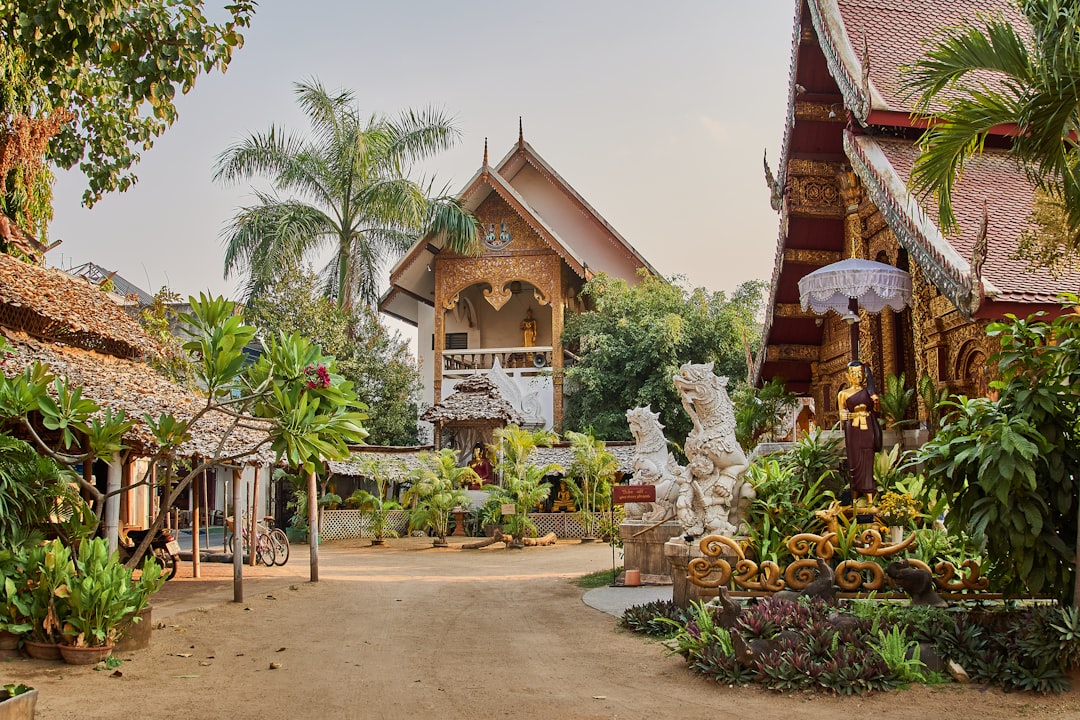
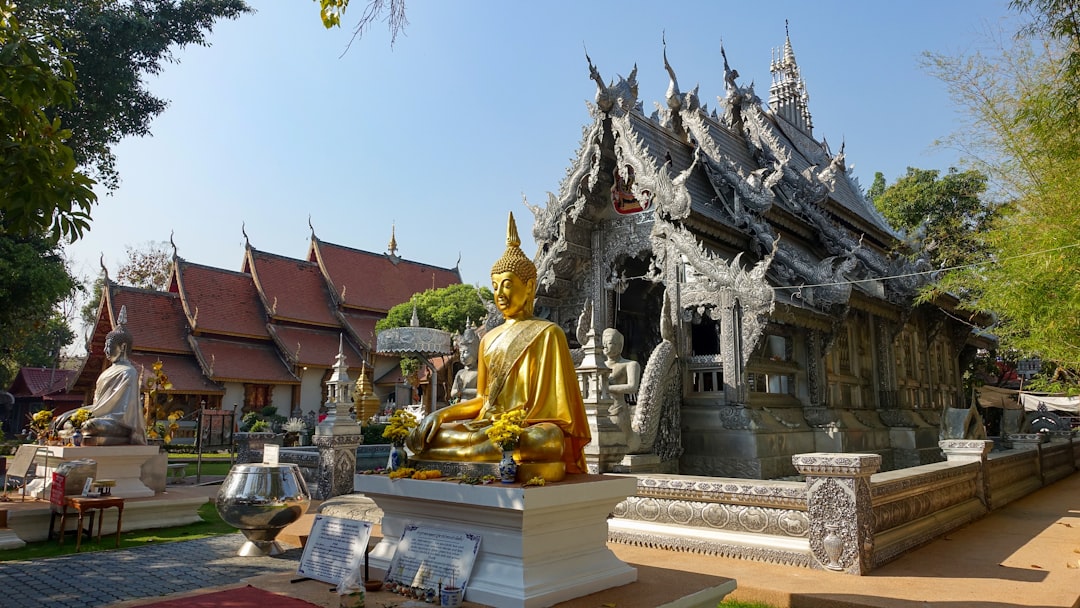
brown and white concrete house surrounded by green trees during daytime
shallow focus photo of Gautama Buddha statue
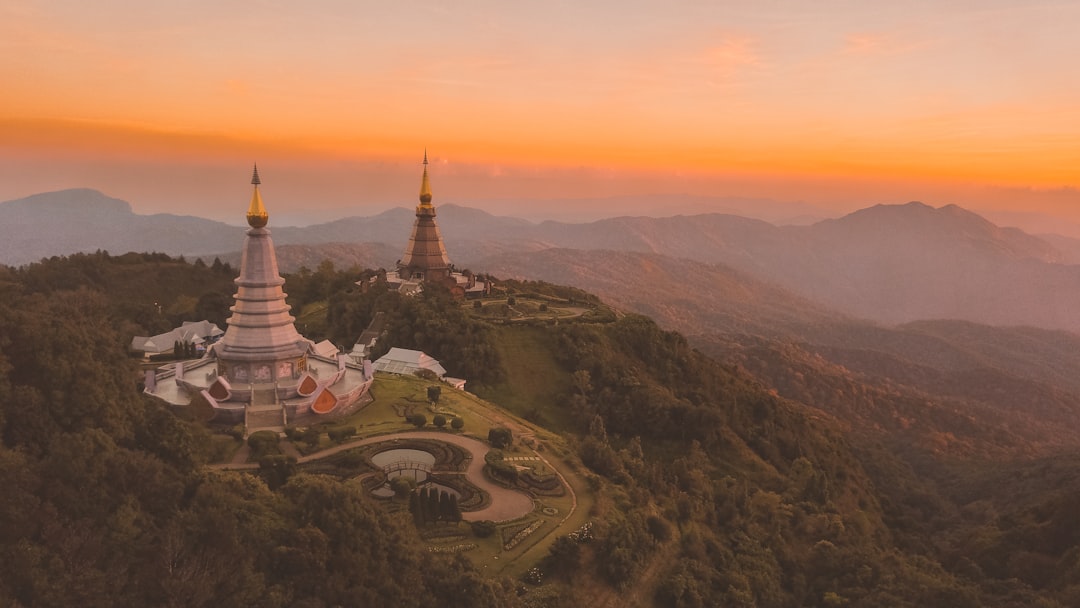
bird's-eye view of white temple surround by trees
Noppamethanedol and Noppapol Phumsiri pagoda and colorful sky at sunrise. Mountains on background. Doi Inthanon national park, Thailand

Chiang Mai

Thailand
Natural WondersHistoricalCulturalArt & ArchitectureEntertainment & Leisure
i

brown and white concrete house surrounded by green trees during daytime

Photo by Peter Borter

Chiang Mai wakes you up with the smell of grilling pork and temple bells echoing through the cool morning air. The old city’s moat wraps around brick walls softened by centuries, its narrow lanes lined with orchids and teakwood houses. Mornings are for sticky rice and iced coffee, sipped at open-air markets where vendors chat in soft, musical Thai. By midday, the sun spills over Doi Suthep’s golden spires, the city spread like a patchwork quilt below. Afternoons invite wandering—through art galleries in Nimmanhaemin or riverside cafes where time drifts with the Ping’s slow current. At night, lanterns bob above the Night Bazaar, their glow mingling with scents of lemongrass and chili. Chiang Mai’s charm lies in its pace: vibrant yet relaxed, a place where even small moments feel rich. You’ll find mosquitoes at dusk and traffic on the ring road, but also kindness in every exchange. It’s a city that invites you to linger, to settle into its rhythms until the line between visitor and local starts to blur.

Quick Facts

currency
THB
languages
Thai
airports
Chiang Mai International Airport
size
Large City
power
Type A, Type B, Type C, Type F, Type O
timezone
Asia/Bangkok
safety
Safe
costs
Cheap

General Information

Safety indexChiang Mai is considered a relatively safe city for travelers, with a low crime rate compared to other major cities. Petty theft such as pickpocketing can happen in tourist areas and markets, so standard precautions are advised. Violent crime is rare. Road safety can be a concern, particularly with motorbikes.

Best Time to TravelThe best time to visit Chiang Mai is from November to February, during the cool, dry season. The weather is pleasant, skies are clear, and the famous Yi Peng lantern festival usually occurs in November.

Least crowded and still a good time to visitMay to June and late September to early October are less crowded but still a pleasant time to visit. Rain showers are more frequent but generally short. Accommodation prices are lower, and tourist sites are quieter.

BudgetChiang Mai is budget-friendly. Backpackers can get by on $20–30 USD per day, including dorm accommodation and street food. Mid-range travelers should budget $40–80 USD daily for nicer hotels and dining. Luxury options are also available at a fraction of Western prices.

Healthcare and VaccinationsChiang Mai has several modern hospitals and clinics catering to foreigners. Basic care is good and affordable. Travelers should have adequate travel insurance. Recommended vaccinations include Hepatitis A, Hepatitis B, Typhoid, Japanese Encephalitis (for longer stays or rural trips), and routine vaccines. Dengue fever occurs, so mosquito precautions are advisable.

Visa RequirementsCitizens of over 60 countries (including the US, UK, EU, Australia, Canada) can enter Thailand visa-free for tourism for up to 30 days (can vary by nationality). Longer stays require applying for a tourist visa in advance. Check current regulations before travel, as rules may change.

Weather in Chiang Mai

°C°F
41106
3391
2577
1763
948
Jan
Feb
Mar
Apr
May
Jun
Jul
Aug
Sep
Oct
Nov
Dec
3020100
Avg. min. temperature
Avg. max. temperature
Avg. precipitation days

First-time travelers

Arrival in Chiang Mai is a gentle shock. The city displays a soothing balance—old wats beside neon-lit coffee shops, tuk-tuks slicing through dusk along quiet, leafy sois. Mist hugs the distant mountains. First impressions can feel almost enchanted: from the tangerine robes of monks to the careful bows of fruit vendors, everything hums with quiet honesty.

The Senses Welcome You

Sunrise reveals light on gilded temple spires—Wat Phra Singh and Wat Chedi Luang both draw you in. Listen for bells echoing across the moat circling the Old City, a reminder of ancient rulers and modern bustle. Markets breathe to life early. At Warorot Market, the aroma of pandan cakes mingles with jackfruit and fried dough sticks. The city wakes up hungry.

Cafés along Nimmanhaemin Road offer sticky rice and mango at breakfast. For lunch, try khao soi on a quiet corner near Mae Ping River. Notes of turmeric and coconut linger with each bite. Everywhere, tiny smiles and snippets of Thai speak—charm is constant, not forced. Night falls; Chiang Mai’s lanterns bob along Ratchadamnoen Road, hinting at the city’s long Lanna legacy.

First Steps Essentials

  • Dress modestly when visiting temples, especially early mornings at Wat Phra That Doi Suthep.
  • Try sai ua, the northern spicy sausage, from street stalls behind the Somphet Market.
  • Hop in a red songthaew—shared truck taxis—for quick, cheap rides across town.
  • Greet locals with a ‘wai’ and gentle smile, respecting traditions.

Let Chiang Mai seep in slowly—watching, tasting, listening. For first timers, wonder never feels far away.
Return travelers

Coming back to Chiang Mai isn’t about seeing ‘the sights’—it’s about who you become in the city’s in-betweens. You notice familiar contours; the ancient wall’s crumbling red brick now marks your turning point for a late night noodle haunt or a shortcut home. You wander with purpose—and with ease.

Life Beyond the Map

This time, trade polished temples for living traditions. Duck into the alley near Wat Lok Molee for a morning chat with the aunties at Samlan Road’s tiny khao kha moo stall. Nearby, a Muay Thai gym punches through dawn, the echo mixing with birdcalls from the city’s green pockets. The San Kamphaeng Road offers gentle slopes toward artisan workshops. Baan Jang Nak, the elephant woodcarving village, hums with the handwork of skilled carvers—rough teak dust floats in sunbeams.

Food trusts you now. At Chang Phueak Night Market, vendors remember your order. You crunch through laab khua at SP Chicken or slurp boat noodles in a backroom beside locals. The city becomes a conversation. You find rhythm watching weavers in Bor Sang painting umbrellas, sipping iced oolong, and making friends at slow, shaded tea shops like Mingmitr.

Hidden Depths, Honest Delights

  • Bike toward Doi Saket’s sleepy temples, finding peace beneath tamarind trees.
  • Take a Thai calligraphy class at Monfai Cultural Centre for real cultural connection.
  • Order nam prik ong from a family-run kitchen north of the moat.
  • Sunset at Wat Umong’s ancient tunnel—quiet, cooling, rarely crowded.

Returning travelers aren’t searching—they’re belonging. Chiang Mai welcomes you back softly, quietly—just as you left, but somehow deeper.

Must-see locations

Tha Phae Gate

Tha Phae Gate

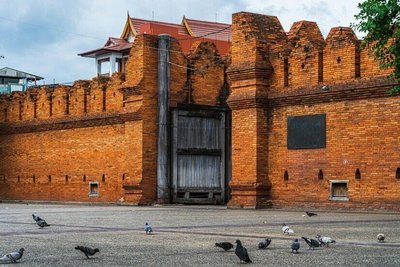
Red-brick Tha Phae Gate stands as a living piece of Chiang Mai’s old city wall, drawing street performers, local artists, and lively markets. Late afternoon, pigeons fill the square while food stalls fill the air with spice.

Learn More
Chiang Mai Night Bazaar

Chiang Mai Night Bazaar

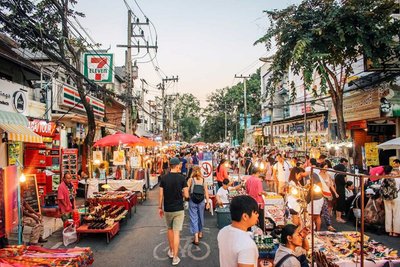
Chiang Mai Night Bazaar blends lively street food stalls, handmade crafts, and live music in the heart of Chang Khlan Road. Colorful lanterns brighten every corner. Shoppers haggle beside locals, soaking in Northern Thai culture and buzzing nightlife.

Learn More
Wat Phra That Doi Kham

Wat Phra That Doi Kham

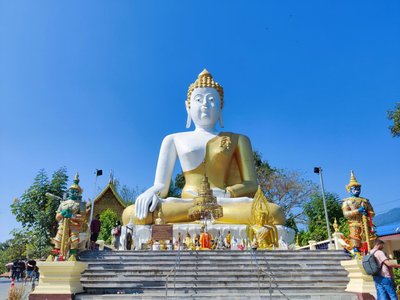
Wat Phra That Doi Kham, perched above Chiang Mai's forests, offers sweeping mountain views, a towering seated Buddha, and golden chedis. Locals visit for lucky flowers; monks chant at dawn. A peaceful escape from city crowds.

Learn More
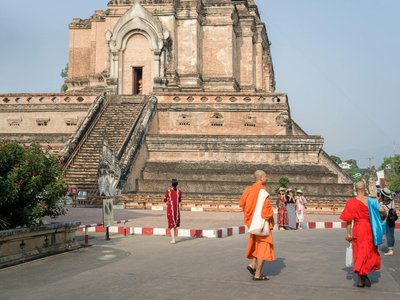
Monks and tourists at Wat Chedi Luang, a historic temple in Chiang Mai, Thailand.
i

Monks and tourists at Wat Chedi Luang, a historic temple in Chiang Mai, Thailand.

Photo by M I N E I A M A R T I N S

Wat Chedi Luang

Wat Chedi Luang rises above Chiang Mai's Old City, where monks chant in shaded courtyards and locals light incense near ancient carvings. Climb the ruined brick chedi for views, or chat with monks during daily Q&A sessions.

Learn More
Mon Jam

Mon Jam

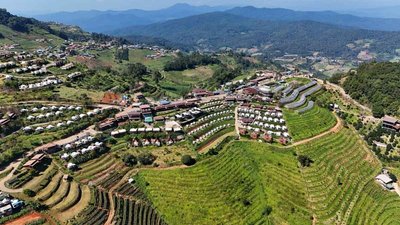
Mist floating over Mon Jam’s rolling hills creates cool air and dreamy views. Hill tribe farmers grow strawberries on terraced slopes. Wooden walkways lead to flower gardens, bamboo huts, and food stalls with fresh local dishes.

Learn More

How to get there

By air

Chiang Mai International Airport (CNX) is well connected to major cities in Thailand (such as Bangkok, Phuket, and Krabi) as well as several regional destinations in Southeast Asia. Direct flights are the quickest and most convenient way to reach Chiang Mai.
Options to get to town:
TypePriceDurationWhere to buy
Taxi150-200 THB15-20 minutesTaxi counter at the airport arrivals hall
Airport bus20-40 THB30 minutesBus stop outside the arrivals hall
Train/shuttleNot availableN/AN/A

By train

State Railway of Thailand offers overnight and daytime trains from Bangkok to Chiang Mai. The journey is scenic, taking approximately 11-14 hours, with several classes of service (seat, sleeper, 1st/2nd/3rd class).
Useful websites for train tickets:

By car

Driving to Chiang Mai is possible via Highway 1 or Highway 11 from Bangkok, covering roughly 700 km and taking approximately 8-10 hours. Roads are in good condition, and car rental options are available in major cities.
Additional charges to be aware of:
FeeCostHow to pay
Toll / vignette / emission stickerMinimal tolls (mainly around Bangkok), typically under 100 THBAt toll booths on highways
Other driving costsFuel: approx. 2,000-3,000 THB for Bangkok–Chiang MaiPetrol stations en route

How to get around

Public transport

Chiang Mai's public transport mainly consists of local red songthaews (shared pickup trucks), city buses, and tuk-tuks. Songthaews follow loose routes throughout the city and are a popular, affordable way to get around. City buses are a newer addition and serve several main routes.

Ticket options:
Ticket TypePriceWhere to buy
Single ticket15-30 THB (songthaew or bus)Pay directly to the songthaew or bus driver
Day passNo official day pass available for citywide public transportN/A

Taxis & ridesharing

Taxis and ridesharing are common and convenient in Chiang Mai. Regular meter taxis are available but less commonly hailed on the street. Tuk-tuks can be flagged down easily. Ridesharing services like Grab offer the most hassle-free way to book and pay.

Service providers:
ProviderPriceHow to book
Local taxiStarting from 50-60 THB, meter or negotiated fareHail on the street, at taxi stands, or via hotel reception
Ridesharing app (e.g., Grab)Fares depend on distance, typically 50-150 THB for city ridesVia Grab app

Car rental

Car rental is a great option for exploring areas outside the city, such as Doi Inthanon or Pai. Both international and local rental companies operate in Chiang Mai, with pickup at the airport or in the city. An International Driving Permit (IDP) is recommended.

Rental options:
ServicePriceHow to book
Daily rentalStarting from 800-1,500 THB/day for a basic sedanRental counters at Chiang Mai Airport or local offices in the city
Weekly rentalFrom 5,000-10,000 THB/weekBook at rental agencies in person or via their official websites

Bike & scooter rental

Renting a scooter or bicycle is popular for short distances and allows flexibility in accessing temples or nearby attractions. Scooters are widely available, but make sure to wear a helmet and have the proper license. Bicycles are handy for exploring Old City and Nimman area.

Rental options:
ServicePriceHow to book
Bike rentalStarting from 50-100 THB/dayBike shops and hostels around Old City and Nimman
Scooter rentalStarting from 150-300 THB/day (110-125cc)Scooter rental shops throughout the city

What to eat

Thick morning mist rises from the Ping River as you brush past crackling woks on Chiang Mai’s buzzing streets. Curry perfumes the air, mingling with char-grilled meat and the sweet scent of mango. Monks shuffle by, collecting alms, while vendors chop herbs and scoop noodles. The city wakes hungry. Chiang Mai’s kitchens tempt you with spice, crunch, and comfort in every bite—food here lives at the heart of daily life, always drawing you in for one more bowl or skewer.

Signature Dishes

  • Khao Soi: Creamy coconut curry noodle soup topped with crunchy fried noodles. Warm, rich, and tangy, this is Chiang Mai’s signature comfort food—try it at Khao Soi Khun Yai near the old city wall.
  • Sai Ua: Northern Thai sausage exploding with lemongrass, kaffir lime, and chilies. Often sizzling from charcoal grills at the market.
  • Gaeng Hang Lay: Burmese-influenced pork curry, slow-cooked with ginger, tamarind, and aromatic spices. Slightly sweet, meltingly tender.
  • Nam Prik Noom: Roasted green chili dip, chunky with eggplant and shallots. Eaten with sticky rice and crisp vegetables—each bite packs smoky heat.
  • Sticky Rice with Mango (Khao Niew Mamuang): Slices of ripe mango paired with chewy coconut sticky rice. Sweet, salty, and refreshing, ideal for the city’s tropical heat.

Street Food & Markets

After sunset, Chiang Mai’s markets explode with color, noise, and irresistible smells. Wandering through Sunday Walking Street or the Night Bazaar, you’ll see locals and tourists eating shoulder to shoulder at low tables. Try grilled pork skewers, hot off the coals. Snag crispy fried quail eggs with herbs at Wua Lai Market. Late-night cravings? Grab a bowl of herb-packed noodle soup at Chang Phuak Gate’s well-loved cowboy hat lady stall. But be warned—bargains vanish fast in tourist season, and prices can spike.

Sweet Treats & Drinks

Chiang Mai’s desserts beg for attention. Order coconut ice cream from street carts, topped with roasted peanuts. Savor kanom krok—mini coconut pancakes—crispy outside, molten inside. Sip iced Thai tea, bright orange and outrageously sweet, on hot afternoons. For caffeine, try a slow-roasted local coffee at Ristr8to or Akha Ama. Every treat comes with extra charm if you wander the city’s hidden sois.

Why Travelers Eat Here

  • Authentic flavors—from fiery curries to ancient royal dishes—still shine in family-run kitchens.
  • Colorful street markets, where cooks serve food fast and fresh under glowing lanterns.
  • Diversity—Northern Thai cuisine blends Burmese, Shan, and Lanna influences in unique ways.
  • Prices to suit all budgets, from street-side grills to polished riverside restaurants.

Chiang Mai’s spirit lives in every meal—quiet temples steps from spicy food stalls, laughter spinning through smoky air. Here, every bite brings you closer to the city’s warm, generous soul.

Top Rated Restaurants

Garden to Table Chiangmai

Garden to Table Chiangmai

4.9 (1.3k reviews)
$
Location136 4 Ratchapakhinai Rd, Tambon Si Phum, Amphoe Mueang Chiang Mai, Chang Wat Chiang Mai 50200, Thailand
Khoei Chiang Mai - Northern Food (Chiang Mai Restaurant)

Khoei Chiang Mai - Northern Food (Chiang Mai Restaurant)

4.8 (3.8k reviews)
$$
Location14 Thanon Santitham, Tambon Chang Phueak, Amphoe Mueang Chiang Mai, Chang Wat Chiang Mai 50300, Thailand
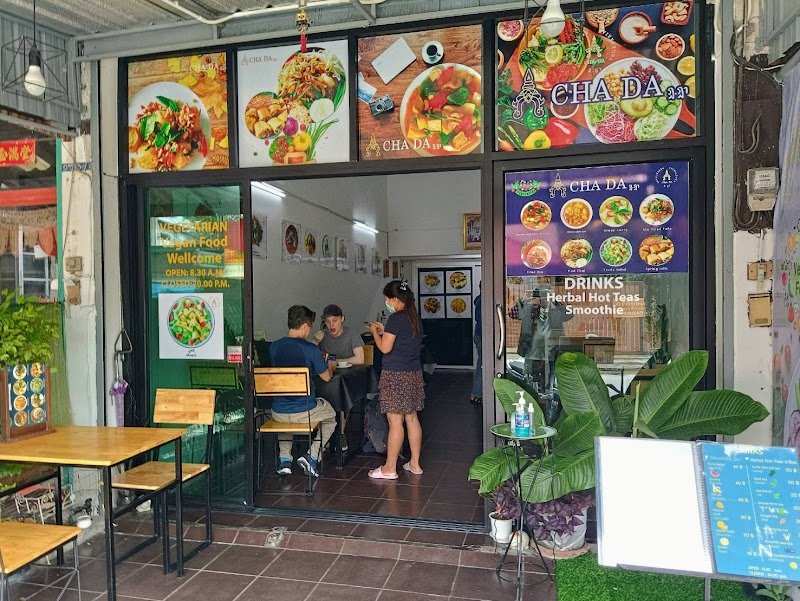
Chada Vegetarian Restaurant Chiang Mai

Chada Vegetarian Restaurant Chiang Mai

4.8 (1.9k reviews)
$
Location136/5 Ratchapakhinai Rd, Tambon Si Phum, Amphoe Mueang Chiang Mai, Chang Wat Chiang Mai 50200, Thailand
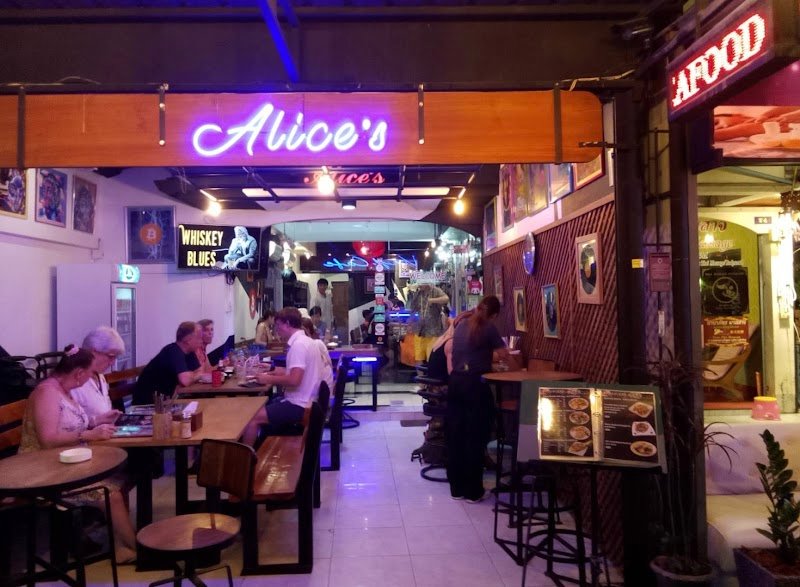
Alice's Restaurant

Alice's Restaurant

4.7 (2.0k reviews)
$$
Location74, 1 Loi Kroh Rd, Tambon Chang Khlan, Amphoe Mueang Chiang Mai, Chang Wat Chiang Mai 50100, Thailand
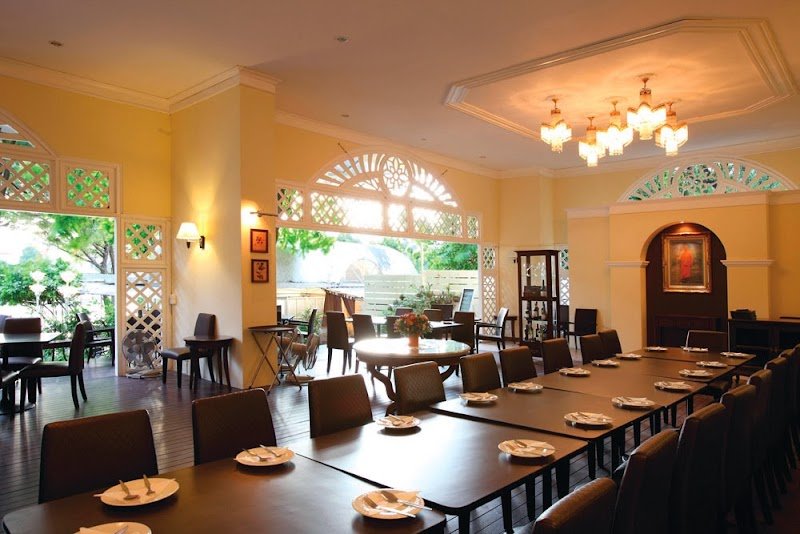
Samsen Villa

Samsen Villa

4.7 (4.4k reviews)
$$
LocationRim Ping Condominium, 201 ถนน เจริญราษฎร์ Subdistrict Mueang Amphoe Mueang Chiang Mai, Chang Wat Chiang Mai 50000, Thailand

Accommodations

Old walls curve against new glass towers in Chiang Mai—a city where a guesthouse on a sleepy lane stands seconds from a buzzing night market. Choosing where to stay is a defining decision. Chiang Mai’s neighborhoods each hold a different tempo. The right location shapes your adventure—whether you seek dawn calm or midnight revelry.

Neighborhood Overview

  • Old City: Enclosed by ancient moat and brick walls, Old City hums with tradition. Narrow lanes hide boutique hotels, cheap hostels, monks on morning alms rounds. Best for culture seekers. Families and first-timers will feel safe exploring here day or night.
  • Nimmanhaemin: Nicknamed Nimman, this hip quarter embraces glassy cafes, creative design hotels, and rooftop bars. Digital nomads flock to its coworking spaces. Great for creative types and night owls—less quiet, more neon.
  • Night Bazaar / Chang Khlan: Hotels tower by the river, while night markets crowd every sidewalk. This zone buzzes after sunset. Couples seeking night life or convenience will enjoy the action—but some streets get noisy late.
  • Riverside: The Ping River hums with restaurants, luxury stays, and boutique resorts. Riverside areas feel removed from downtown chaos. Ideal for couples wanting relaxation and scenic strolls, tricky for those needing fast city access.
  • Santitham & Wat Ket: Local flavor dominates here. Guesthouses sit among market stalls and temples. Popular with long-stayers, value seekers, and those hoping to glimpse real city life—though English is less common.

Types of Accommodation

  • Budget Guesthouses: Shared bathrooms, funky common areas. Examples: Julie Guesthouse, Hug Hostel. Expect $8–$18/night.
  • Boutique Hotels: Design-forward, air-con, quick breakfast. Examples: Hotel Yayee, The Inside House. $45–$170/night.
  • Resorts & Luxury: Set by the river, in lush gardens. Examples: Rachamankha, Anantara Chiang Mai. From $130/night.

Insider Tips for Booking

  • Book 2–3 months ahead in December–February—peak season rates jump 30–50%.
  • Expect a 7% VAT and extra 10% service charge at mid-range or higher hotels.
  • Many places offer discounts for longer stays—ask directly before booking.

Even before sunrise, you’ll hear Chiang Mai stir—monks chanting, scooters humming. From a riverside suite or a window on the moat, this city’s rhythms pulse quietly beneath your guesthouse door. Every stay becomes part of the story—yours and Chiang Mai’s.