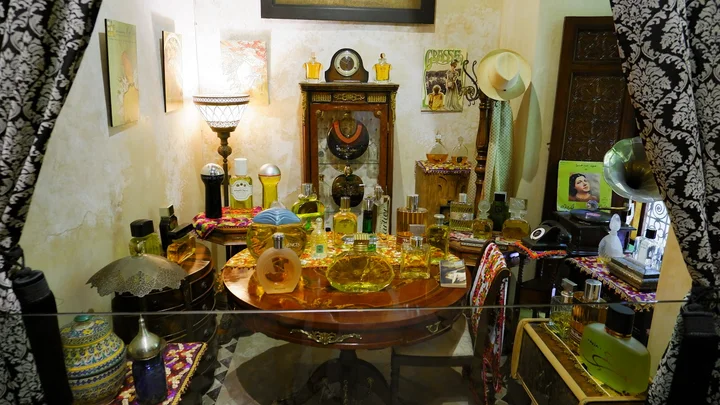
Beautiful view of Musée du Parfum

Musée du Parfum

Marrakesh, Morocco
i

Beautiful view of Musée du Parfum

Behind terracotta walls, among the noisy motorbikes and busy marketplaces of Marrakesh, scents travel on the air. But within the Musée du Parfum, fragrances tell their own story—one that weaves Moroccan craft, global history, and the city’s creative pulse under one roof. Visits here are more than walks through a museum. This is an immersive, sensory journey where visitors discover the role of scent in local life, old and new.

Visiting Info

Currency
Entrance fee
50 MAD
Hours
Opening hours
Monday: 9:00 AM – 5:30 PM
Tuesday: 9:00 AM – 5:30 PM
Wednesday: 9:00 AM – 5:30 PM
Thursday: 9:00 AM – 5:30 PM
Friday: 9:00 AM – 5:30 PM
Saturday: 9:00 AM – 5:30 PM
Sunday: 9:00 AM – 5:30 PM

Contact Information

Location
Address
2, Derb Chérif, Rue Diour Saboun, Marrakech 40000, Morocco

Planning your visit

Wandering into the Musée du Parfum is best done with some planning. The museum sits tucked just north of the old Medina, an easy stroll if coming from the busy spice square of Jemaa el-Fnaa. For those arriving by taxi or tuk-tuk, drivers know the “parfum” destination, but a short walk through quiet alleys awaits after drop-off. Tickets are usually available at the entrance, and this spot rarely suffers from the crowds seen in Marrakesh’s bigger landmarks—though weekends and late afternoons bring in more visitors, especially after lunch.

  • Best time to visit: Weekday mornings or late afternoons, especially in spring or autumn for cooler weather
  • How to get there: Walk from Jemaa el-Fnaa (about 10 minutes), or take a taxi directly to the museum's door
  • Accessibility: Main areas are on the ground floor, with ramps available; most exhibits comfortable for families, seniors, or guests with limited mobility
  • Average visit duration: 60–90 minutes, with extra time for workshops or the garden café

Must see stuff

Marrakesh’s Musée du Parfum is crafted for the senses, and several areas stand out for both learning and pure delight. Light and shadow play across the restored riad architecture, where exhibits mix hand-crafted perfume bottles, rare botanical samples, and hands-on displays. This is not just a parade of glass cases. Smelling stations allow guests to sample real Moroccan notes—rose, orange flower, aromatic herbs from the High Atlas. Aside from the main halls, don’t skip the leafy courtyard, with its fountains and workshop tables where visitors can make their own tiny scents to carry home. Cameras come out often, especially in the tiled entrance hall or under the vine-draped arches of the garden café. Guidance from knowledgeable staff adds context, with stories about Berber perfumers and Marrakech’s past as a crossroads of spice and luxury.

  • Key sights: Antique perfume vessels, distillation tools, and rare local ingredients on vivid display
  • Unique experiences: DIY perfumery workshops—mixing oils and essences for custom blends
  • Photo-worthy locations: Traditional riad courtyard, geometric tile mosaics, cozy rooftop garden
  • Cultural facts: Exhibits reveal the deep history of perfumery in Morocco—from ancient trade routes to modern luxury brands

Tips for your visit

Visitors who plan ahead usually get the most from the Musée du Parfum. Early mornings mean more peace—just the trick for experiencing scents without distraction. A refillable water bottle comes in handy, especially after testing aromas, while cameras or smartphones are encouraged but should be used with respect for the occasional quiet workshop. The staff welcomes questions and can recommend scents to try based on visitors’ interests. Dress comfortably, as much of the tour is on foot across cool tile or stone.

  • Best times to avoid crowds: Arrive before 11am, or after 4pm on weekdays
  • What to bring: Water, camera, a small notebook for scent ideas
  • Local etiquette: Stop to wash hands before perfume testing, ask permission for close-up photos of staff or artisans
  • Safety/comfort advice: Watch for occasional uneven stones in the courtyard; most areas are shaded, but the rooftop can be bright mid-day