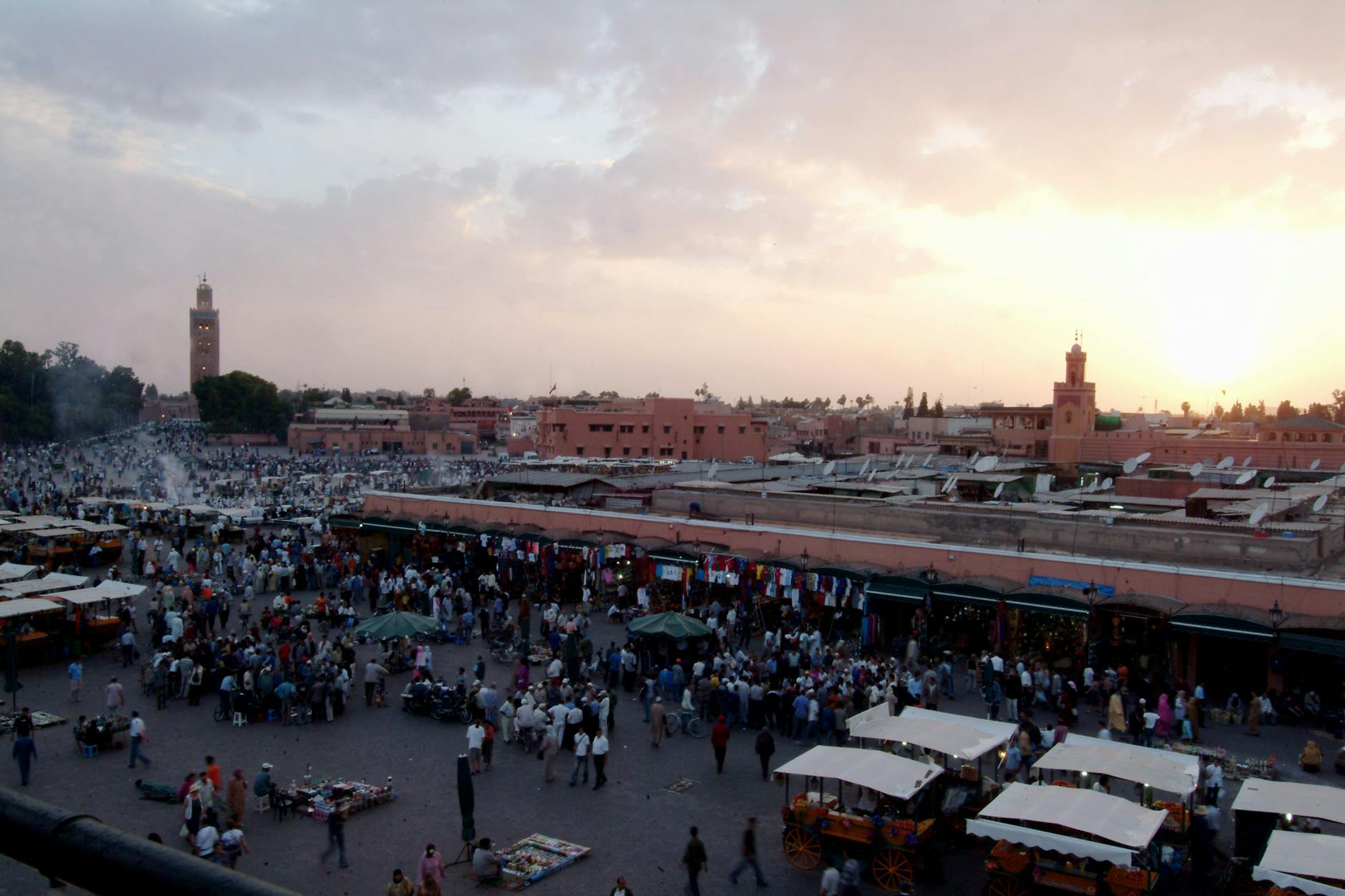
Bustling Jemaa el-Fnaa in Marrakech at sunset, showcasing a lively market scene.
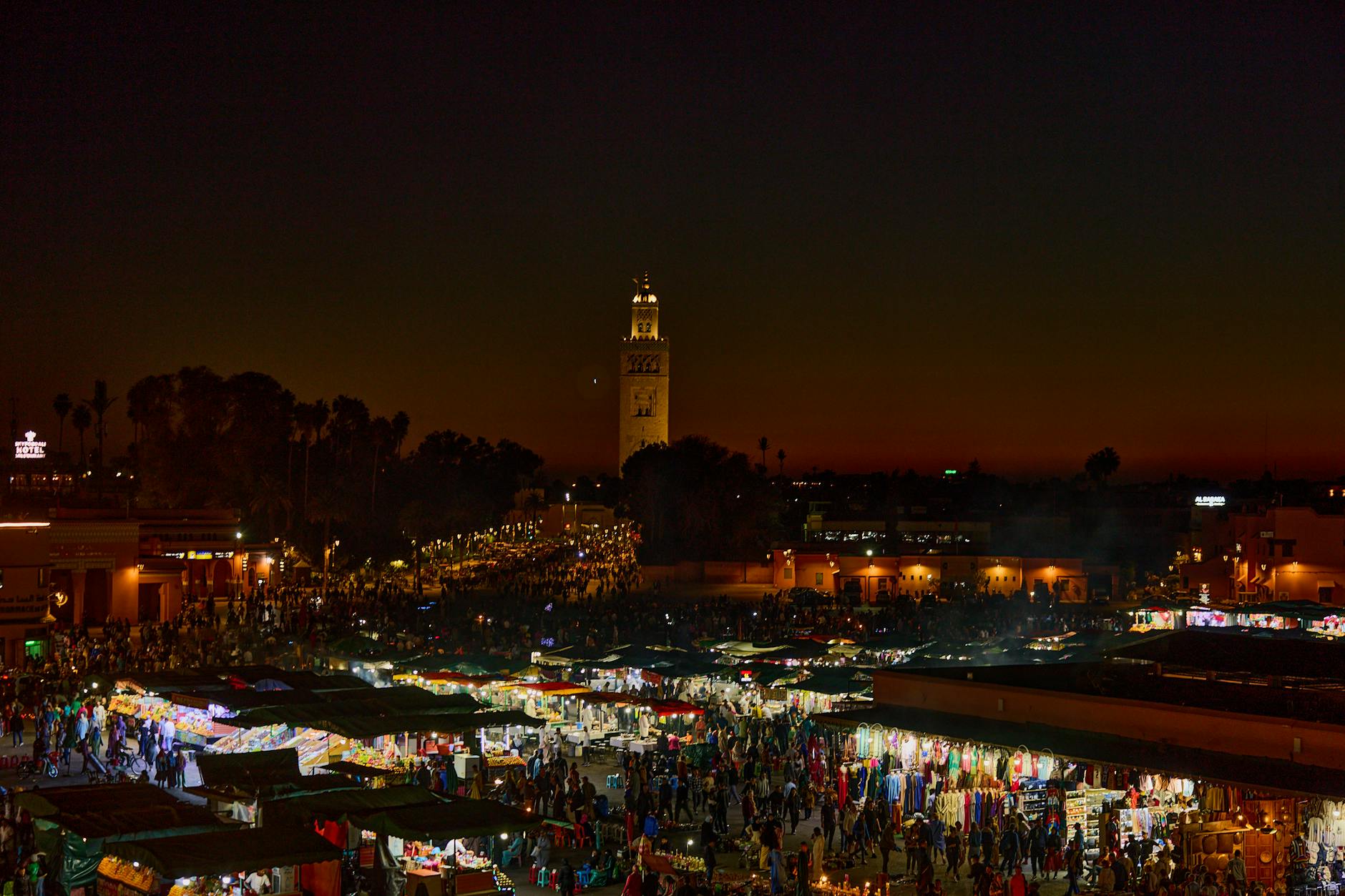
Experience the bustling night market in Marrakesh, Morocco, illuminated against a stunning twilight sky.

Jemaa el-Fnaa

Marrakesh, Morocco
i

Bustling Jemaa el-Fnaa in Marrakech at sunset, showcasing a lively market scene.

Photo by Moussa Idrissi

Sprawling with life from sunrise to midnight, Jemaa el-Fnaa stands at the heart of Marrakesh as a living theater. The roar of voices, the aroma of spices, and the pulsing rhythm of music blend together, creating an atmosphere unlike any other. What starts as a simple square by day transforms into a festival of lights, sounds, and stories when dusk falls. Visitors arrive from across the globe, eager to taste, watch, and wander. A visit to Jemaa el-Fnaa reveals both the storied history and the ever-changing culture of Morocco in a single place.

Visiting Info

Currency
Entrance fee
Free

Contact Information

Location
Address
Marrakesh 40000, Morocco

Planning your visit

Planning a trip to Jemaa el-Fnaa calls for some basic preparations. With Marrakesh’s intense sun and lively crowds, picking the right season and time is key. Traffic and narrow streets can make reaching the square tricky, so a bit of advance strategy pays off. Accessibility for strollers and wheelchairs is fair, but stone pavements and uneven surfaces may slow down travel. Unlike many attractions, there’s no entry fee or ticketing system, so visitors can come and go as they like, soaking up the scene for as long or as little as they wish.

  • Best time to visit: Early evening in spring or autumn—warm but not sweltering, with crowds peaking just after sunset.
  • How to get there: Arrive by taxi or on foot from the medina. Bikes and cars are best left outside the old city walls due to tight lanes.
  • Accessibility: Suitable for most ages. Families and seniors should stick to the outer paths where the ground is smoother.
  • Average visit duration: Two to three hours offers enough time for wandering, dining, and people-watching.

Must see stuff

With so much happening in Jemaa el-Fnaa, it helps to focus on both the famous and the underrated. Snake charmers and storytellers, orange juice stalls and traditional musicians—each corner offers something unique. The energy never drops, but certain spots shine brightest depending on the hour. Climbing a rooftop café gives sweeping views, while stepping into the maze of food tents opens a Pandora’s box of local flavors. History lives not only in monuments but also in living customs. Every visit becomes a different tale based on the sights chosen and the side streets explored.

  • Key sights: Snake charmers, monkey handlers, live storytellers, and musicians fill the square’s center by day and night.
  • Unique experiences: Try fresh orange juice from a century-old stall, then watch the sun set while sipping mint tea on a terrace café.
  • Photo-worthy locations: Rooftop terraces at Le Grand Balcon du Café Glacier or Café de France give perfect panoramic shots of the bustling square and Koutoubia Mosque beyond.
  • Cultural facts: Jemaa el-Fnaa has been a gathering space for more than a thousand years. Its traditions of oral storytelling and public performance are listed by UNESCO as intangible cultural heritage.

Tips for your visit

Experiencing Jemaa el-Fnaa is as much about planning as it is about openness to surprises. The crowds, while lively, can sometimes feel overwhelming. Some visitors may find the music loud or the hawkers persistent. But a little preparation makes all the difference. Dressing modestly and keeping a respectful distance from animal handlers avoids awkward moments. Watching wallets and phones protects against petty theft in the thickest crowds. Those willing to get lost in the noise and color will usually leave with more than just souvenirs—a sense of having joined a city-wide celebration, if only for an evening.

  • Best times to avoid crowds: Late mornings or just after dawn see fewer visitors, though the full spectacle starts later in the day.
  • What to bring: Water, sunhat, comfortable walking shoes, hand sanitizer, and a camera are essentials.
  • Local etiquette: Always ask before photographing people, especially performers or animal handlers. A small tip is usually expected if a photo is granted.
  • Safety advice: Keep bags zipped and valuables close. Remain aware of pickpockets, especially after dark or near the densest crowds.