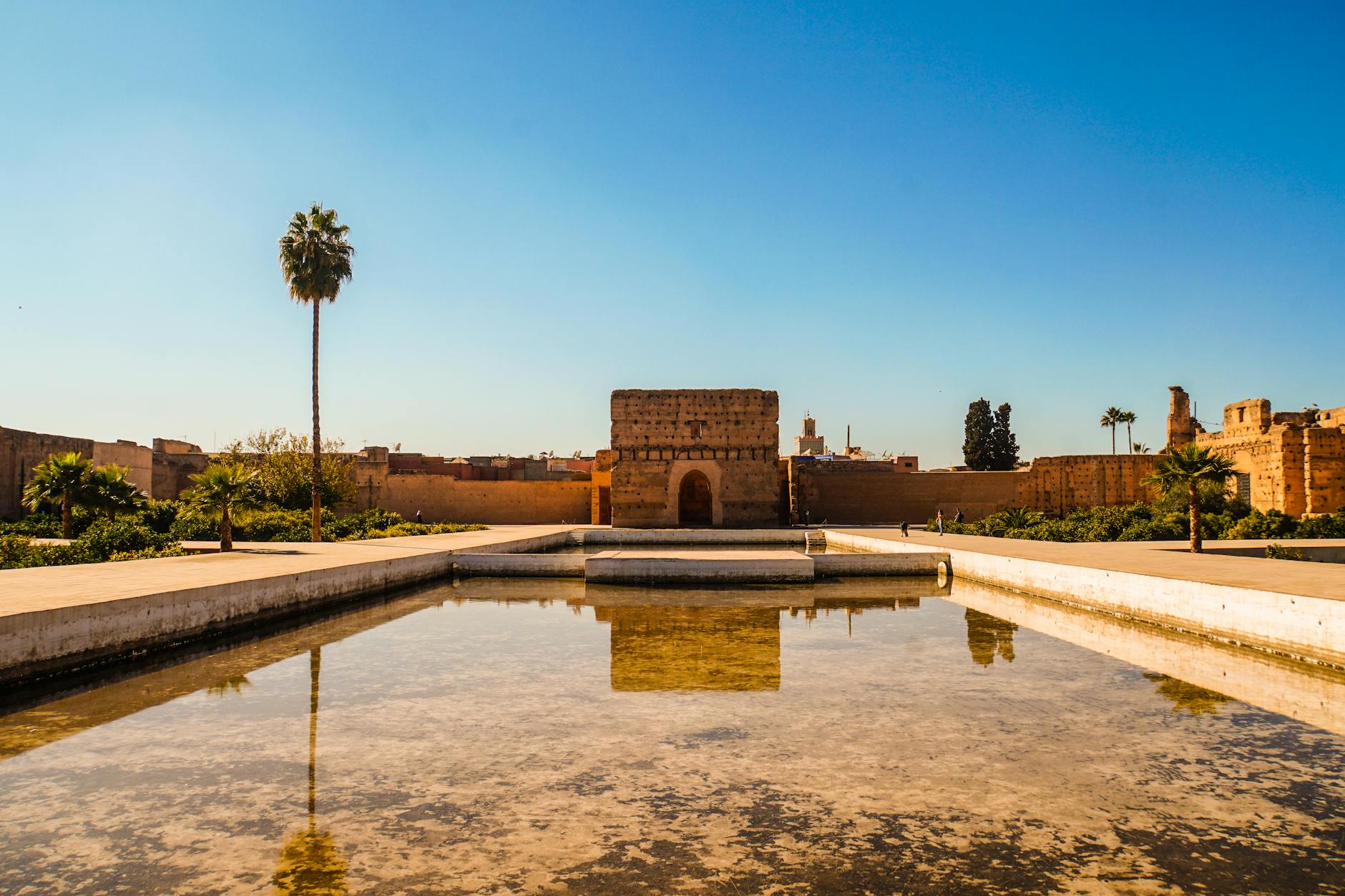
El Badi Palace in Marrakech under a clear blue sky with a reflecting pool in the foreground.

El Badi Palace

Marrakesh, Morocco
i

El Badi Palace in Marrakech under a clear blue sky with a reflecting pool in the foreground.

Photo by Domenico Bertazzo

Time changes many places, but some structures gather stories while stones fall away. El Badi Palace, long-ruined yet fiercely impressive, sits at the heart of Marrakesh’s old kasbah sector, drawing visitors not just for what remains, but for what can be imagined. Once a lavish showcase for a Saadian sultan, these vast courtyards hold echoes of golden days and the laughter of royal guests. Birds wheel overhead now, and shadows slip quietly along faded orange walls, tracing patterns etched by centuries of sun and memory.

Visiting Info

Currency
Entrance fee
70 MAD
Hours
Opening hours
Monday: 9:00 AM – 5:00 PM
Tuesday: 9:00 AM – 5:00 PM
Wednesday: 9:00 AM – 5:00 PM
Thursday: 9:00 AM – 5:00 PM
Friday: 9:00 AM – 5:00 PM
Saturday: 9:00 AM – 5:00 PM
Sunday: 9:00 AM – 5:00 PM

Contact Information

Location
Address
Ksibat Nhass, Marrakech 40000, Morocco

Planning your visit

A journey to El Badi Palace rewards a bit of advance planning. Set within Marrakesh’s busy historic area, the site welcomes all types of explorers, though some forethought helps ensure a smoother experience. Marrakesh heats up quickly in summer, and mid-morning or late afternoons bring more comfortable weather and fewer crowds. Most visitors reach the palace on foot, hailing a taxi, or riding a horse-drawn carriage; each offers a different slice of city life. Entry fees remain reasonable, though there is a ticket window at the entrance that sometimes gets busy during peak tourist months. Scattered shade and a few benches let families or older visitors rest, yet the ground underfoot can be uneven in places, especially around the impressive sunken courtyard.

  • Best time to visit: Spring (March–May) or autumn (September–November); mornings and late afternoons for cooler air and gentler light
  • How to get there: Walking from Jemaa el-Fnaa (about 15 minutes); by petit taxi; or calèche (horse-drawn carriage—popular for a local touch)
  • Accessibility: Wide, open spaces with some steps and rough stones; moderate suitability for wheelchairs and families; be mindful of uneven pathways
  • Average visit duration: 1 to 2 hours, depending on pace and interest in details

Must see stuff

Inside El Badi Palace, the sweep of ruin gives way to sharp detail and wonder. Cool stone corridors and riotous stork nests reveal both grandeur and gritty reality. The palace’s vast sunken courtyard, with its four gardens and large water basins, creates a striking first impression. Each garden once bloomed with citrus and pomegranate—now echoes linger as bursts of green reclaim space. Don’t miss the restored minbar (pulpit) of the Koutoubia Mosque, a rare wooden artifact displayed in one of the palace chambers. The towers, though weathered, deliver panoramic views over the palms and city roofs. Guides share tales that bring distant centuries to life, while observant guests often notice delicate tilework and secret chambers. Locals slip in, pausing in shade or using the space for quiet prayer, adding real life to ancient walls.

  • Key sights or features: The central sunken courtyard; remaining walls and towers; the Koutoubia mosque minbar exhibit; underground passages
  • Unique experiences: Climb to tower tops for sweeping city views; listen to guides’ dramatic stories; greet the resident storks nesting above the palace walls
  • Photo-worthy locations: Ornate arches against sky, shadowy colonnades, and reflective pools (especially near sunrise or sunset)
  • Cultural or historical facts: El Badi means “The Incomparable” in Arabic—built in the 16th century using tribute from Portugal, then stripped by later sultans to decorate new palaces further north

Tips for your visit

Small details can turn a brief trip to El Badi Palace into a lasting memory. While the main courtyard and exhibits hold the biggest draw, stray paths sometimes lead visitors to peaceful corners missed by busy groups. Early entry or visits near closing time reduce jostling with big tour parties. The sun presses hard on open spaces, so hats, water, and comfortable shoes come highly recommended. Official signage, though present, sometimes leaves gaps; hiring a local guide or downloading a reliable history app helps fill in the story. Some local etiquette is easy to follow—quiet voices in shaded chambers, respect for small prayer sites, and a friendly greeting to the caretaker sweeping the stones.

  • Best times to avoid crowds: Morning opening hour and last 60 minutes before closing
  • What to bring: Sunscreen, reusable water bottle, hat, sturdy walking shoes, camera or phone for photos
  • Local etiquette: Dress modestly, greet staff politely, be mindful if prayers are happening in side alcoves
  • Safety and comfort: Mind the uneven stones and stairwells; keep valuables secure and watch step in shaded corridors
El Badi Palace – Tickets, Hours & Visitor Guide