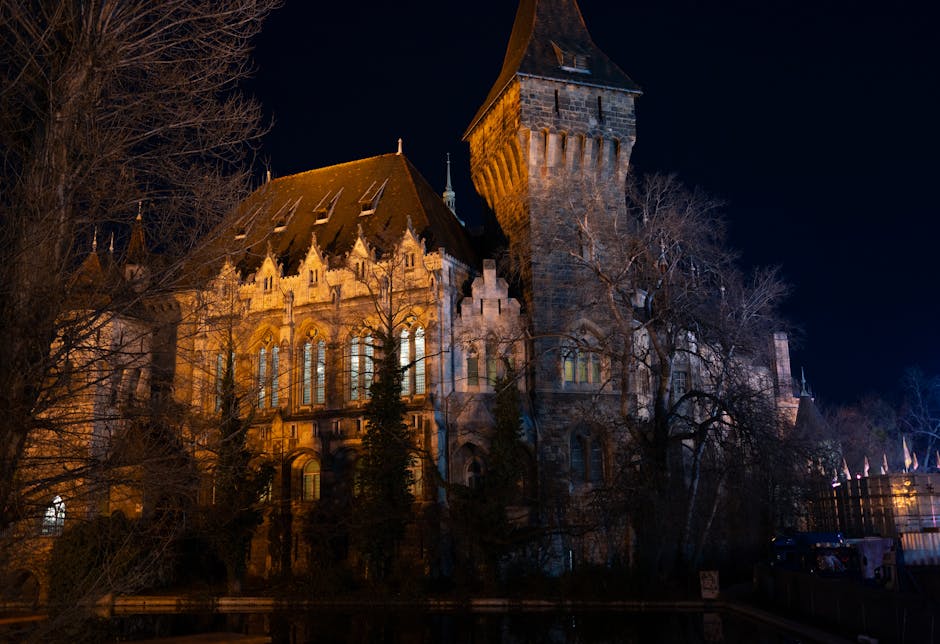
Dramatic view of Vajdahunyad Castle illuminated at night, capturing the Gothic Revival architecture.

Vajdahunyad Castle

Budapest, Hungary
i

Dramatic view of Vajdahunyad Castle illuminated at night, capturing the Gothic Revival architecture.

Photo by Alex Moliski

Rising from the green embrace of City Park, turrets and stone arches leap out in a storybook silhouette—the kind that promises secrets and tall tales. Vajdahunyad Castle, with its faded grandeur and patchwork of historic walls, sets the stage for past centuries. Visitors step onto gravel paths and pause beneath medieval gateways, half-expecting to spot a phantom knight or the glimmer of a festival torch. Yet, every curve and corner of this castle invites not fear but fascination: a treasure tucked in Budapest’s living heart.

Visiting Info

Currency
Entrance fee
1500 HUF
Hours
Opening hours
Monday: 10:00 AM – 5:00 PM
Tuesday: 10:00 AM – 5:00 PM
Wednesday: 10:00 AM – 5:00 PM
Thursday: 10:00 AM – 5:00 PM
Friday: 10:00 AM – 5:00 PM
Saturday: 10:00 AM – 5:00 PM
Sunday: 10:00 AM – 5:00 PM

Contact Information

Location
Address
Budapest, Vajdahunyad stny., 1146 Hungary

Planning your visit

To truly enjoy Vajdahunyad Castle, plan your timing with care. Spring and early autumn bring the softest light and gentlest crowds—perfect for lingering under ancient elms by the moat. City Park’s wide boulevards funnel guests from Heroes’ Square right to the castle steps, with the Metro or a leisurely stroll both easy options. While admission to the grounds is free, exhibitions or museum entry require tickets. Mornings tend to be quieter, with afternoons and weekends busier—especially during festivals or local events. Parents and grandparents will find most paths and public areas stroller- and wheelchair-friendly, though a few cobbled spots require some care.

  • Best time to visit: Weekday mornings in spring or early fall offer the calmest ambiance and the prettiest light for photos.
  • How to get there: Board Metro Line 1 to Széchenyi Fürdő, then walk five minutes through City Park. Buses and trams also serve the area.
  • Accessibility: Most exterior areas and the Agriculture Museum offer ramps and smooth walkways for families and seniors; a few interior staircases are less accessible.
  • Average visit duration: Plan for 1–2 hours to explore outside and browse the museum exhibits.

Must see stuff

This castle rewards curiosity: each facade, statue, and arch tells a fragment of Hungarian history. Designed in the late 1800s to mimic famous buildings across Hungary, Vajdahunyad mixes Gothic spires with Baroque domes and Renaissance windows. The main courtyard bustles with musicians and, sometimes, local festivals. Inside, the Museum of Hungarian Agriculture surprises with quirky old grape presses and traditional plows. Outdoors, the castle’s reflecting moat lures photographers, while the hidden corners—especially near the Apostles’ Tower—whisper of quiet moments away from crowds. History fans notice the statue of celebrated king Matthias Corvinus, while kids chase ducks around shaded benches.

  • Key sights or features: Towering clock towers, the stunning Baroque-style chapel, the intricate Romanesque gate, and the unique statue of the Anonymous chronicler.
  • Unique experiences: Guided tours that unlock castle legends, sunset strolls along the moat, and concerts held in the main courtyard on summer evenings.
  • Photo-worthy locations: Reflections on the moat bridge, gargoyles above the Gothic hall, and sunlit walkways framed by old trees.
  • Cultural or historical facts: Originally, the castle began as a temporary structure for Hungary’s 1896 Millennium celebrations; after locals fell in love with it, builders replaced the cardboard with lasting stone.

Tips for your visit

A smooth exploration of Vajdahunyad Castle comes down to some advance wisdom. Early arrivals mean fewer fellow travelers and softer, slanted light—helpful for photos and peaceful walks. Comfortable shoes are a must, as much of the castle’s magic hides in the details—intricate reliefs or woodland animals in sculpted corners. While the castle hosts lively festivals (and occasional food markets), the main museum closes on Mondays, so plan accordingly. Respecting local habits goes a long way: keep noise low inside the museum, and don’t feed wildlife around the moat, since it disturbs nesting birds. In colder seasons, moat views can feel chilly; bring layers, especially for kids.

  • Best times to avoid crowds: Arrive before 10 a.m., or visit on weekday afternoons outside the main summer and festival periods.
  • What to bring: A camera for striking architecture, a bottle of water, and sturdy walking shoes.
  • Local etiquette or rules: Refrain from picnicking on sculptures or climbing ramps not marked for public access. Media use (like drones) faces restrictions—check signage or ask staff.
  • Safety or comfort advice: Watch for uneven stones in older courtyards; consider sun protection in peak summer months, as shade can be patchy.