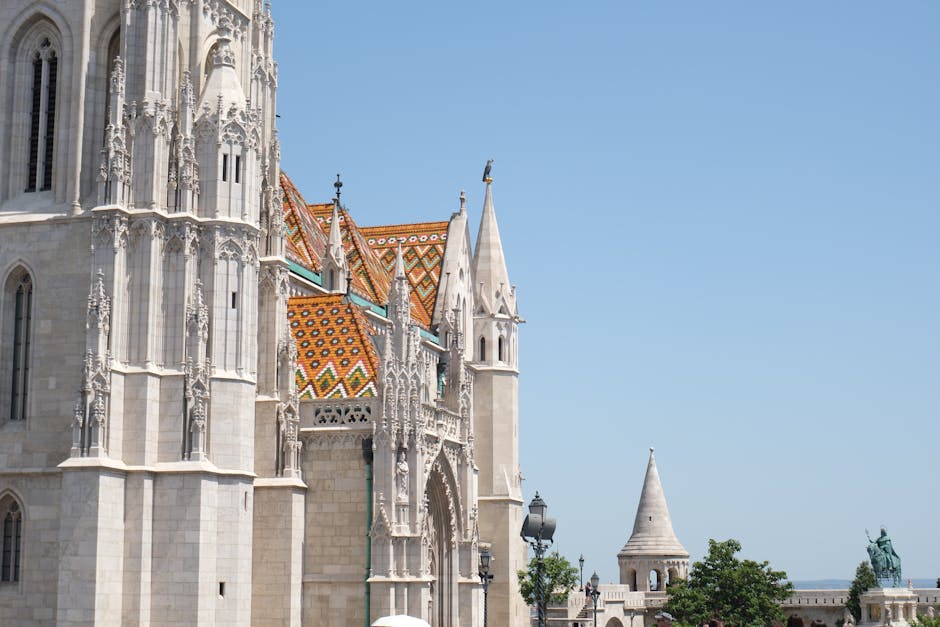
Beautiful low-angle view of Dohany Street Synagogue's ornate architecture in Budapest, Hungary.

Dohány Street Synagogue

Budapest, Hungary
i

Beautiful low-angle view of Dohany Street Synagogue's ornate architecture in Budapest, Hungary.

Photo by KITSUN YUEN

The Dohány Street Synagogue towers between shaded trees and the pulse of Budapest’s busy Seventh District, its striped brick walls casting long shadows at midday. The scent of sweet pastries from nearby cafés blends with distant laughter. On clear mornings, sunlight glints from golden domes, inviting visitors past wrought iron gates and into a world where sorrow, faith, and resilience all live side by side. Europe’s largest synagogue, Dohány Street, welcomes the curious and the reverent, offering a glimpse into stories both monumental and intimate—etched in stone, wood, and memory.

Visiting Info

Currency
Entrance fee
10700 HUF
Hours
Opening hours
Monday: 10:00 AM – 4:00 PM
Tuesday: 10:00 AM – 4:00 PM
Wednesday: 10:00 AM – 4:00 PM
Thursday: 10:00 AM – 4:00 PM
Friday: 10:00 AM – 2:00 PM
Saturday: Closed
Sunday: 10:00 AM – 4:00 PM

Contact Information

Location
Address
Budapest, Dohány u. 2, 1074 Hungary

Planning your visit

Thoughtful planning ensures a deeper experience at Dohány Street Synagogue. Peak seasons bring crowds, especially in summer and over major Jewish holidays, so travelers who value quiet moments should aim for off-peak hours. Central Budapest’s reliable trams and metro lines drop visitors a short walk from the synagogue’s ornate gates. Wheelchair ramps and thoughtful signage make exploring friendly for most, though some older sections feature cobblestones. Expect security checks at the entrance; a respectful pace is appreciated throughout the site.

  • Best time to visit: Mornings on weekdays (April–June or September–October) for fewer crowds and better light.
  • How to get there: Easily accessible by Metro Line 2 (Astoria stop), Tram 47 or 49, or a short walk from Deák Ferenc Square.
  • Accessibility: Suitable for families, and most areas are accessible for wheelchairs and strollers; a few narrow passageways and steps remain.
  • Average visit duration: 60–90 minutes for the synagogue, gardens, and museum; guided tours may last two hours.
Must see stuff

Step through the arched entry and marvel at the Neo-Moorish architecture. Inside, rows of wooden pews line up beneath colored glass and gilded balconies. The main sanctuary buzzes softly with hushed awe. Just outside, a weeping willow sculpture shines above the memorial garden, its metal leaves engraved with the names of Hungarian Holocaust victims. Tucked behind leafy courtyards, the Jewish Museum adds layers of personal and religious history.

  • Main Sanctuary: Intricate frescos, grand organ, and twin towers—the heart of the synagogue.
  • The Raul Wallenberg Memorial Park: Features the shimmering Tree of Life sculpture and tribute to Swedish diplomat Wallenberg.
  • Jewish Museum: Personal artifacts, moving exhibitions, and stories behind heroic resistance.
  • Heroes’ Temple: A peaceful side-chapel honoring Hungarian Jews lost in World War I.
  • Unique experiences: Guided tours share personal stories and uncover details you’ll miss alone. Quiet moments near the Tree of Life offer powerful reflection.
  • Photo-worthy spots: The synagogue’s façade at golden hour, stained glass windows, and the silver-leafed willow tree.
  • Cultural facts: Built in 1859, Dohány Street Synagogue survived war, occupation, and restoration; today, it’s both a living place of worship and a beacon of remembrance for Jewish culture in Budapest.

Tips for your visit

A visit runs smoother with the right gear and a bit of local awareness. Modest clothing—covering shoulders and knees—respects both tradition and current practices; scarves and yarmulkes are often available at the door. Some areas can be breezy, so a light jacket might help. Large bags must be checked at security. Cameras are welcome in most spaces, though flash can disrupt the quiet mood. Sincere silence near memorials honors the lives commemorated there. Families with young children may want to talk through expectations beforehand—the overall mood leans respectful more than playful.

  • Best times to avoid crowds: Early weekday mornings, just as the synagogue opens.
  • What to bring: Comfortable walking shoes, refillable water bottle, camera (no flash for indoor photos), and a respectful attitude.
  • Local etiquette: Speak softly indoors, and avoid eating, drinking, or using cell phones inside main spaces.
  • Safety and comfort: Stay hydrated in summer, and mind uneven stones in garden paths and courtyards.