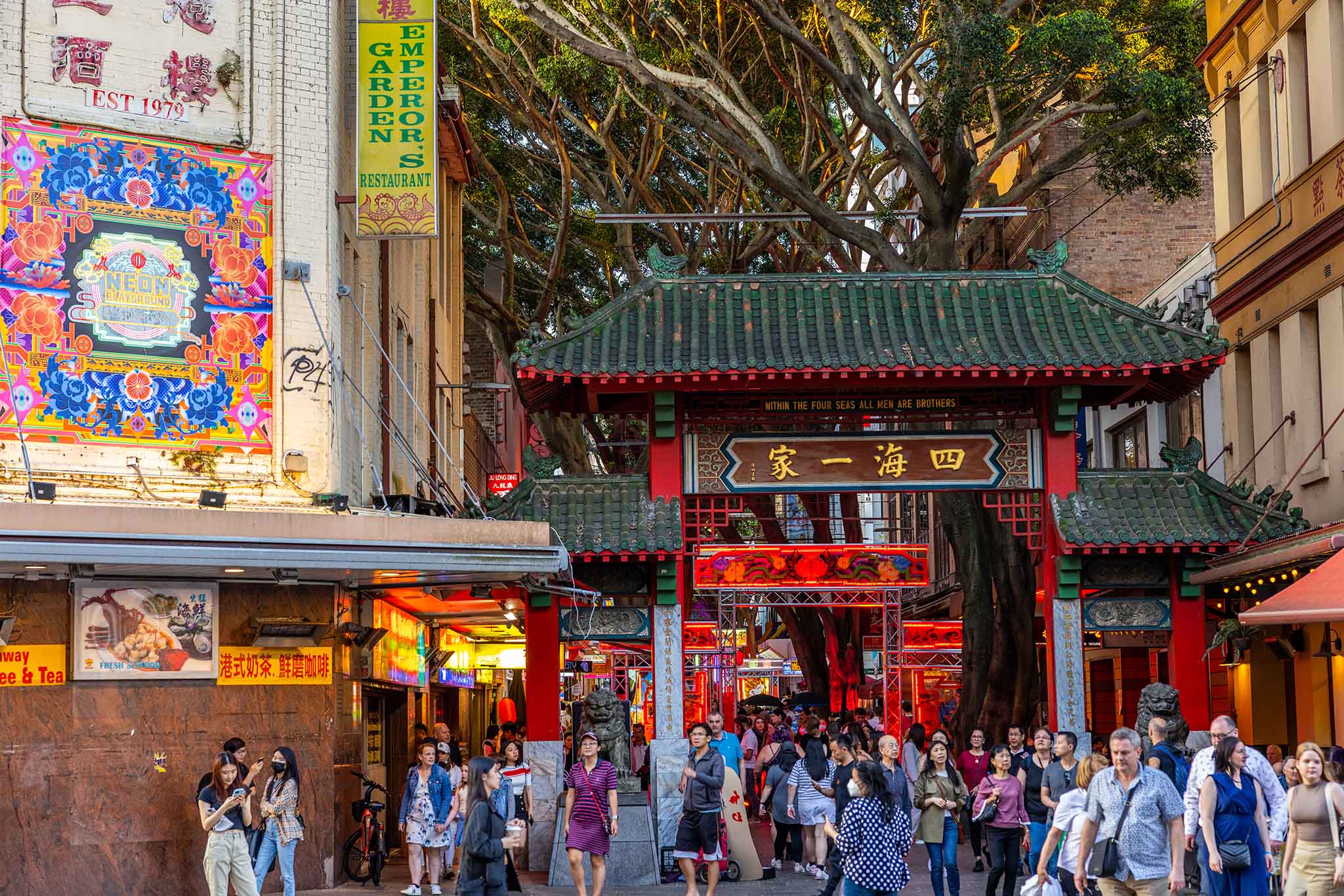
Beautiful view of Chinatown Sydney

Chinatown Sydney

Sydney, Australia
i

Beautiful view of Chinatown Sydney

Buzzing with life day and night, Chinatown Sydney is a place where history, community, and modern city rhythms mingle on compact streets. Here, vibrant lanterns sway over food stalls, locals haggle in open-air markets, and every turn presents the flavors, sights, and sounds of generations past and present. Art and aroma fill the lanes—a sensory feast for anyone ready to wander, eat, and discover.

Visiting Info

Currency
Entrance fee
Free
Hours
Opening hours
Monday: Open 24 hours
Tuesday: Open 24 hours
Wednesday: Open 24 hours
Thursday: Open 24 hours
Friday: Open 24 hours
Saturday: Open 24 hours
Sunday: Open 24 hours

Contact Information

Location
Address
82/84 Dixon St, Haymarket NSW 2000, Australia

Planning your visit

When considering a trip to Chinatown Sydney, a little planning pays off. This lively hub draws crowds for good reason, so timing and logistics matter. Located in the heart of Haymarket, the district forms a gateway between Sydney’s Central Station and Darling Harbour. Most activities stay open late, but crowds peak on weekends, especially around Friday night markets. While entry is free, bring cash for food stalls and quirky gift shops—some spots don’t accept cards. Expect a lively, bustling energy, but also occasional wait times, especially at popular eateries.

  • Best time to visit: Late afternoons on weekdays for a relaxed vibe; weekends for festival buzz and Friday night markets
  • How to get there: Short walk from Central Station, or use the light rail (Paddy’s Markets stop) and numerous bus routes
  • Accessibility: Flat pavements suit strollers and wheelchairs; ramps available at shopping arcades and markets
  • Average visit duration: Two to four hours; longer if you linger for a meal or explore side streets


Must see stuff

Chinatown Sydney offers a tapestry of experiences, blending classic attractions with local secrets. The main stretch—Dixon Street—pulses with color and activity, anchored by imposing lion gates at either end. Next door, the Golden Water Mouth sculpture marks the entrance with modern flair. Joyful crowds gather at street-food stands, noodle houses, bakeries, tea shops, and tiny grocery stores. Just behind, the hidden laneways of Little Hay Street and Factory Street reveal murals and quiet spots for a breather. Paddy’s Markets buzz with bargain hunting; the Chinese Garden of Friendship offers calm for those seeking a slower pace. Cameras come out for ornate architecture, neon lights, and dishes as beautiful as they are delicious. The lively Chinese New Year festival transforms the area, but every season has its own unique draw.

  • Dixon Street: Lanterns, lion statues, and endless restaurants in the heart of Chinatown
  • Paddy’s Markets: Souvenirs, fresh produce, and a glimpse into daily shopping rituals
  • Chinese Garden of Friendship: Classical landscaping, koi ponds, and tranquil paths (small entry fee)
  • Golden Water Mouth sculpture: Photo-worthy landmark at the main gateway
  • Street art and hidden alleys: Murals, quiet corners, and locals playing chess or mahjong
  • Chinese New Year celebrations: Parades, lion dances, and fireworks in late January or February
  • Authentic food experiences: Soup dumplings at hole-in-the-wall spots, BBQ duck from window displays, and custard buns from bustling bakeries

Tips for your visit

Chinatown Sydney rewards those who pause and explore beyond the surface. Early evening finds eateries at their tastiest and least crowded—plan dinner before the peak. Carry water and an empty stomach for rich flavors and varied snacks. Walking shoes help with tiled lanes and sidetrips to Darling Harbour or Capitol Theatre next door. Practice patience when queueing at famous restaurants; popularity means a short wait, but turnover is quick. Locals appreciate a polite greeting, and some shop owners prefer cash. While safe and well-lit, keep an eye on bags at night due to the constant flow of people. For families, strollers blend in easily, but young kids may become restless during busy festival times.

  • Best times to avoid crowds: Mid-afternoon or early weekday evenings
  • What to bring: Water bottle, comfortable shoes, camera, and cash for smaller retailers
  • Local etiquette or rules: Respect personal space in queues, thank vendors with a nod or smile, and avoid flash photography inside small shops
  • Safety or comfort advice: Stay alert with valuables during nighttime festivals, and use bathrooms in nearby malls or arcades