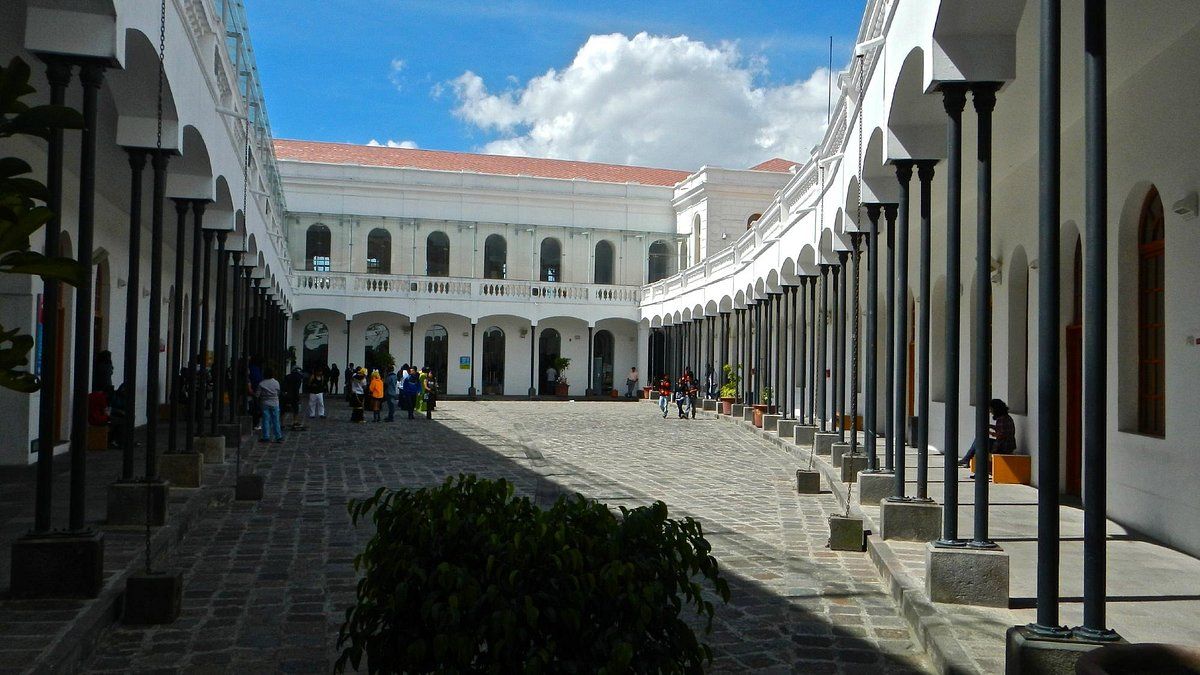
Beautiful view of Contemporary Art Center of Quito

Contemporary Art Center of Quito

Quito, Ecuador
i

Beautiful view of Contemporary Art Center of Quito

Oversized windows fill every corridor with shifting equatorial light. Concrete pillars, thick as a tree trunk, ground hushed galleries where art tangled with politics, history, and everyday noise. The Contemporary Art Center of Quito stands as a gathering place for fresh ideas, bold installations, and lively conversations—a monument to Ecuador’s past and a laboratory for tomorrow’s creative voices. Here, visual storytelling stretches across salons, balconies, and even the rooftop, where volcanic ridges frame the city’s ceaseless buzz.

Visiting Info

Currency
Entrance fee
Free
Hours
Opening hours
Monday: Closed
Tuesday: Closed
Wednesday: 9:00 AM – 4:30 PM
Thursday: 9:00 AM – 4:30 PM
Friday: 9:00 AM – 4:30 PM
Saturday: 10:00 AM – 5:30 PM
Sunday: 10:00 AM – 5:30 PM

Contact Information

Location
Address
Montevideo, y, Quito 170103, Ecuador

Planning your visit

Careful planning unlocks the best of the Contemporary Art Center of Quito. The building, a repurposed military hospital, sits between the city’s busy Mariscal Sucre neighborhood and the steep edges of El Tejar. Most visitors arrive by taxi or city bus, though the nearby bus stop and bike-friendly roads give day-trippers a handful of options. While walk-ins are welcome, popular weekends and special exhibition openings fill lobbies quickly. Late mornings or weekday afternoons generally offer more space for reflection or exploration.

  • Best time to visit: Late morning or weekday afternoons; March to June brings drier weather.
  • How to get there: Taxis from central Quito take 10 to 15 minutes; city buses stop a short walk away; some bike lanes nearby.
  • Accessibility: Ramps and elevators serve most floors—families with strollers and seniors will find access relatively smooth, though a few upper balconies lack railings.
  • Average visit duration: Two to three hours, longer if a major exhibition is on display or a workshop is in session.

Must see stuff

Inside the Contemporary Art Center, sunlight moves through generous atriums not just for looks—the entire building invites visitors to pause and reflect. Before passing the security desk, the echo of conversation rises from the main hall, where local school groups sometimes study installations or play among the museum’s inner courtyards. Permanent and rotating exhibitions fill vast, white rooms. Each offers a different perspective, from indigenous symbolism and street art to video installations that surprise visitors at every turn. Upstairs, a rooftop terrace reveals panoramic views of Quito’s ridges and the spires of the old town—a favorite for artists and photographers, especially near dusk.

  • Museum’s grand staircase: This sculptural centerpiece leads into open-air courtyards, drawing natural light and fresh air deep inside.
  • Rotating exhibitions: Dos pulsos, Emergentes, and regional retrospectives often bring international and Ecuadorian artists together—check exhibit calendars before your visit.
  • Workshops and artist studios: Regular public art workshops give guests hands-on experience; emerging artists frequently open their work spaces for questions.
  • Photo opportunities: The rooftop terrace, with its view of Panecillo hill and the city skyline, and the main hall’s spiral ramp impress most camera-toting visitors.
  • History underfoot: Plaques and small displays recount the building’s past as a military hospital, adding layers to the creative transformation visitors now see.

Tips for your visit

With a little preparation, a trip to the Contemporary Art Center becomes much more than a gallery walk. Crowds surge during big exhibit launches and weekends, but even then, quiet pockets—like the reading room or a secluded second-floor bench—offer space to rest and observe. While lively, the center sits along a busy street where traffic noise sometimes seeps indoors. Plan for Quito’s unpredictable highland weather; sunshine and drizzle often trade places before noon. Outside, food carts and small cafés provide local snacks—inside, resources for families and groups abound, but the on-site café may close unexpectedly.

  • Best times to avoid crowds: Early afternoons on weekdays or right at opening.
  • What to bring: Water bottle (no food or drink in exhibit halls), light jacket, camera, and comfortable walking shoes—concrete floors can be hard on feet.
  • Local etiquette or rules: Photography is allowed in most non-ticketed areas, but flash is forbidden; some exhibits require silence or minimal talking.
  • Safety or comfort advice: Quito sits at high altitude; take breaks if feeling short of breath and drink plenty of water, especially after climbing stairs or visiting the rooftop.

Similar Attractions