Google Places photo

Ao Dai Museum

Among the leafy outskirts of a bustling metropolis, a place quietly honors Vietnam’s most iconic garment. The Ao Dai Museum invites visitors into a world of fabric and tradition, where every curve of silk relays the history and culture of the Vietnamese people. Far from the usual downtown landmarks, this museum draws those who wish to understand the country through detail, heritage, and living art. Each visit weaves together rich aesthetics with daily life, creating a rare pause in Vietnam’s urban rush.

Visiting Info

Currency
Entrance fee
100000 VND
Hours
Opening hours
Monday: 8:30 AM – 5:30 PM
Tuesday: 8:30 AM – 5:30 PM
Wednesday: 8:30 AM – 5:30 PM
Thursday: 8:30 AM – 5:30 PM
Friday: 8:30 AM – 5:30 PM
Saturday: 8:30 AM – 5:30 PM
Sunday: 8:30 AM – 5:30 PM

Contact Information

Location
Address
Bảo tàng Áo Dài, 206/19/30 Long Thuận, P, Long Phước, Hồ Chí Minh, Vietnam

Planning your visit

Nestled in District 9, the Ao Dai Museum sits about 30 kilometers from the city center, best reached by taxi or ride-share. The museum lies within a lush, shaded garden, providing a respite from traffic and concrete. Traffic outside the central districts dies down by late morning, making the journey in the early afternoon smoother. Tickets can be bought on arrival, but tour groups sometimes fill the galleries; weekday mornings offer the calmest experience. The peaceful location suits family groups and older visitors alike, though uneven paths in the garden might be tricky for those with mobility issues.

  • Best time to visit: Weekday mornings in the dry season (December to April) for thin crowds and bright garden walks
  • How to get there: Taxi or ride-share from central Ho Chi Minh City; some buses connect, but require extra walking
  • Accessibility: Gardens and houses have some steps and uneven walkways; families and seniors may want to bring strollers or canes
  • Average visit duration: 1.5 to 2.5 hours, with extra time for tea or photos in the gardens

Must see stuff

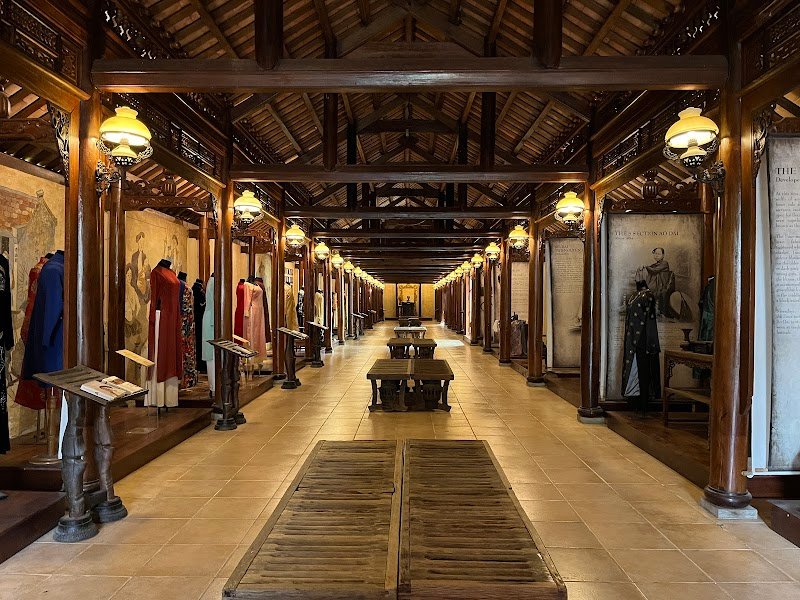
Stepping into the museum’s grounds, visitors cross a wooden bridge over a lotus pond—a favorite spot for photos—before entering a complex of traditional wooden houses. Each room tells its own story, from the humble beginnings of the ao dai to its place on world fashion runways. Original costumes worn by famous Vietnamese women fill glass cases, while tailors’ tools and vintage photographs line the walls. Beyond the display rooms, workshops and art corners invite guests to fold paper lotus flowers or try on ao dai themselves. A small theater sometimes features live performances of music and dance. Outside, bamboo groves and water lilies offer tranquil corners for reflection and snapshots.

  • Key sights or features: Exhibition halls with ao dai from different historical eras; the lotus pond and traditional wooden longhouses
  • Unique experiences: Dressing up in ao dai for photos; making handcrafts in cultural workshops
  • Photo-worthy locations: The bridge over the lotus pond, flower-lined walkways, and the rustic workshop spaces
  • Cultural or historical facts: Museum created by designer Si Hoang to preserve ao dai history; many costumes on display belonged to important artists and activists

Tips for your visit

Though the Ao Dai Museum drapes itself in tranquility, small details can make the experience even better. Arriving before tour groups yields quiet halls and the best light for garden photos. The heat can be strong after midday, so hats and water bottles are a must. Museum staff usually welcome photo-taking if asked, but some special costumes come with no-photography signs. Trying on an ao dai is popular, so coming early means more choices and less waiting. Slow down in the garden café for a cup of iced tea—watching the lotus flowers drift is part of the art of visiting here. While some English explanations appear on signs, not every exhibit is translated, so consider hiring a local guide for deeper stories.

  • Best times to avoid crowds: Weekday mornings before 11am
  • What to bring: Hat, water, camera, sunscreen, comfortable shoes
  • Local etiquette or rules: Ask before touching displays; remove shoes if invited into certain rooms; dress conservatively to respect the cultural setting
  • Safety or comfort advice: Paths can be slippery after rain; bring mosquito repellent if visiting late afternoon

Similar Attractions