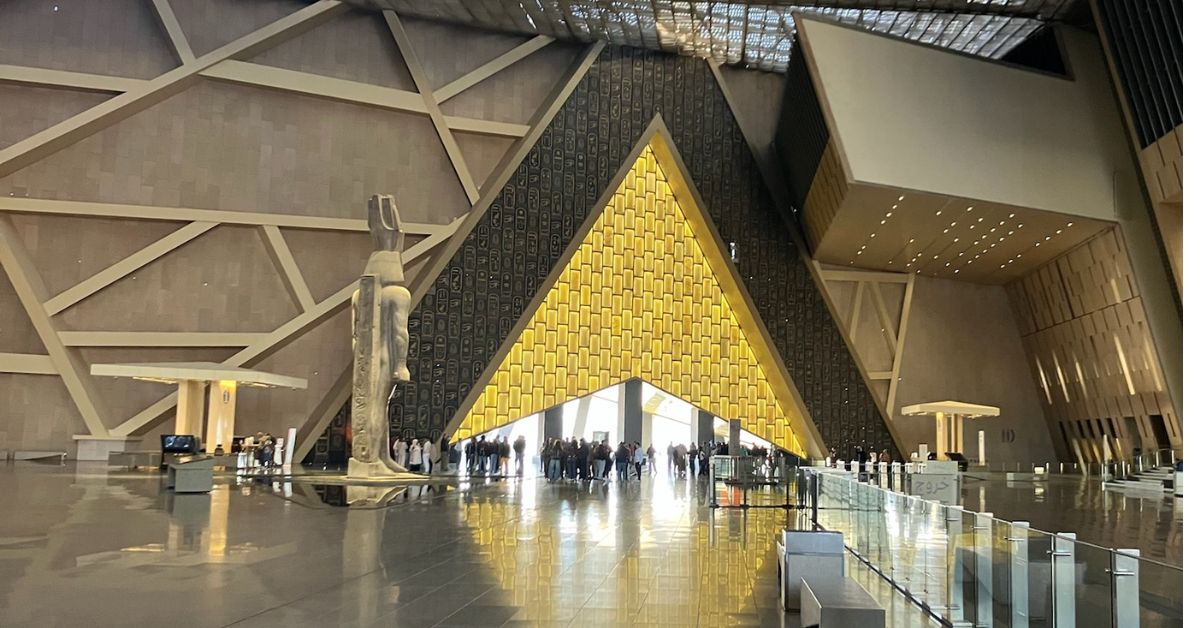
Beautiful view of The Grand Egyptian Museum

The Grand Egyptian Museum

Cairo, Egypt
i

Beautiful view of The Grand Egyptian Museum

In the desert light on the edge of Giza, the Grand Egyptian Museum rises like a modern monument to the world’s oldest civilization. Sitting near the legendary pyramids, this museum invites visitors to step into the heart of ancient Egypt, surrounded by treasures once lost to sand and time. Designed to inspire awe, the museum blends sweeping architecture with a collection so vast it redefines how to see history up close. Here, artifacts that shaped the world finally find a home that matches their stories.

Visiting Info

Currency
Entrance fee
600 EGP
Hours
Opening hours
Monday: 9:00 AM – 6:00 PM
Tuesday: 9:00 AM – 6:00 PM
Wednesday: 9:00 AM – 9:00 PM
Thursday: 9:00 AM – 6:00 PM
Friday: 9:00 AM – 6:00 PM
Saturday: 9:00 AM – 9:00 PM
Sunday: 9:00 AM – 6:00 PM

Contact Information

Location
Address
Cairo - Alexandria Desert Rd, Kafr Nassar, Al Haram, Giza Governorate 3513204, Egypt

Planning your visit

The Grand Egyptian Museum welcomes culture-seekers, families, and history buffs year-round, but some simple planning can turn a good day into an unforgettable one. The museum’s scale means there’s plenty of space, but weekends and afternoons, especially in high season, can still draw big crowds. Getting to the museum is straightforward from Cairo or Giza, and ticketing is organized but sometimes busy. Booking ahead is wise, especially for those hoping to join a special tour or see rare exhibits. Bring patience and excitement—this is history at its grandest, but also its most popular.

  • Best time to visit: Early mornings or late afternoons, October through April. Cooler weather, softer light, smaller crowds.
  • How to get there: Taxi and ride-shares from downtown Cairo or Giza are direct and affordable. Some hotels offer shuttles. City buses stop nearby, but traffic can slow arrival.
  • Accessibility: Ramps, elevators, and wide walkways serve families, seniors, and those with limited mobility. Stroller-friendly, but plan for some walking.
  • Average visit duration: 3–5 hours to enjoy main highlights, though some visitors spend a full day.

Must see stuff

From the moment visitors step through the museum’s glass entrance, ancient wonders unfold by the dozen. The Grand Staircase climbs beside colossal statues. Bright galleries display the golden treasures of boy king Tutankhamun. Creative exhibits and digital displays help the past feel vivid and close. Beyond grand showcases, smaller rooms tell quiet stories about daily life in Egypt thousands of years ago. Here, every corner holds a secret, and every artifact is a window to another age.

  • The Grand Staircase: Flanked by towering pharaohs, this dramatic ascent is the museum’s beating heart and an unmissable photo spot.
  • Tutankhamun’s Galleries: See the famous golden mask, jewelry, and more—over 5,000 items, many never shown before.
  • The Solar Boat: The 4,500-year-old funerary boat, painstakingly reconstructed, gives a sense of royal journeys through the afterlife.
  • Children’s Museum: Hands-on exhibits and interactive screens make stories of ancient Egypt come alive for kids and curious adults.
  • Changing Exhibitions: Rotating displays highlight specialist finds, lesser-known stories, and modern connections to Egyptian craft.
  • Photo highlights: The vast glass façade with the pyramids rising nearby; the sparkling treasures of the New Kingdom; and quiet courtyards for a rare moment of peace.
  • Cultural fact: Many pieces have left storage for the first time in nearly a century, assembled here according to ancient themes, not just pharaohs’ reigns.

Tips for your visit

The Grand Egyptian Museum rewards both the wide-eyed newcomer and the careful planner. Comfort and curiosity go hand in hand—comfy shoes matter almost as much as a camera. Plenty of signs appear in Arabic and English, but some descriptions remain sparse, so a guided tour or audio guide adds depth. Security is tight, and some exhibits have ‘no flash’ rules to protect artifacts. Food courts and quiet corners help families relax, though snacks and water from outside get checked at the entrance. Souvenir shops sell unique items but, like museums everywhere, prices lean high. Sometimes, restoration work closes parts of the museum with little notice—flexibility is always helpful.

  • Best times to avoid crowds: Midweek mornings, and Ramadan afternoons, tend to be tranquil.
  • What to bring: Water bottle (refill inside), sunscreen, fully charged phone or camera, walking shoes. Headphones for audio guide apps.
  • Local etiquette: Modest dress is courteous. Ask before photographing people. Respect ropes and barriers—some artifacts are especially fragile.
  • Safety and comfort: Bags are scanned on entry. Air-conditioning keeps things cool. Staff can help with lost items or translation needs.