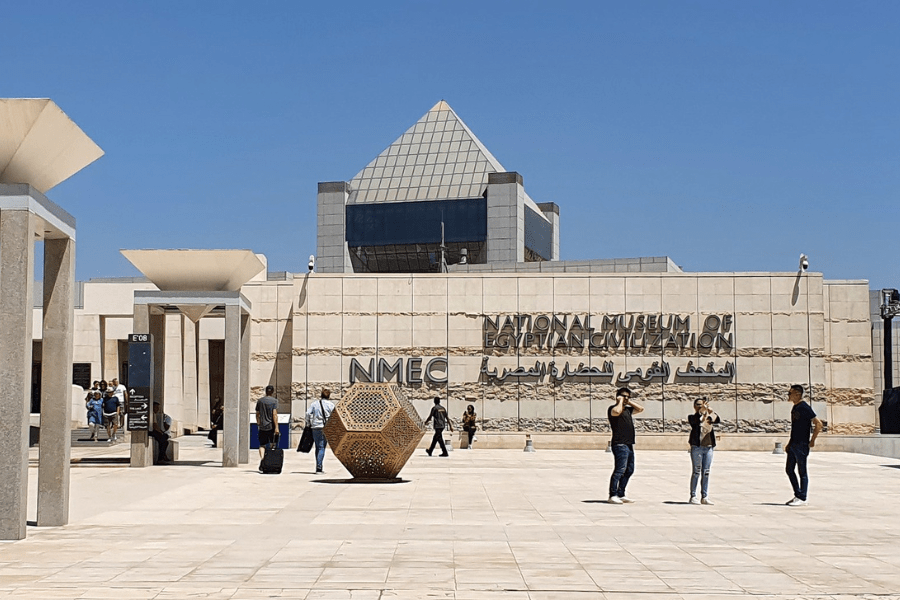
Beautiful view of The National Museum of Egyptian Civilization

The National Museum of Egyptian Civilization

Cairo, Egypt
i

Beautiful view of The National Museum of Egyptian Civilization

The National Museum of Egyptian Civilization stands as Egypt’s ambitious introduction to its own story, told through objects that span millennia. Rather than focusing only on gilded treasures, this museum unpacks daily life, ingenuity, and spiritual traditions using rich displays. For any traveler keen on understanding Egypt in context—not just through the lens of ancient pharaohs—this landmark delivers a fresh, inviting perspective.

Visiting Info

Currency
Entrance fee
240 EGP
Hours
Opening hours
Monday: 9:00 AM – 5:00 PM
Tuesday: 9:00 AM – 5:00 PM
Wednesday: 9:00 AM – 5:00 PM
Thursday: 9:00 AM – 5:00 PM
Friday: 9:00 AM – 5:00 PM
Saturday: 9:00 AM – 5:00 PM
Sunday: 9:00 AM – 5:00 PM

Contact Information

Location
Address
Ein as Seirah, Old Cairo, Cairo Governorate 4245001, Egypt

Planning your visit

With its modern façade and inviting plaza, the National Museum of Egyptian Civilization draws both local families and global visitors. The museum sits in Fustat, a neighborhood that bridges old and new Cairo. Arranging a visit is simple, though planning ahead helps. Lines can form at peak times, especially during holidays or weekends, but pre-booked tickets and early arrivals cut out long waits. Public transport brings visitors to within walking distance, and taxis or ride-share options make access even easier. Bring patience on busy mornings, but enjoy the lively scene around the entrance, often filled with local street vendors and school children on trips.

  • Best time to visit: Weekday mornings or late afternoons in cooler months (October–April) offer smaller crowds and milder weather.
  • How to get there: Accessible by taxi, ride-hailing apps, or Metro Line 1 to Fustat station; parking is available nearby.
  • Accessibility: Wheelchair-friendly ramps, elevators, and family restrooms; spacious galleries accommodate strollers and mobility aids.
  • Average visit duration: Allow 2–3 hours to explore thoroughly, longer if visiting temporary exhibitions or the café.

Must see stuff

The National Museum of Egyptian Civilization distinguishes itself with a sweeping timeline. Galleries begin with prehistoric crafts and move through ancient, medieval, and modern Egypt, all presented with sharp clarity. Visitors often flock first to the Royal Mummies Hall—an underground chamber with gentle lighting, where storied kings and queens such as Ramses II and Hatshepsut rest in climate-controlled chambers. Besides this striking centerpiece, the museum hosts artifacts rarely seen elsewhere: ancient pottery, Coptic textiles, Fatimid jewelry, and film footage from the twentieth century. Interactive screens and models bring Egypt’s evolution to life. For those with a curious eye, pause at the panorama windows for views across Ain El-Sira Lake, especially at sunset.

  • Royal Mummies Hall: Resting place for Egypt’s most famous rulers, displayed with quiet dignity and detailed biographies.
  • Permanent Galleries: Artifacts covering every era, from prehistoric flints to post-independence art.
  • Temporary Exhibitions: Rotating shows highlight archaeology, design, or forgotten communities.
  • Lake-view terrace: Perfect spot for photographs, especially as the afternoon light slants over the water.
  • Hidden gem: The Crafts Pavilion, where live demonstrations show pottery and metalwork in action.
  • Cultural fact: The museum’s Fustat location stands where Egypt’s first Islamic capital once thrived, linking old history with new expression.

Tips for your visit

A little preparation ensures a smoother tour. Lines thin out at midday, after school groups depart. Water bottles and light snacks are allowed in outer areas, but food must stay out of galleries. Comfortable shoes help—marble floors run long and wide. Some English signs rely on short summaries, so guided tours or digital apps, available at the front desk, reveal context often missed by casual visitors. Local etiquette expects modest dress, quiet voices in the Mummies Hall, and no flash photography. Security checks can add a few minutes at entry, but bags and cameras rarely cause trouble. If visiting with kids, interactive displays in the children’s area keep younger travelers busy and engaged.

  • Best times to avoid crowds: Arrive before 10 am or after 3 pm; avoid weekends for a quieter stroll.
  • What to bring: Water, a fully charged phone or camera, sun protection for outside, and comfortable shoes.
  • Local etiquette or rules: Modest clothing is appreciated; respect quiet zones such as the Mummies Hall; no flash photography.
  • Safety or comfort advice: Clear bags speed up entry; don’t forget sunglasses for the bright plaza outside.