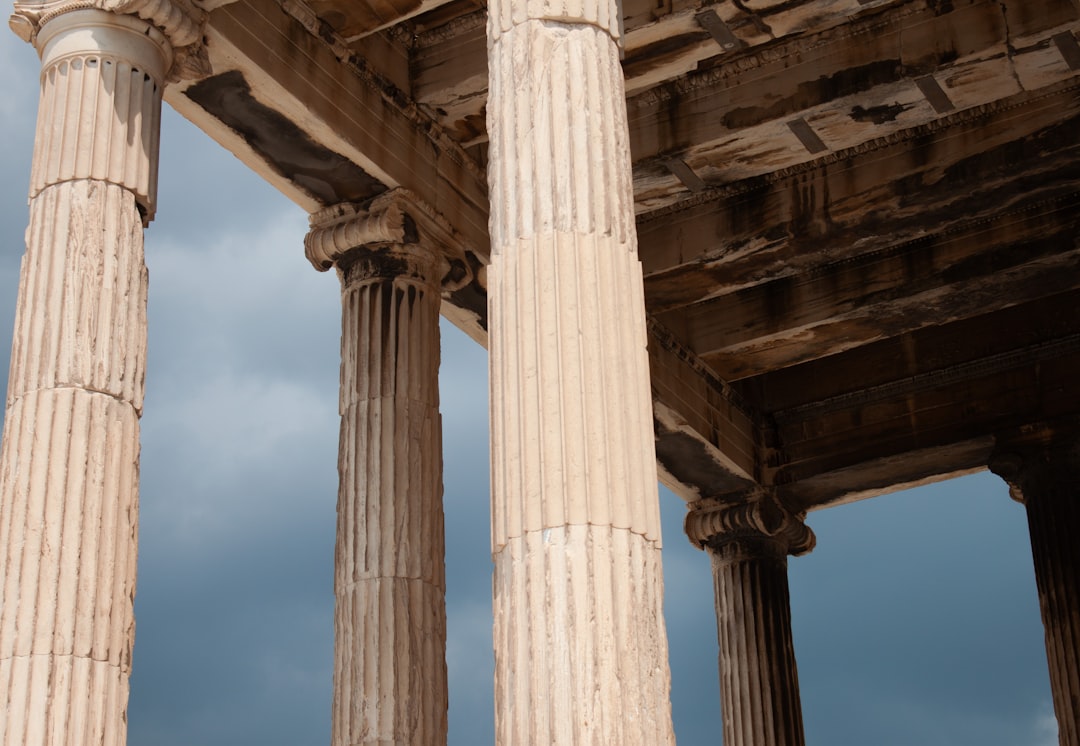
A group of pillars sitting under a cloudy sky

Temple of Hephaestus

Athens, Greece
i

A group of pillars sitting under a cloudy sky

Photo by MIGUEL BAIXAULI

Sunlight pours over ancient stone. The sound of distant street music drifts across a hill worn smooth by centuries of footsteps. At the edge of Athens’ vibrant heart, the Temple of Hephaestus rises from an airy grove, its columns silent witnesses to the city’s restless life. While crowds hustle past nearby markets, this graceful sanctuary feels almost hidden—steady, marbled, and alive with the quiet pulse of Greece’s history. For those who seek beauty amid endurance, Hephaestus delivers both, sweeping visitors into a story that’s still unfolding amidst olive trees and swallows overhead.

Visiting Info

Currency
Entrance fee
10 EUR
Hours
Opening hours
Monday: 8:00 AM – 8:00 PM
Tuesday: 8:00 AM – 8:00 PM
Wednesday: 8:00 AM – 8:00 PM
Thursday: 8:00 AM – 8:00 PM
Friday: 8:00 AM – 8:00 PM
Saturday: 8:00 AM – 8:00 PM
Sunday: 8:00 AM – 8:00 PM

Contact Information

Location
Address
Athens 105 55, Greece

Planning your visit

Deciding when and how to visit the Temple of Hephaestus can shape the experience more than one might expect. During summer, Athens fills with travelers, but this site—tucked into the green Thissio district—often feels more relaxed than the well-trodden Acropolis. The temple sits inside Agora park, a short walk from bustling Monastiraki Square, making it easy to slot into any city itinerary. Crowds thin out in the morning or late afternoon, especially as golden light paints the columns at dusk. Tickets are generally inexpensive, and entry comes included with access to the wider Agora, letting visitors soak up not just the temple but the ancient city heart that surrounds it.

  • Best time to visit: Spring or fall for cooler weather and quieter paths; early morning or just before sunset for gentle light and fewer crowds.
  • How to get there: Metro Line 1 to Thissio Station, then a five-minute walk through cobbled streets; taxis and local buses serve the area, with pedestrian routes from Monastiraki as well.
  • Accessibility: Paths through Agora park are mostly level but can be uneven; families with strollers or those with mobility challenges may want to enter from the main entrance, where ramps lead toward the temple.
  • Average visit duration: 45 to 90 minutes to appreciate the site and explore the surroundings at a relaxed pace.

Must see stuff

The Temple of Hephaestus stands as Athens’ best-preserved ancient temple. Blushing marble columns, still upright after 2,400 years, frame views of olive groves and the city’s shifting skyline. The experience here unfolds in layers: history, architecture, and quiet sanctuary. Artisans once worked in the forges that gave the god Hephaestus his honor in this place—fitting, since the temple sits surrounded by the “old neighborhood of the blacksmiths.” Spiraling paths around the structure offer up-close views of carved details, while the nearby Stoa of Attalos museums and ancient market ruins weave the larger story of Athenian daily life for modern guests.

  • Main highlights: The full colonnade—six Doric columns on each end, thirteen on each side; friezes showing scenes from Theseus’s labors and the Amazonian battles.
  • Unique experiences: Golden-hour photography, when the temple seems to glow; walking the perimeter for lesser-seen details like weathered inscriptions and ancient flora.
  • Photo-worthy spots: The southeast corner, where the light falls dramatically against the Parthenon in the distance; shadow-dappled avenues lined with wildflowers in spring.
  • Cultural facts: The temple has doubled as a Christian church, a burial spot for Philhellenes, and a neighborhood anchor for waves of craftspeople—each new use still visible in subtle ways under the marble.

Tips for your visit

A few thoughtful steps can turn a quick stop into a richly memorable visit. Early hours or weekdays almost guarantee calm, letting visitors pause long enough to hear cicadas and the far-off clatter of Athens waking up. Weather changes quickly in Athens, so bring a light layer and sturdy shoes. Inside the Agora, water fountains offer refreshment in the heat, and shaded benches welcome a break. Photography is welcomed, though drones and climbing on the temple steps are strictly forbidden. Locals stroll here as well, especially artists and students sketching at the base, so a smile or quiet greeting adds warmth to the moment.

  • Best times to avoid crowds: Arrive before 10am or near closing time; weekdays are usually quieter than weekends.
  • What to bring: Refillable water bottle, sunhat, non-slip walking shoes, and a camera or sketchpad.
  • Local etiquette: Keep voices low near the temple; respect cordoned-off areas and ancient masonry.
  • Safety and comfort tips: The hill gets slippery when wet; shade is uneven so take precautions in midday heat and bring light snacks if needed.