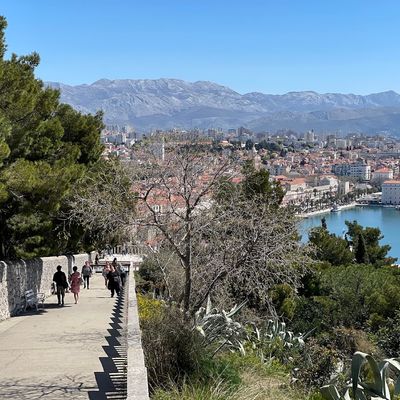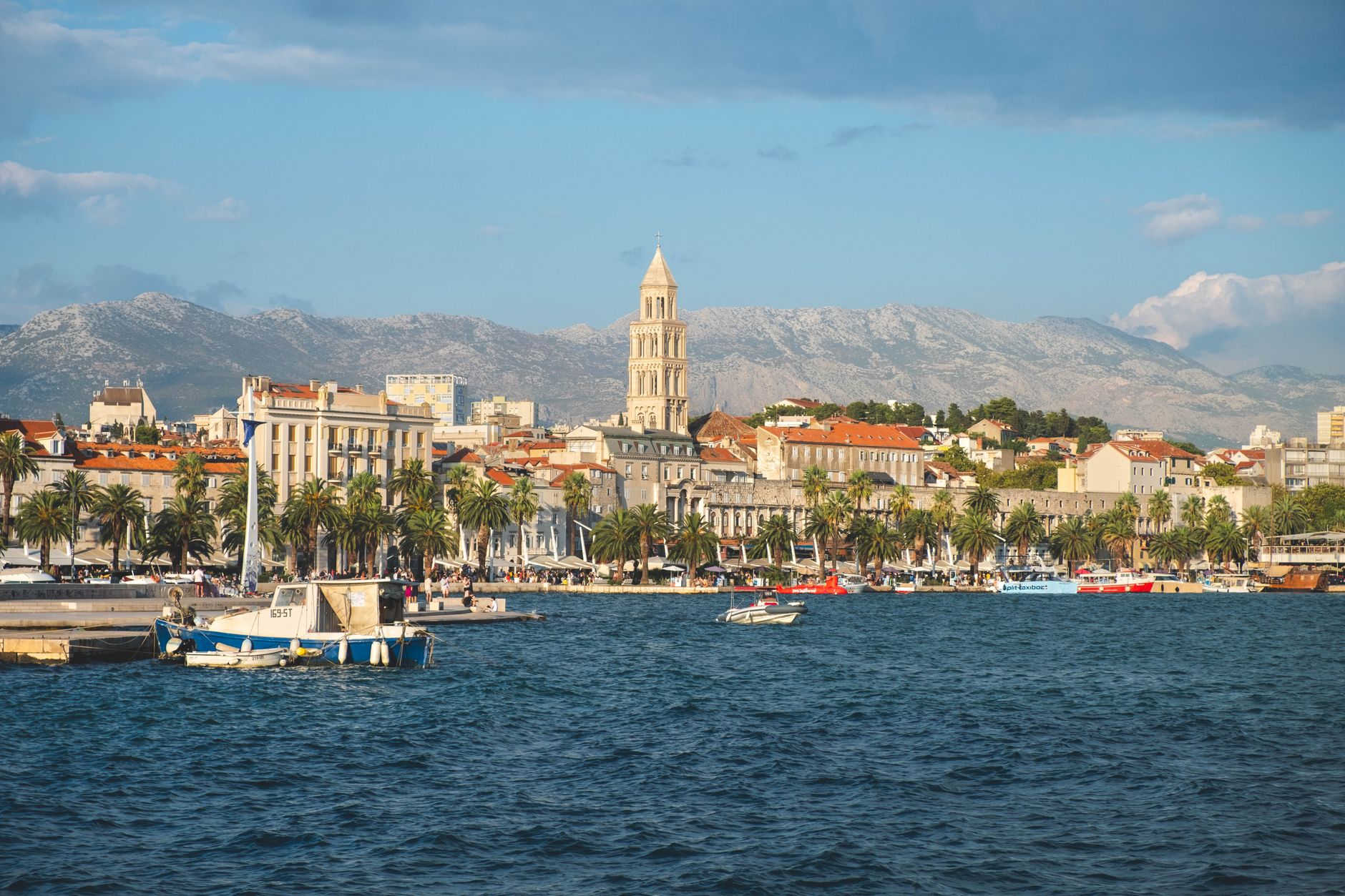
Stunning view of Split's old town and waterfront with mountains in the background, ideal for travel inspiration.
croatia, split, historic center, europe, summer, nature, palm trees
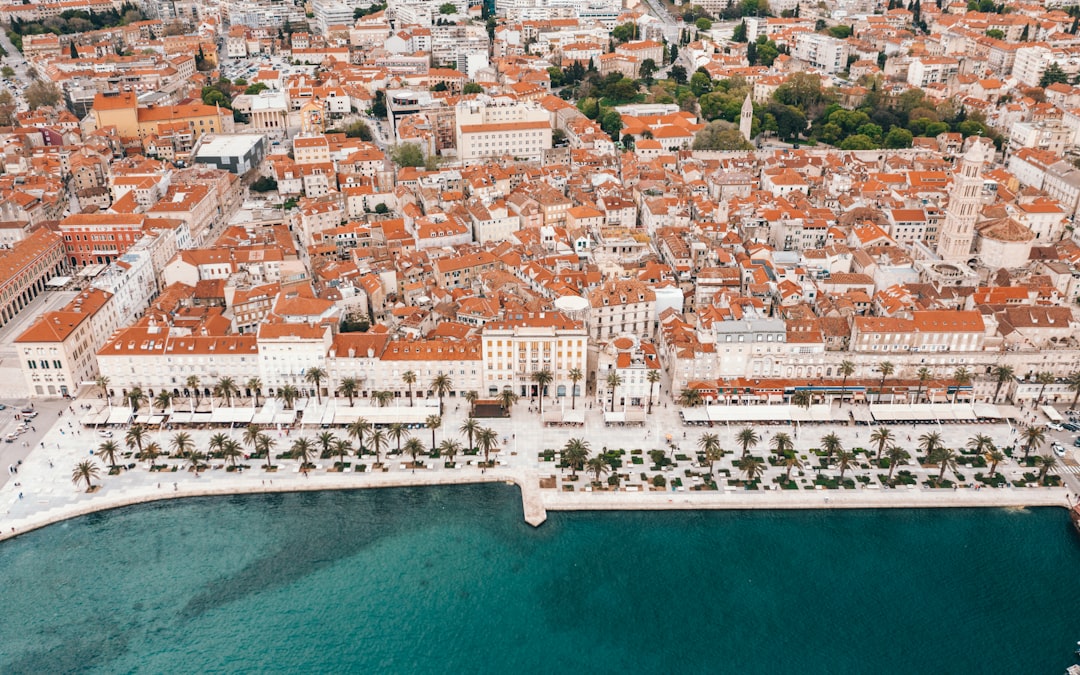
an aerial view of a city next to a body of water
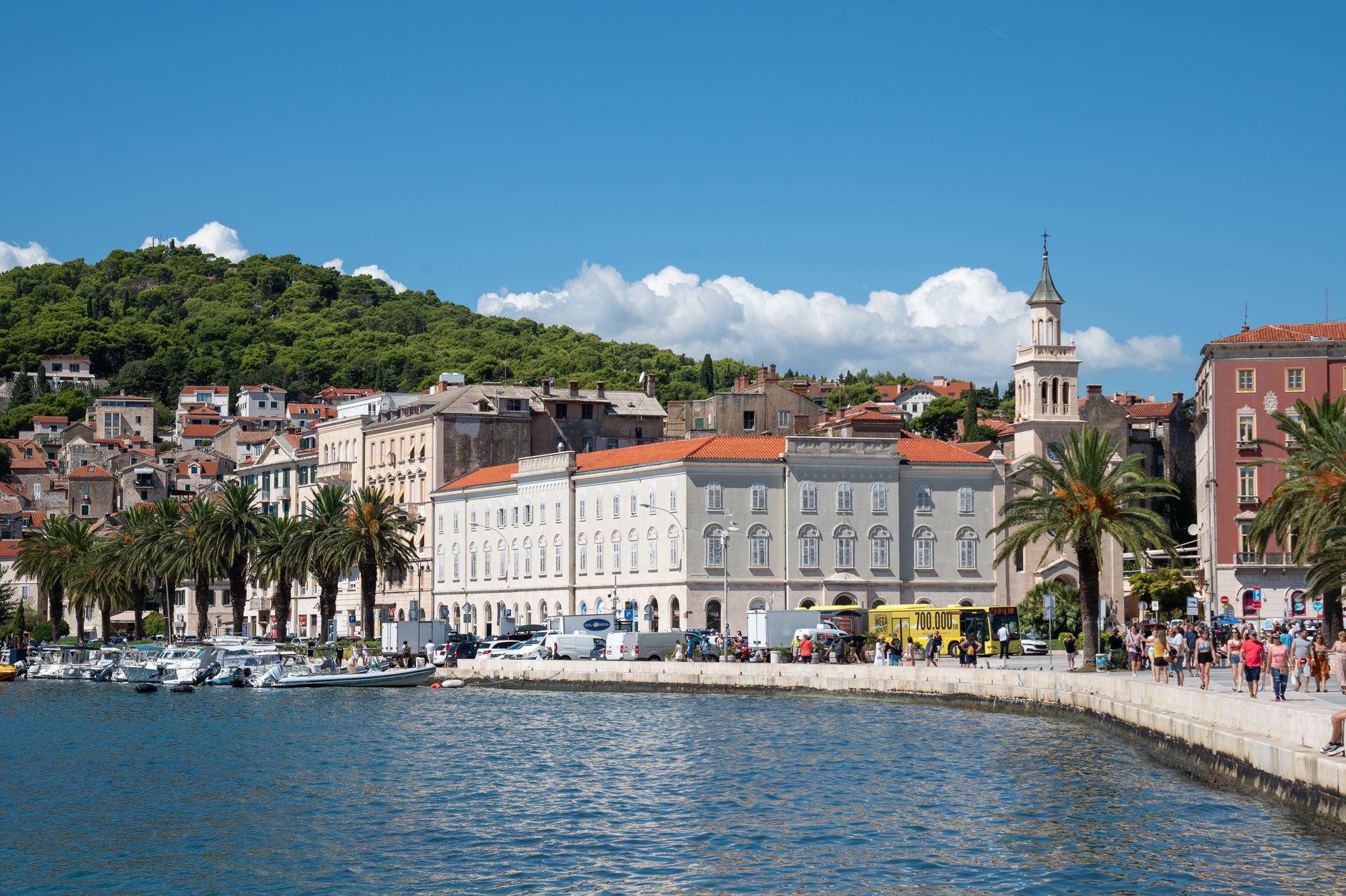
Explore the vibrant waterfront and stunning architecture of Split, Croatia on a sunny day.

Split

Croatia
CulturalArt & ArchitectureNatural WondersUNESCO World HeritageHistorical
i

Stunning view of Split's old town and waterfront with mountains in the background, ideal for travel inspiration.

Photo by Jo Kassis

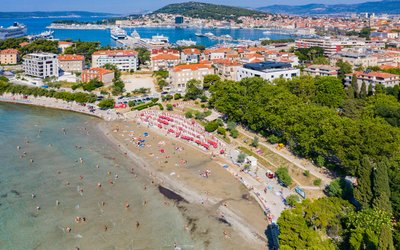
Salt and sun define Split. At dawn, the Adriatic turns silver-blue, the light catching on Diocletian’s Palace. Within those ancient walls, cafes hum with the smell of strong coffee and warm pastries. Fishermen sell morning catch by the Riva, scales flashing in the sunlight. Beyond the promenade, Marjan Hill offers pine-scented trails and views of islands fading into haze. Summer nights, music drifts from bars tucked in stone alleys, laughter mixing with the clink of glasses. Split pulses with life, half museum, half living room. Expect crowds in July, but in early fall, the city breathes easier. Swim at Kašjuni, where the water’s clear to ten feet. Grab grilled sardines from a beach shack, lemon and oil on your fingers. It’s a place that rewards slow mornings and late dinners, where even the small moments feel vivid.

Quick Facts

currency
EUR
languages
Croatian
airports
Split Airport
size
Medium City
power
Type C, Type F
timezone
Central European Time (CET, UTC+1; CEST, UTC+2 in summer)
safety
Safe
costs
Moderate

General Information

Safety indexSplit is generally considered a safe city for travelers with a safety index of around 75 out of 100. Petty theft, especially pickpocketing in crowded areas or beaches, can occur, but violent crime is rare.

Best Time to TravelThe best time to visit Split is from May to June or September to early October. During these months, the weather is warm and ideal for swimming and sightseeing, while the city is lively but not overly crowded.

Least crowded and still a good time to visitLate April and early October are less crowded alternatives, offering pleasant weather, fewer tourists, lower accommodation prices, and a relaxed atmosphere.

BudgetSplit can cater to various budgets. Backpackers can expect to spend around €40-60 per day (hostel, public transport, cheap eats), while mid-range travelers might spend €100-150 per day (mid-range hotel, restaurants, attractions). Luxury travelers can expect €200+ daily expenses.

Healthcare and VaccinationsSplit has reliable public and private healthcare facilities. EU citizens should bring a European Health Insurance Card (EHIC) for emergency treatment. No special vaccinations are required for Croatia apart from standard travel vaccinations (MMR, tetanus, hepatitis A/B). Travel insurance is recommended for all visitors.

Visa RequirementsCroatia is part of the Schengen area. Travelers from the EU, US, UK, Canada, Australia, New Zealand, and many other countries do not require a visa for short stays up to 90 days. Check official government websites to confirm requirements based on your nationality.

Weather in Split

°C°F
3595
2679
1864
948
032
Jan
Feb
Mar
Apr
May
Jun
Jul
Aug
Sep
Oct
Nov
Dec
3020100
Avg. min. temperature
Avg. max. temperature
Avg. precipitation days

First-time travelers

Centuries echo through the worn stones of Split. Old meets new at every turn, with the Adriatic glimmering beside imperial columns. For a first visit, sensations often merge: surprise, curiosity, and the pleasure of sun-drenched mornings. Everything invites a pause. The city moves at its own tide, far from hurried, yet always alive.

Past and present, side by side

Diocletian's Palace dazzles from afar, but only up close do its secrets unfold. Inside, Roman pillars house espresso bars, boutiques, and quiet corners where laundry flutters above narrow alleys. The scent of fresh figs mingles with sea salt and pine, especially near the Riva promenade. Here, children chase pigeons while old fishermen mend nets beneath the palms.

Flavors tell their own story. Dalmatian cuisine starts with simplicity: grilled branzino, silky olive oil, plump black olives. Locals sip coffee for hours, unhurried, laughing in tucked-away cafés like 4coffee soul food or D16. Gelato is everywhere, and the afternoon heat begs for a creamy scoop beneath the city’s honeyed stones.

Embrace local moments

  • Order pasticada (beef stew) at a konoba like Fetivi
  • Watch sunrise from Marjan Hill for the best city view
  • Stroll through Pazar green market for honey and cheese
  • Share a bottle of local plavac mali wine at sunset on Bacvice beach

Split rewards those who linger. Let time slip, lose yourself in the labyrinth, and listen for another layer in the city’s story. The first trip always feels like an introduction— a promise of more to come.
Return travelers

Returning to Split, everything feels familiar yet oddly fresh. Hidden cafés, warmly-lit squares, and the distant buzz of scooters on polished stone. There’s belonging but also curiosity, as the city keeps unveiling new corners beyond the palace walls. Memory blends with discovery, and what felt foreign now feels like a second language.

Beyond the famous avenues

Venture to Varoš, the old fishermen’s quarter, where sleepy cats sprawl on windowsills shaded by rosemary, and handwritten menus dangle from rusty hooks. The crowds thin quickly past Marmontova. Here, everyday life unfolds: children dart between cracks in the mosaic pavement, and neighbors swap gossip over anchovy sandwiches.

Moments outside the Old Town hit deeper. In Trstenik or Firule, beaches are less polished, more local. Pebbles crunch underfoot, as laughter drifts from nearby picigin games. Markets like Brodarica teem with early morning deals—herbs, fresh almonds, a flurry of Dalmatian phrases. By now, you know where to look, and which baker’s burek tastes best with yogurt on the go.

Local rhythms for return visits

  • Join a weekend klapa (a capella singing) session at Matejuška harbor
  • Sample rose petal syrup at Kavana Procaffe away from the main drag
  • Visit Galerija Meštrović for sculpture and sea breezes
  • Bike through the pine-shadowed trails of Park Šuma Marjan

Each return sharpens intimacy with Split. Every hidden bakery, secret cove, and smile seems meant just for you. Here, returning is not repetition— it’s becoming part of the city’s daily heartbeat, one stone at a time.

Must-see locations

Diocletian's Palace

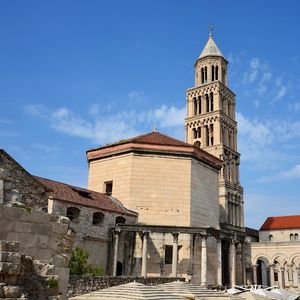
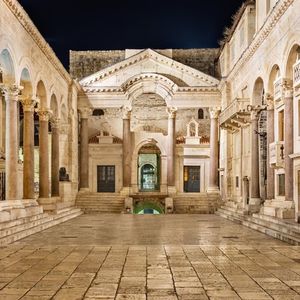
In Split, stone streets wind through Diocletian's Palace, where ancient Roman walls frame lively cafés, hidden courtyards, and daily markets. Climb the bell tower for sweeping sea views, or join locals in Peristyle Square for music.

Learn More
Split Riva
i

Split Riva

Photo by Riva

Riva

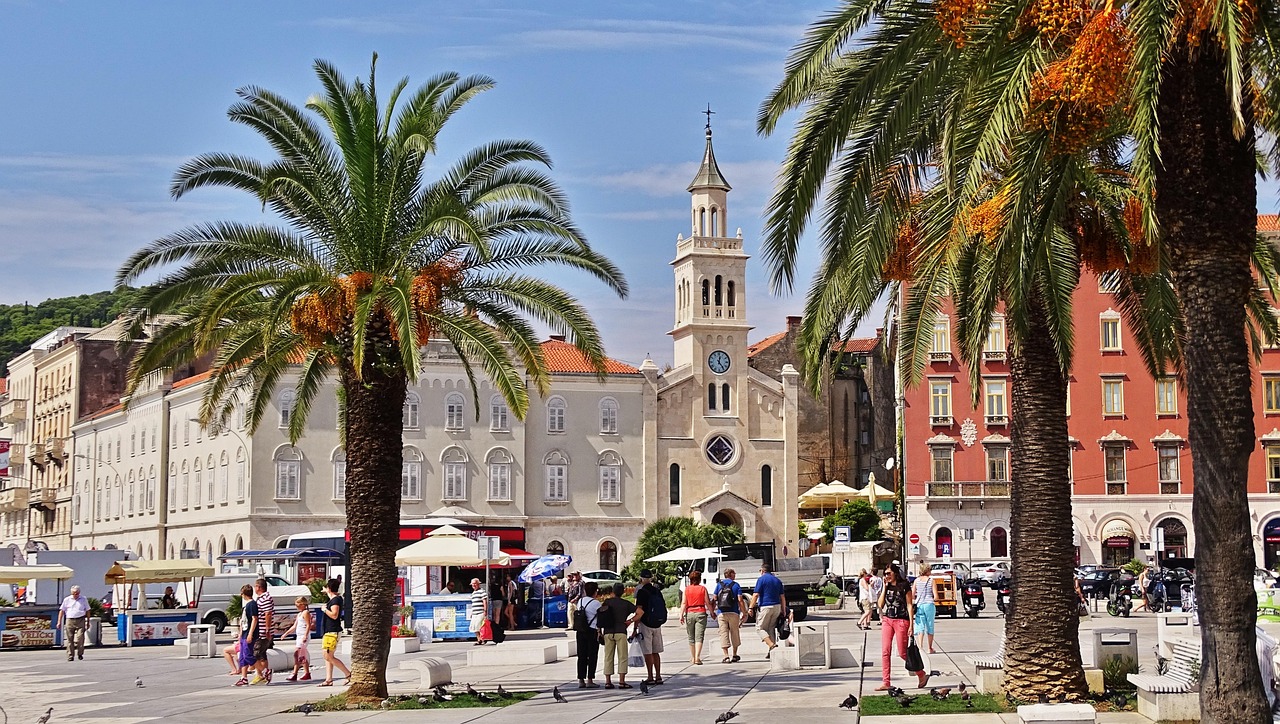
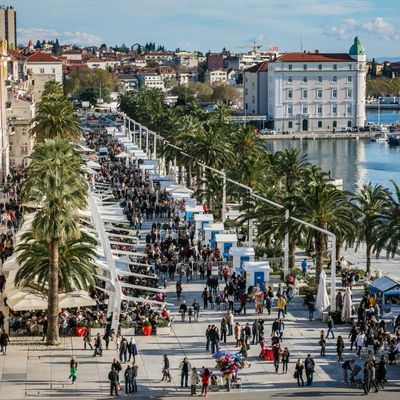
Riva’s palm-lined walkway pulses with life, where locals sip coffee outside cafes and families stroll past Diocletian’s Palace. Lively street performances and sparkling sea views make every visit unforgettable.

Learn More
Forest Park Marjan
i

Forest Park Marjan

Photo by Praveen Natarajan

Marjan Forest Park

Marjan Forest Park in Split offers lush pine woods, winding trails for hiking or biking, family-friendly beaches such as Bene, scenic overlooks of the Adriatic, and centuries-old chapels. Locals gather for picnics and city views.

Learn More
Google Places photo
i

Google Places photo

Photo by Arpád Balogh

Saint Domnius Cathedral

Saint Domnius Cathedral in Split, Croatia, stands inside the ancient Diocletian’s Palace. Romanesque bell tower rises above lively Peristyle Square. Climb the tower for Adriatic views, explore underground crypts, or catch local festivals nearby.

Learn More
Bačvice Beach

Bačvice Beach

Bačvice Beach in Split offers soft sand, warm Adriatic waters, and lively games of picigin played by locals. Sunbathe, swim, or join waterfront cafés. Historic Old Town sits a short walk away, adding city charm to the seaside fun.

Learn More

How to get there

By air

Split is served by Split Airport (SPU), which is located about 24 km from the city center. The airport has direct flights to many European cities especially in season. From the airport, several transportation options are available to reach the city center.
Options to get to town:
Taxi
Price:
Approx. €35-50
Duration:
30-40 min
Where to buy:
Taxi stand at airport arrivals
Airport bus
Price:
Approx. €8
Duration:
30-40 min
Where to buy:
Buy from the bus driver or at the airport kiosk
Train/shuttle
Price:
Approx. €2.30 (train) or €8 (shuttle)
Duration:
20 min (shuttle) or 30 min (train + bus)
Where to buy:
Buy tickets at the airport shuttle counter or train station

By train

Split has direct railway connections with Zagreb and several other Croatian cities. Trains arrive at Split's main railway station, which is conveniently located next to the ferry port and bus terminal. Note that train connections to other European countries may require changes in Zagreb.
Useful websites for train tickets:

By car

Split is accessible by modern motorways from the north (Zagreb, Rijeka) via the A1 highway. The city is well-connected and offers several parking options around the city center. Traffic can be heavy in high season.
Additional charges to be aware of:
Toll / vignette / emission sticker
Cost:
A1 motorway toll: approx. €24 (Zagreb-Split)
How to pay:
Pay at toll booths by cash or card
Other driving costs
Cost:
Fuel: approx. €1.50/liter
How to pay:
Gas stations en route

By ferry

Split's ferry port is one of Croatia's largest and has regular ferry connections to nearby islands (such as Brač, Hvar, and Vis), and some international summer routes (e.g., to Ancona, Italy). Ferries are a popular option for those arriving from the islands or by sea.
Useful websites for ferry tickets:

How to get around

Public transport

Public Transport: Split has an efficient network of buses operated by Promet Split, connecting the city center with various neighborhoods and nearby towns. Buses run frequently during the day, with reduced services at night. The main hub is at the Sukošan Bus Terminal near the ferry port. Public transport is a reliable and cost-effective choice for getting around most of Split.

Ticket options:
Ticket TypePriceWhere to buy
Single ticket€1.50–€2 (within Split city zones)Bus drivers, newspaper kiosks, ticket machines, or Promet ticket offices
Day pass€5–€6Promet ticket offices or select kiosks

Taxis & ridesharing

Taxis & Ridesharing: Taxis are widely available and can be hailed at stands, by phone, or via app. Uber and Bolt operate in Split and offer competitive pricing. Taxis are more expensive than public transit but are convenient for direct routes, especially at night or with luggage.

Service providers:
ProviderPriceHow to book
Local taxiStarting from €3; €1/km on averageTaxi ranks, hotel desks, or by phone
Ridesharing appVaries by distance; often slightly cheaper than taxisUber or Bolt mobile apps

Car rental

Car Rental: Renting a car provides flexibility for exploring the greater Dalmatian region, nearby towns, or national parks. Parking in central Split can be difficult and expensive, but a car is useful if planning day trips or visiting less accessible locations.

Rental options:
ServicePriceHow to book
Daily rentalFrom €30–€60/day (basic models, low season)Car rental agencies at Split Airport, city center, or online
Weekly rentalFrom €180–€350/weekCar rental agencies or booking platforms

Bike & scooter rental

Bike & Scooter Rental: Split’s compact Old Town and scenic seafront are ideal for two-wheeled exploration. There are many rental shops offering daily, hourly, or longer bike and electric scooter rentals. This is an eco-friendly, fun way to get around, particularly on sunny days.

Rental options:
ServicePriceHow to book
Bike rentalFrom €10–€15/dayLocal bike shops or main tourist areas
Scooter rentalFrom €20–€35/day (electric scooters)Rental shops, tourist stands, or app-based services

Ferry / Boat

Ferry / Boat: Split is a major ferry port for travel to the Dalmatian islands such as Hvar, Brač, and Vis. Ferries are operated year-round, with increased frequency in the summer. Regular lines make island-hopping straightforward, and tickets can be bought at the port or online in advance.

Useful websites for ferry tickets:

What to eat

Spices mingle with salt air as you walk Split’s sun-splashed promenade. The scent of grilled fish, sharp cheese, and strong coffee fills hidden lanes. Fishermen unload crates on the Riva each dawn. Locals sip sljivovica under Roman arches, laughing between bites. Food here is a daily ritual—a bridge between tradition and restless summer nights. Each corner reveals another secret: flaky pastries, crimson octopus salads, street carts bent under fresh figs. Hungry yet? Good. Because Split is a place to eat like you mean it.

Signature Dishes

  • Pasticada: Slow-braised beef in a sweet-tangy wine sauce, served with pillowy gnocchi. A family feast often prepared for celebrations.
  • Black Risotto (Crni Rižot): Squid ink gives this rice dish its eerie black color and briny flavor. Each bite is ocean-rich, with tender cuttlefish.
  • Gregada: A simple fisherman’s stew—layers of white fish, potatoes, garlic, and olive oil. Comforting and deeply local, best on chilly nights.
  • Brudet: Rich seafood stew, tomato-spiked and aromatic, ladled over polenta. Made with whatever fish the Adriatic brings in.
  • Peka: Lamb, veal, or octopus slow-cooked under a bell-shaped lid, perfumed with rosemary and smoke. Must be pre-ordered, worth the advance planning.

Street Food & Markets

Split’s Green Market (Pazar) wakes at sunrise. Vendors pile tomatoes, figs, and feta into wise hands. Locals barter for shiny anchovies and baskets of cherries. Street stands sell burek, a flaky pastry spun with cheese or meat, best devoured hot from oily paper. Try fritule, donut balls dusted with sugar, at the harbor. Ćevapi—grilled meat fingers in a pillowy flatbread—are messy, juicy, and wildly satisfying. Don’t miss warm bread dipped in local olive oil. Watch for price spikes in peak season, and remember: the freshest snacks hide along alleys just off the main squares.

Sweet Treats & Drinks

Rafioli—almond shortbread—fills bakery windows, each bite crumbly and fragrant. Rozata, Split’s silky caramel custard, cools sweltering afternoons. Try Prošek, a honeyed dessert wine, after dinner, or sip sharp rakija with new friends at a konoba. Don’t leave without a strong espresso on the waterfront, watching boats rock in golden light.

Why Travelers Eat Here

  • Unbeatable seafood, landed fresh each morning from the Adriatic.
  • Fascinating blend of Italian, Ottoman, and Dalmatian culinary traditions.
  • Bustling food markets filled with seasonal, local produce.
  • Atmospheric konobas (taverns) serving time-honored recipes.

Dining in Split is more than a meal. It’s a sensual passage through history with every plate and glass. Food here delivers both comfort and adventure, salty with the sea and always served with a story.

Top Rated Restaurants

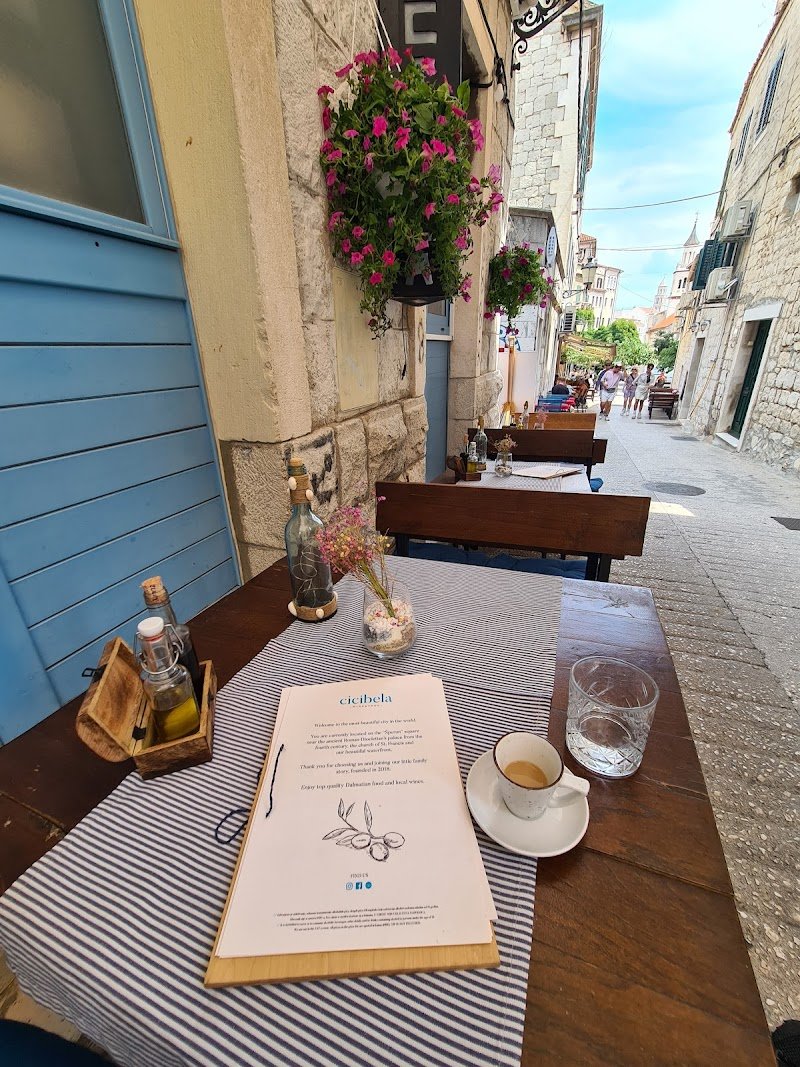
Cicibela food and wine bar (SPLIT)

Cicibela food and wine bar (SPLIT)

4.9 (5.0k reviews)
LocationSenjska ul. 8, 21000, Split, Croatia
Pizzeria Sette Sorelle

Pizzeria Sette Sorelle

4.9 (11.3k reviews)
$$
LocationTrg Franje Tuđmana 3, 21000, Split, Croatia
Soul Kitchen

Soul Kitchen

4.8 (1.2k reviews)
Locationprilaz braće Kaliterna 8, 21000, Split, Croatia
LAGANINI seafood • pasta • steak

LAGANINI seafood • pasta • steak

4.8 (3.2k reviews)
$$
LocationUlica Kraj Svetog Ivana 2, 21000, Split, Croatia
Ćiri Biri Bela

Ćiri Biri Bela

4.8 (2.5k reviews)
$$$
LocationPlinarska ul. 6, 21000, Split, Croatia

Accommodations

Waking up to Split’s gentle Adriatic breeze is nothing like stumbling into town with the late-night ferry crowds. Where you stay changes how you feel about the city itself. In two decades walking Split’s cobbles and climbing its steps, I’ve learned that the neighborhood you choose frames every memory—sometimes more than the landmarks themselves.

Neighborhood Overview

  • Old Town (Diocletian’s Palace): Ancient stone lanes, cafés spilling onto tiny squares, buskers’ music echoing, and all of it humming until late. This area sits in the city’s heart—magical, but noisy. Couples and history buffs love waking up here, though families might crave quieter nights.
  • Veli Varoš: A traditional Mediterranean village within the city, full of charm and narrow alleys. You’ll hear local voices in the mornings and smell grilled fish at dinner. Friends traveling together and couples drawn to authenticity thrive here, but parking is nearly impossible.
  • Bačvice: Split’s classic seaside neighborhood draws a younger, playful crowd. Walk to sandy beaches and vibrant bars in minutes. While families enjoy the shallow waters, night owls often return late with sand on their feet.
  • Firule: Quieter than Bačvice but still near the water, Firule gives you leafy parks and more space to breathe. Tennis players love the famous clay courts. This is a sweet spot for families or travelers who want a mix of relaxation and easy access to the old center.
  • Spinut and Poljud: North of the palace, these zones offer affordable apartments and green spaces. With nearby Marjan Hill and playgrounds, Spinut suits longer stays or active families. Poljud brings sports fans close to the famous stadium.

Types of Accommodation

  • Private Apartments: Split’s most popular pick, especially on Booking.com or Airbnb. Styles range from quick fixes (think €70/night studios) to designer lofts (€160+).
  • Hotels: Small boutique hotels like Heritage Hotel Antique or Marmont offer four-star comfort, mostly €120–€300 per night. Budget hotels cluster around Poljud and the bus station.
  • Hostels: Bačvice and Old Town host several fun hostels, usually about €25–€50 per night for a bed. Hostels suit solo travelers and digital nomads.

Insider Tips for Booking

Book early for June to August—last-minute rooms nearly vanish. May and September mean lower rates and thinner crowds. Croatian tourist tax adds about €1.50 per adult, per night. Certain listings ask cash for taxes or cleaning fees; double-check confirmation emails.

There’s a thrill to swinging open shuttered windows and smelling distant pines when Split wakes. No matter the address, the right base lets you slip into city rhythms. Every corner changes with dawn, but your neighborhood leaves the deepest mark.

Split Travel Guide - What to See, Do & Eat