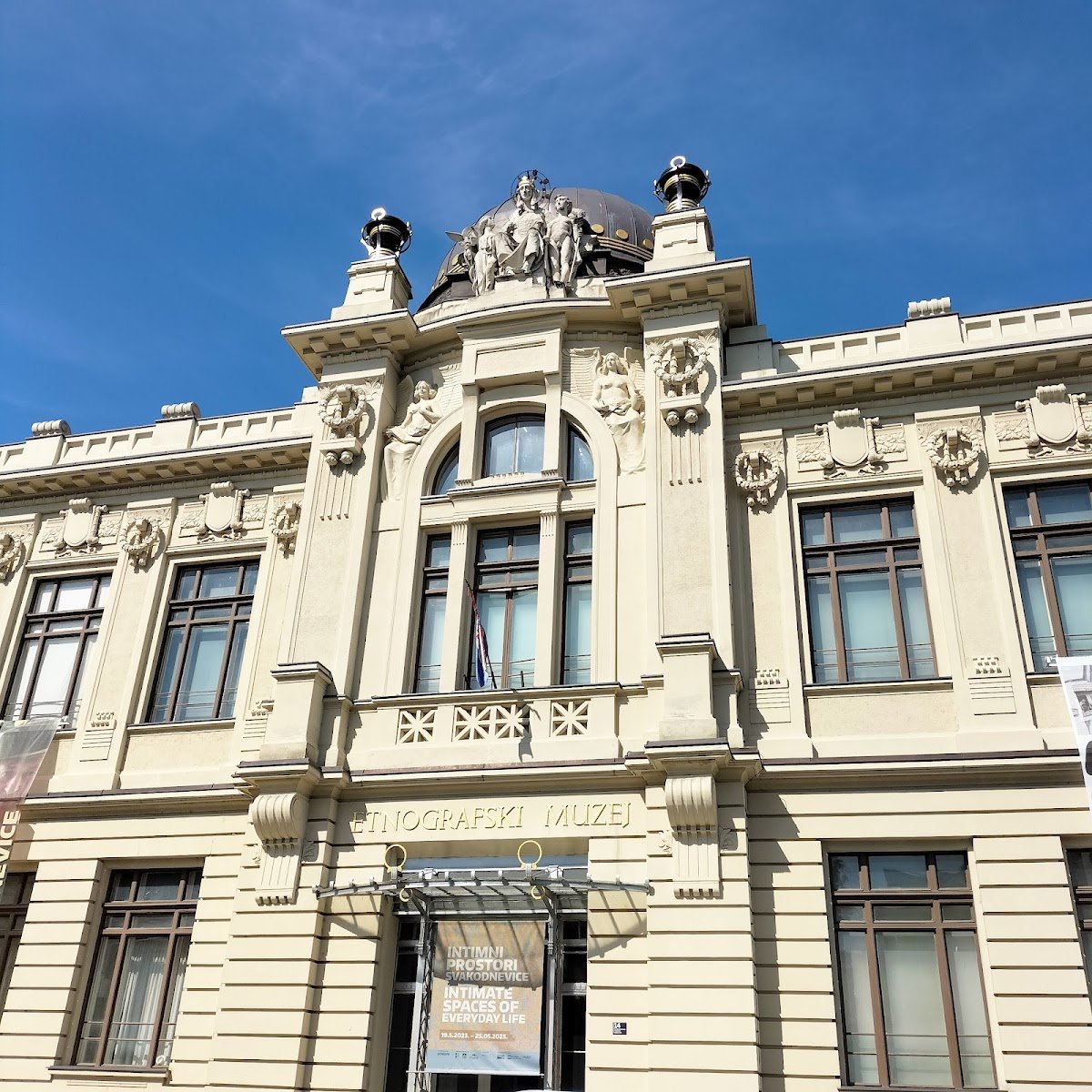
Ethnography Museum

Ethnography Museum

Zagreb, Croatia
i

Ethnography Museum

Photo by Roberta Pietrobon

Inside a sunlit, early 20th-century building surrounded by the hum of Zagreb's Lower Town, a visitor enters a world crafted by rural tradition and age-old creativity. A walk through the Ethnography Museum opens Czech painted kitchens, Dinaric mountain embroidery, and even distant Silk Road stories, all arranged in rooms bursting with color and detail. Here, daily life becomes art, and every object—whether a gleaming wooden cradle or gold-threaded bridal apron—tells the tale of Croatia’s diverse peoples and their way of life.

Visiting Info

Currency
Entrance fee
6 EUR
Hours
Opening hours
Monday: Closed
Tuesday: 10:00 AM – 6:00 PM
Wednesday: 10:00 AM – 6:00 PM
Thursday: 10:00 AM – 6:00 PM
Friday: 10:00 AM – 6:00 PM
Saturday: 10:00 AM – 1:00 PM
Sunday: 10:00 AM – 1:00 PM

Contact Information

Location
Address
Trg Antuna, Ivana i Vladimira Mažuranića 14, 10000, Zagreb, Croatia

Planning your visit

Planning a trip to the Ethnography Museum can be part of a relaxed stroll or a focused afternoon of discovery. The museum sits less than ten minutes’ walk from Zagreb’s main square, so most visitors approach on foot or by tram, weaving through broad avenues shaded by chestnut trees. Entry lines tend to move quickly, though school groups sometimes fill the halls on weekday mornings. Tickets are inexpensive and no advance reservation is normally needed except for rare special events. The building does have stairs, but staff provide assistance for visitors with limited mobility.

  • Best time to visit: Late morning or early afternoon, Tuesday to Thursday; avoid rainy Saturday rushes
  • How to get there: Walk or take Tram 6, 11, or 13 to Trg Republike Hrvatske; from there, it’s a short stroll along Hrvatsko Narodno Kazaliste
  • Accessibility: Families welcome (strollers are manageable); elevator available for wheelchairs and seniors; benches provided in main halls
  • Average visit duration: Approximately 1–1.5 hours for highlights, up to 2.5 for curious explorers

Must see stuff

Each gallery inside the Ethnography Museum brims with handwoven textiles, agricultural marvels, and festive costumes preserved for generations. Room after room surprises travelers with ingenuity: wooden ox carts built for ice-bound roads; gold-and-silver filigree jewelry, cut and twisted by tiny Selja craftsmen; ritual masks of animal fur used in spirited Carnival processions across the Balkans. For many, the star is the traditional kitchen with its smoky hearth and blue-glazed tiles, where children gaze into centuries past and adults imagine the stories that drifted through low, carved doorways. Tucked beside the grand staircase, a quiet alcove of toys offers a nostalgic touch, while temporary exhibitions often shine a spotlight on Croatian minorities or unexpected corners of world culture.

  • Key sights or features: Gala folk costumes from Slavonia, Istria, and Dalmatia; the atmospheric reconstructed kitchen; rare musical instruments including bagpipes and tamburica
  • Unique experiences: Dress-up station with children’s folk costumes; hands-on loom weaving during special workshops (seasonal); staff-led themed tours exploring migration or festival rituals
  • Photo-worthy locations: The main staircase, with its glowing stained glass skylight; glass cases densely filled with ornate pottery; the colorful Carnival mask wall
  • Cultural or historical facts: The museum holds over 85,000 artifacts spanning countryside to Adriatic islands, with traditions recorded in situ over the last century

Tips for your visit

Small details can make exploring the Ethnography Museum much more pleasant. Audio guides are available in several languages, though static information panels are clear and well-written. The museum shop is cozy, better for postcards or tiny souvenirs than for lunch, so plan meals elsewhere. Staff are knowledgeable and friendly, eager to share tips about upcoming festival days, when temporary displays and live music can appear quite suddenly. The building is not air-conditioned, so sensitive travelers may feel warm in summer—bring a layer in colder months, as stone hallways retain the chill. Photography without flash is allowed and encouraged.

  • Best times to avoid crowds: Mid-week and early afternoon; summer mornings see fewer tour groups
  • What to bring: Water bottle, phone/camera (low-light settings for indoor shots), comfortable shoes (some floors are uneven)
  • Local etiquette or rules: Touching displays is not allowed except at interactive stations; quiet voices maintain the museum’s contemplative feel
  • Safety or comfort advice: Floors can be slippery after rain—use extra caution; keep bags close, as some cases are placed in narrow aisles

Similar Attractions

Ethnography Museum – Tickets, Hours & Visitor Guide