vienna, belvedere, entry, romantic, austria, building, baroque, travel, palace, landmark, tourism, historic, europe, museum, wien, castle, city, capital, garden, nature, famous, sightseeing, monument, autumn, brown city, brown travel, brown building, brown garden, brown gardening, brown castle
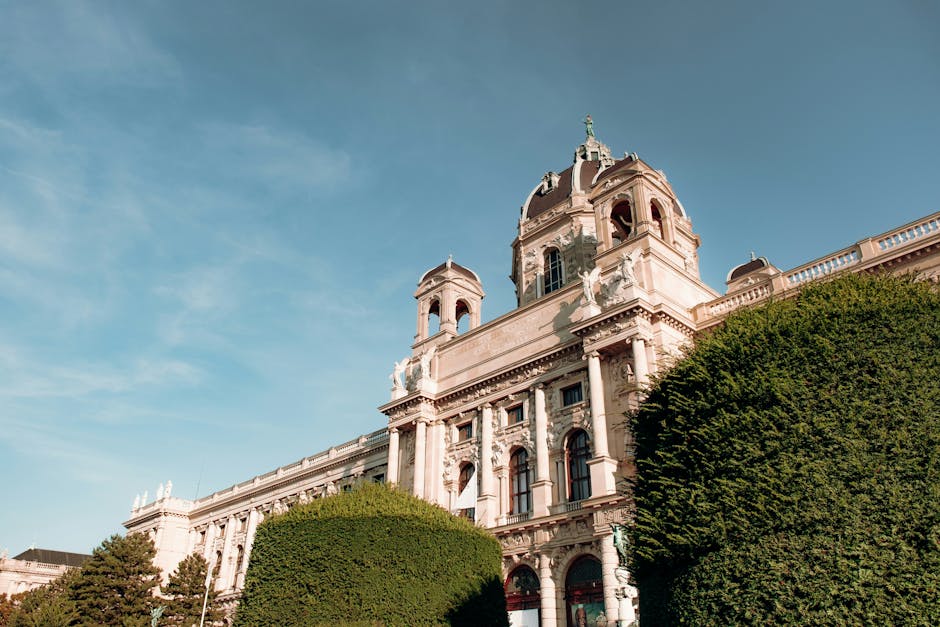
A stunning view of the Kunsthistorisches Museum, showcasing Vienna's architectural grandeur on a sunny day.

Kunsthistorisches Museum Wien

Vienna, Austria
i

vienna, belvedere, entry, romantic, austria, building, baroque, travel, palace, landmark, tourism, historic, europe, museum, wien, castle, city, capital, garden, nature, famous, sightseeing, monument, autumn, brown city, brown travel, brown building, brown garden, brown gardening, brown castle

Photo by ClickerHappy

Step through marble archways into a world where emperors once gazed upon wonders from every continent. Crafted with the flair of the Habsburg Dynasty, the Kunsthistorisches Museum Wien wraps a treasure trove of European art and ancient artifacts within elegant halls. Here, sunlight catches on gilded staircases and high domes echo with centuries of history, inviting all who enter to pause amidst masterpieces both timeless and rare.

Visiting Info

Currency
Entrance fee
21 EUR
Hours
Opening hours
Monday: 10:00 AM – 6:00 PM
Tuesday: 10:00 AM – 6:00 PM
Wednesday: 10:00 AM – 6:00 PM
Thursday: 10:00 AM – 9:00 PM
Friday: 10:00 AM – 6:00 PM
Saturday: 10:00 AM – 6:00 PM
Sunday: 10:00 AM – 6:00 PM

Contact Information

Location
Address
Maria-Theresien-Platz, 1010 Wien, Austria

Planning your visit

The Kunsthistorisches Museum Wien stands as a must-see stop for culture seekers in Vienna. Giant pillars greet visitors just off Maria-Theresien-Platz, making arrivals as sweeping as the collections inside. For those planning a visit, timing and preparation can make all the difference. Mornings and weekdays usually mean smaller crowds, while afternoons, weekends, and holidays see an uptick in groups and school tours. Tickets may be booked online to speed up entry, especially during peak tourist months. The museum's grand layout asks for comfortable shoes, and cloakrooms offer a handy spot for bags or coats.

  • Best time to visit: Early mornings on weekdays (Tuesday-Friday) or late afternoons, especially in spring and fall.
  • How to get there: Easily reached by Vienna’s U2 and U3 subway lines (Museumsquartier or Volkstheater stations), trams D or 1, or a brisk walk from the city center.
  • Accessibility: Wheelchair ramps, elevators, and loaner wheelchairs accommodate visitors with mobility needs. Family-friendly, with baby-changing facilities and discounted tickets for kids.
  • Average visit duration: 2 to 3 hours for highlights, up to half a day for art lovers who want every detail.

Must see stuff

The museum gathers centuries of creativity under one opulent roof. At its heart, the Picture Gallery dazzles with works by Bruegel, Rembrandt, Vermeer, and Velázquez. Downstairs, marble and mosaics frame age-old Greek and Roman relics, while Egyptian sarcophagi and Renaissance miniatures provide moments of awe and quiet study. Between exhibits, the café in the cupola sends up the smell of fresh coffee, mingling with echoes from the Grand Staircase.

  • The Picture Gallery: Bruegel the Elder’s detailed scenes (“The Tower of Babel”) command entire rooms; Titian’s portraits offer glimpses into high society of the past.
  • Egyptian and Near Eastern Collection: Mummies, ornate jewelry, and a real Book of the Dead, all surrounded by jewel-toned walls.
  • Greek and Roman Antiquities: Marble gods, bronze statuettes, and a rare Roman silver hoard.
  • Cabinet of Curiosities (Kunstkammer): Wonders both strange and beautiful—golden automatons, a mechanical ship centerpiece, and Delft tulip vases.
  • Photo-worthy spots: The sweeping entrance staircase with its palm trees and ceiling murals; tall windows overlooking Ringstrasse; the glass-domed café with its 360-degree view.
  • Cultural facts: Opened in 1891 as a showcase for imperial collections. The Habsburgs gathered art from across Europe, Egypt, and the Near East, later adding pieces recovered or acquired after World War II.

Tips for your visit

Even the most jaw-dropping museum benefits from a little know-how. Arriving close to opening or before closing cuts down on crowding and leaves more quiet corners for exploration. Audio guides peel back layers of history at a steady pace, while guided tours add stories that bring the collections to life. Strollers are welcome, and lockers make it easy to travel light. Hungry after hours of art? Nearby neighborhoods, like Spittelberg, serve up schnitzel or strudel in less touristy venues—perfect for comparing notes over lunch.

  • Best times to avoid crowds: Within the first hour after opening and during school terms.
  • What to bring: A refillable water bottle, camera or phone with plenty of storage, and comfortable walking shoes.
  • Local etiquette: No flash photos. Quiet voices enhance the calm atmosphere. Children are encouraged to explore, but running is best left outside.
  • Safety/comfort: Food and drink are not allowed in galleries; rest often at café tables or in the airy lounge near the entrance.