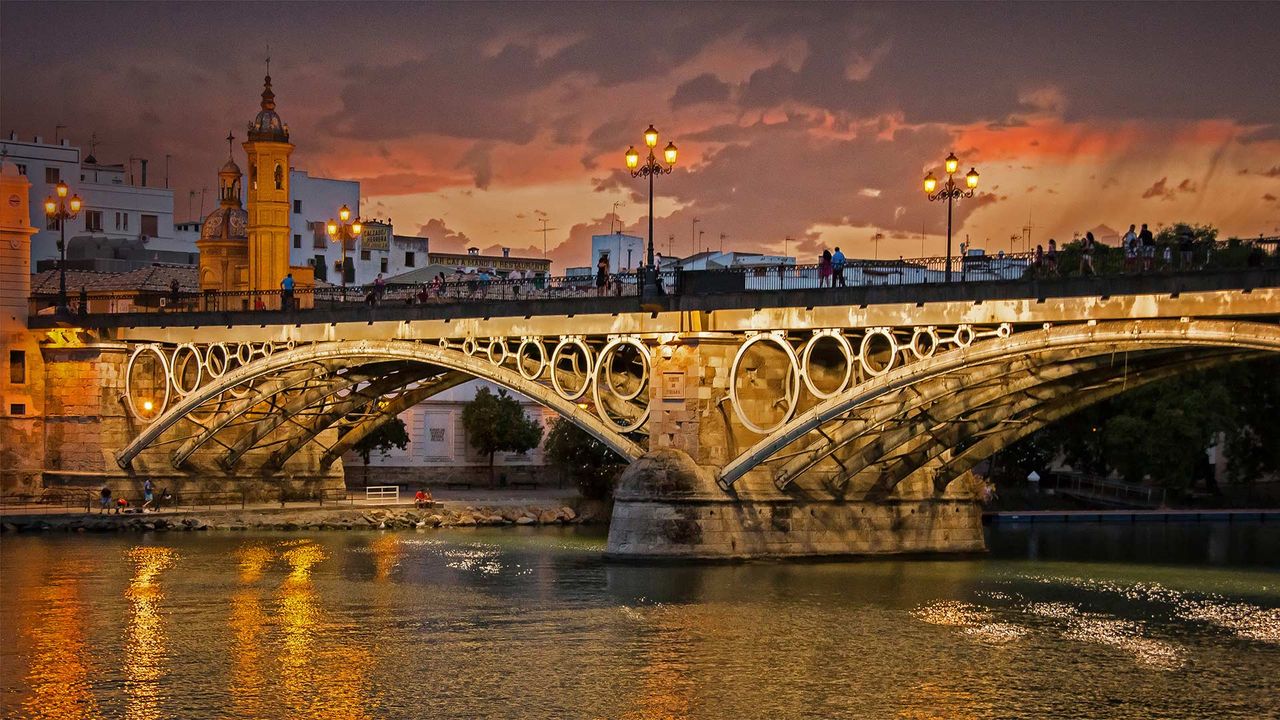
Puente de Triana, a historic Seville bridge connecting the city center with the Triana neighborhood.

Puente de Isabel II (Puente de Triana)

Seville, Spain
i

Puente de Triana, a historic Seville bridge connecting the city center with the Triana neighborhood.

Rising with elegant iron arches over the Guadalquivir River, the Puente de Isabel II—known locally as the Puente de Triana—embodies the spirit of Seville’s living history. Drawing both locals and visitors, this landmark connects neighborhoods, cultures, and centuries with a stroll across. It offers more than just passage: here, stories are traded, sunsets admired, and daily life flows as steadily as the broad water below.

Visiting Info

Currency
Entrance fee
Free
Hours
Opening hours
Monday: Open 24 hours
Tuesday: Open 24 hours
Wednesday: Open 24 hours
Thursday: Open 24 hours
Friday: Open 24 hours
Saturday: Open 24 hours
Sunday: Open 24 hours

Contact Information

Location
Address
Puente de Isabel II, 30, 41010 Sevilla, Spain

Planning your visit

Planning a trip to the Puente de Isabel II is refreshingly simple. No tickets are required to cross or admire it, and the bridge remains open to all, day or night. Walkers, cyclists, and the occasional street musician breathe life into the span each hour. Most travelers arrive by foot from the nearby city center, but the site is equally welcoming to family outings, solo explorers, and photographers seeking Seville’s finest light.

  • Best time to visit: Evening hours, when the sun dips beyond the Triana neighborhood, or early morning for quiet and soft golden light.
  • How to get there: Central Seville’s tram and bus lines stop steps away, and the bridge lies five minutes’ walk from the Plaza de Altozano or Plaza de Cuba. Taxis and bicycles offer easy alternatives for reaching the bridge from anywhere downtown.
  • Accessibility: Flat, wide pedestrian pathways suit strollers, wheelchairs, and all mobility levels. Benches dot either side for resting.
  • Average visit duration: Most visits last 30 minutes to an hour, with extra time needed for sunset photography or café stops in neighboring Triana.

Must see stuff

The Puente de Isabel II is more than functional architecture—it’s a window into the layered past and vibrant present of Seville. Crossing the bridge, visitors often pause for sweeping river views anchored by the towers of both old and new Seville. Ironwork balustrades, dating back to the mid-19th century, reveal artistry inspired by Paris’s own Pont du Carrousel. Locals say the magic happens at dusk, when Triana’s bar terraces fill and the sky glows rose and gold, mirrored in the water.

  • Main features: Ornate cast-iron details, lamp posts, and stone entrances marking either end; viewpoints along the bridge for perfect panoramas.
  • Unique experiences: Watch live flamenco or impromptu musicians performing along the edges, or join a guided riverfront history walk to learn about legends of old smugglers and fishermen.
  • Photo spots: The midpoint facing toward the Giralda and Seville Cathedral, as well as the riverbanks below, offer iconic perspectives—especially at sunrise and sunset.
  • Cultural notes: Built in 1852, this bridge is the oldest iron bridge in Spain still in use. Its construction marked Triana’s true union with Seville, ending centuries of division and lending the district its proudly independent spirit.

Tips for your visit

Visitors will find the Puente de Isabel II welcoming and safe, though a bit busy during festivals or weekend afternoons. Prepare for uneven stones on some parts of the path, and expect a steady stream of bicycles along the marked lanes. For an even richer experience, weave a bridge crossing into an exploration of Triana’s vibrant calle Betis, where friendly tapa bars await after a sunset stroll.

  • Best times to avoid crowds: Early mornings on weekdays or mid-afternoons outside tourist high season (spring and fall have mildest weather).
  • What to bring: A camera, comfortable shoes for walking on cobblestones, and a refillable water bottle—shade is limited on sunny days.
  • Local etiquette: Respect buskers’ space and consider a small tip for performances. Use marked crosswalks and remain mindful of cyclists.
  • Safety and comfort: Watch your footing on wet stones after rain, and keep small bags close as pickpocketing, though rare, can occur during busy periods.
Puente de Isabel II (Puente de Triana) – Tickets, Hours & Visitor Guide