Discover the stunning Alcazar Palace with lush gardens, palm trees, and historic architecture in Seville, Spain.
city square, spain, seville, architecture, building, plaza de españa, seville, seville, seville, seville, seville
a tall building with a palm tree in front of it

Seville

Spain
CulturalHistoricalUNESCO World HeritageArt & Architecture
i

Discover the stunning Alcazar Palace with lush gardens, palm trees, and historic architecture in Seville, Spain.

Photo by AXP Photography

Step into Seville and the air seems to hum with orange blossom and flamenco guitar. The afternoon light turns the Giralda’s stone tower golden, while horse-drawn carriages clip-clop past the cathedral. In Santa Cruz, narrow alleys twist between whitewashed houses, their patios spilling with geraniums. Tapas counters brim with jamón, grilled prawns, and sherry poured straight from the cask. Down by the Guadalquivir, rowers glide, and café tables catch the last of the sun. Seville dazzles, yes, but it’s unhurried — a city that works on its own clock. Expect late dinners, long conversations, and festivals that fill the streets with music till dawn. It’s glorious, sometimes maddening, and entirely worth it.

Quick Facts

currency
EUR
languages
Spanish
airports
Seville Airport
size
Large City
power
Type C, Type F
timezone
Europe/Madrid (GMT+1, GMT+2 in summer)
safety
Safe
costs
Moderate

General Information

Safety indexSeville is generally considered safe for travelers, with a safety index of around 70 out of 100. Petty crime like pickpocketing can occur, particularly in crowded tourist areas and on public transport. Violent crime is rare. Usual precautions are advised.

Best Time to TravelThe best time to visit Seville is in spring (March to May), when the weather is warm but not too hot, and the city comes alive with festivals like Semana Santa and Feria de Abril.

Least crowded and still a good time to visitLate autumn (October to November) and early spring (February to March) are less crowded but still pleasant. The weather is cooler, attractions are quieter, and accommodation is more affordable, making it a great time to visit without the crowds.

BudgetSeville is considered a moderately affordable destination. Daily budgets can range from €60-€120 for mid-range travelers, including meals, transport, and entrance fees. Budget travelers can get by on €40-€60 per day, while luxury experiences will cost €200+ per day.

Healthcare and VaccinationsHealthcare in Seville is of high standard. EU citizens with an EHIC card can access public healthcare at reduced costs. Travel insurance is recommended for non-EU visitors. No special vaccinations are required for entry; standard vaccines (MMR, DTP) should be up-to-date.

Visa RequirementsSpain is part of the Schengen Area. Citizens of EU/EEA countries do not need a visa. Travelers from the US, Canada, Australia, and several other countries can visit visa-free for up to 90 days within a 180 day period. Others may require a short-stay Schengen visa; confirm with the nearest Spanish consulate.

Weather in Seville

°C°F
41106
3188
2170
1152
134
Jan
Feb
Mar
Apr
May
Jun
Jul
Aug
Sep
Oct
Nov
Dec
3020100
Avg. min. temperature
Avg. max. temperature
Avg. precipitation days

First-time travelers

One footstep in Seville, and the city’s warmth seeps into your bones. Sunlight dances on orange trees. The Guadalquivir glimmers and invites you toward a place where tradition pulses beneath every tile and stone. For first-time travelers, Seville is a tapestry—heavy with history, yet open and thrilling in its daily life.

Colors in Motion

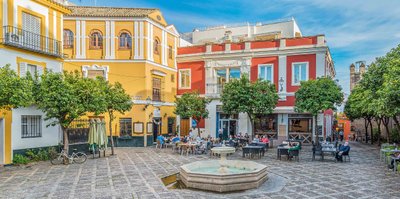
Walk the old Jewish quarter in Barrio Santa Cruz. Narrow lanes curl beneath white walls splashed with bougainvillea. The scent of jasmine rises as locals greet each other in melodic Spanish. You might lose yourself here, only to find a sunlit plaza trimmed by towering palms.

Around the next corner, Plaza de España stuns with blue and gold mosaics. Carriage horses stamp the cobbles. Fountain spray cools your brow. Linger on a tiled bench, each marking a city from Andalusia’s geography and history.

Daily Rituals, Local Flavors

Seville shines brightest in its rhythms—late breakfasts, lazy afternoons, vibrant nights. Slip into Casa Morales for a tapa of salmorejo, a silky cold soup, or tangy aceitunas. Locals pour sherry in quiet bars—don’t shy away.

Evenings bring flamenco—not the tourist spectacle, but raw emotion in hidden peñas. There, feet thunder in the dark as singers cry ancient tales. Listen—each note, a story. Savor your fino with papas aliñás.

  • Begin with churros y chocolate at Bar El Comercio.
  • Take a shaded walk through Parque de María Luisa.
  • Climb the Giralda tower for city-wide vistas.
  • Seek artisan ceramics at Triana market stalls.

Seville welcomes newcomers like old friends. Let its colors, tastes, and stories wash over you—slowly, generously. No checklist can capture that first, spellbound visit.
Return travelers

The thrill of a first visit fades, but Seville deepens with return. The city lets you slip past postcard moments and step into its quiet, daily heart—the half-heard conversations, the autumn haze over Andalusian rooftops, the smoky drift from a distant grill.

Beyond the Center

Return travelers see familiar sights in new light. Skip the crowds at the Real Alcázar. Instead, watch sunrise from the Setas de Sevilla, where fog blurs city edges. Wander into the Feria district, where worn bodegas brim with chatter and simple plates of espinacas con garbanzos.

Here, Seville’s edges reveal real life. Blocky apartments, laundry strung above graffiti, bars filled with old men discussing Betis football. Pause in Alameda de Hércules—a plaza pulsing with youth, artists, and scruffy dogs.

Flavors and Friendships

Memories get rooted through repetition. Shop the Mercado de Feria for bright tomatoes and jamón sliced by hand. Let conversations bloom with shopkeepers—stories shared in spiced Andalusian slang. Sip afternoon vermouth in sunlight, feet resting on ancient stones or wobbly metal chairs.

Record store clerks, flamenco guitarists, street poets—these become companions. Hearts open over glasses of tinto de verano. Life glows along backstreets, far from monument queues.

  • Order menudo at Bodega Dos de Mayo for Sunday lunch.
  • Browse Puente de Triana’s vintage shops and riverside hangouts.
  • Catch indie theater at Sala La Fundición.
  • Visit a rooftop bar in El Arenal at sunset—locals linger here.

On return, Seville gives up its slow secrets. You belong—not just a visitor, but part of the city’s long conversation. Each visit uncovers a new layer—humble, generous, alive.

Must-see locations

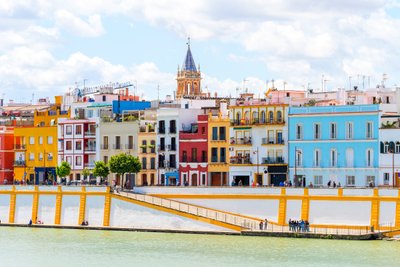
Barrio Santa Cruz, a lively historic quarter with colorful façades and winding alleys.
i

Barrio Santa Cruz, a lively historic quarter with colorful façades and winding alleys.

Barrio Santa Cruz

Barrio Santa Cruz charms with whitewashed lanes, orange trees, and lively plazas. Explore the old Jewish quarter, relax by Murillo Gardens, and visit tapas bars buzzing with music and flamenco energy. History around every corner.

Learn More
Triana district, full of colorful streets, lively tapas bars, and rich local culture.
i

Triana district, full of colorful streets, lively tapas bars, and rich local culture.

Barrio de Triana

Barrio de Triana blends flamenco music, vibrant ceramics, and riverside walks along the Guadalquivir. Explore Calle Betis's tapas bars, tour old tile workshops, and watch artists perform in Plaza del Altozano. Authentic Sevilla energy pulsing.

Learn More
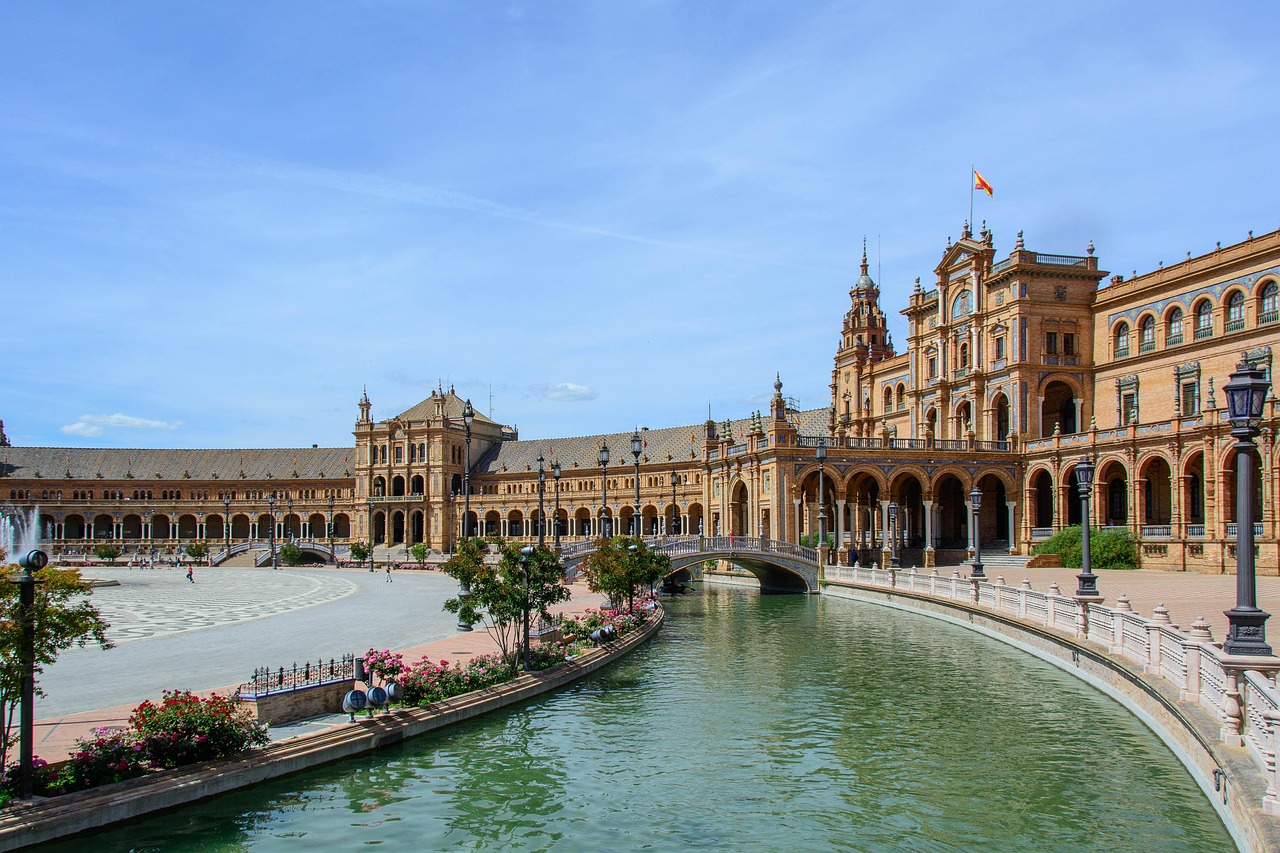
a large building with a fountain in front of it
i

a large building with a fountain in front of it

Photo by Lothar Boris Piltz

Plaza de España

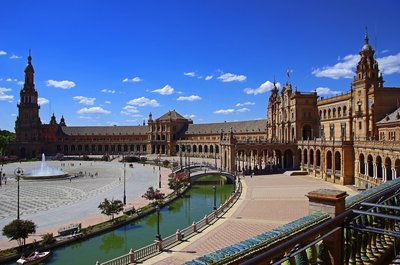
Curving along a sparkling canal, Plaza de España in Seville boasts tiled bridges, horse-drawn carriages, and soaring towers. Explore shaded colonnades, vibrant azulejos, and lively gatherings in Maria Luisa Park.

Learn More
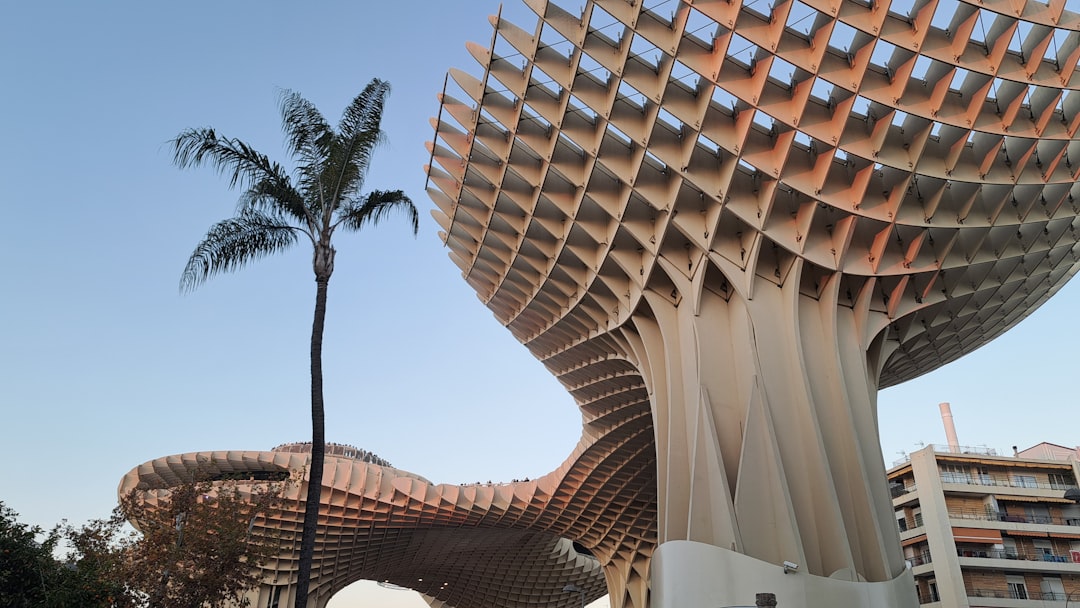
a tall building with a palm tree in front of it
i

a tall building with a palm tree in front of it

Photo by Sergio Guardiola Herrador

Setas de Sevilla

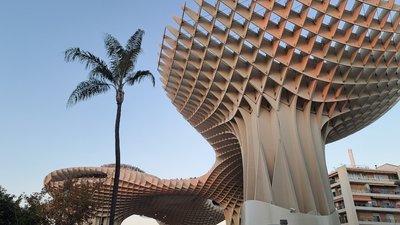
Soaring over Plaza de la Encarnación, Setas de Sevilla wows with its massive wooden canopy, panoramic city views, and lively local market below. Enjoy sunset strolls, catch art exhibits, and savor tapas in this modern Seville hotspot.

Learn More
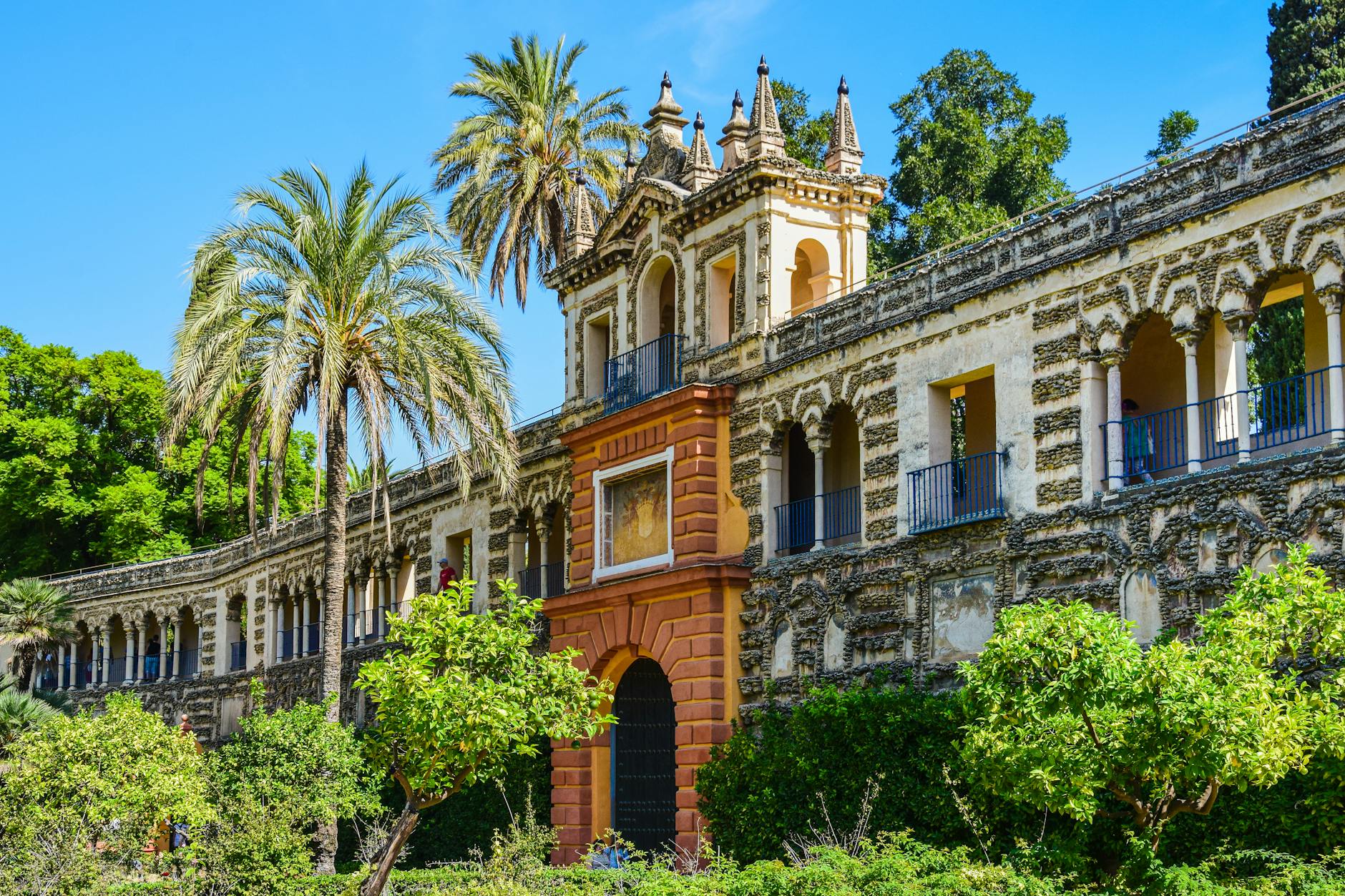
Discover the stunning Alcazar Palace with lush gardens, palm trees, and historic architecture in Seville, Spain.
i

Discover the stunning Alcazar Palace with lush gardens, palm trees, and historic architecture in Seville, Spain.

Photo by AXP Photography

Royal Alcázar of Seville

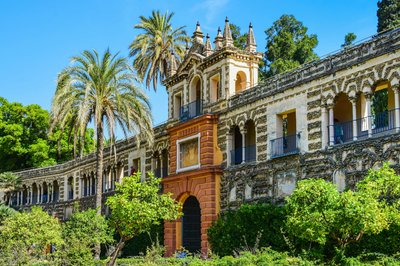
Royal Alcázar of Seville dazzles with intricate Moorish arches, lush green patios, and tilework that captures centuries of history. Walk fragrant gardens, explore royal chambers, and hear legends echoing through lively halls.

Learn More

How to get there

By air

Seville is served by Seville Airport (Aeropuerto de Sevilla, also known as San Pablo), located about 10 km northeast of the city center. The airport offers direct flights to and from many Spanish and European destinations.
Options to get to town:
TypePriceDurationWhere to buy
TaxiApprox. €22–€30 depending on time of day and traffic15–20 minutesAt the taxi rank outside arrivals
Airport bus€4 one-way (€6 return)35 minutesTicket can be purchased from driver or at airport kiosk
Train/shuttleNot available (no direct rail link from the airport to city)

By train

Seville’s main railway station, Santa Justa, is a major hub for high-speed AVE trains and regional trains. High-speed trains connect Seville to Madrid, Cordoba, and other cities.
Useful websites for train tickets:

By car

Seville is well-connected by road, accessible from other major Spanish cities via the A-4, A-49, and A-92 highways. Parking in central Seville can be challenging and often requires payment.
Additional charges to be aware of:
FeeCostHow to pay
Toll / vignette / emission stickerSome highways (mainly AP-designated) may charge tolls; prices vary. No vignette or emission sticker required for Seville as of 2024.Toll booths on relevant highways
Other driving costsPaid parking in central Seville: from €1.50–€2.50 per hour, parking garages can charge €18–€25 per dayOn-street ticket machines or car park offices

How to get around

Public transport

Seville has an efficient and affordable public transport system, primarily operated by buses and the Metro. The TUSSAM bus network covers the whole city, while Metro de Sevilla (single line) connects key neighborhoods and the outskirts. Trams also run through central areas.

Ticket options:
Ticket TypePriceWhere to buy
Single ticket€1.40 (bus), €1.35 (metro)Onboard buses, metro stations, or kiosks
Day pass€4.50 (1-day unlimited bus & tram rides)TUSSAM kiosks, official machines at metro or tram stations

Taxis & ridesharing

Taxis are widely available in Seville, easily found at ranks or hailed on the street. Ridesharing apps provide an alternative with upfront pricing. Both are excellent for convenience or late-night transport.

Service providers:
ProviderPriceHow to book
Local taxiStarting at €1.45 + €0.92/km (approximate daytime rate)Taxi ranks, flagged on street, or by phone/official apps
Ridesharing appVaries by time and distance (comparable to or slightly cheaper than taxis)Uber, Bolt, or Cabify app

Car rental

Car rentals are best for regional explorations out of Seville, as driving and parking in the historic center can be challenging. National and international companies operate at the airport and city center.

Rental options:
ServicePriceHow to book
Daily rentalFrom €30/day (small car, basic insurance)Airport desks, city branches, or main rental company websites
Weekly rentalFrom €160/weekSame as above

Bike & scooter rental

Seville is very bike-friendly with dedicated lanes across the city. Public bike-share (SEVICI), private rentals, and electric scooter providers are convenient for short city rides.

Rental options:
ServicePriceHow to book
Bike rentalFrom €3–€5/hour or €12–€15/daySEVICI stations (for bike-share) or local bike shops
Scooter rentalFrom €0.15–€0.25/minuteApps such as Lime, VOI or local scooter companies

What to eat

Crisp air suffused with the smell of orange blossoms. Plaza shadows hiding lively tapas bars. In Seville, every step tempts the palate—garlic, sherry, and olive oil sizzle in hidden courtyards. Here, food isn’t background. It’s the heartbeat. Every table tells a story, every dish a chapter about centuries of flavors. I came hungry, left amazed. In Seville, eating isn’t just a meal—it’s an adventure, alive with warmth and tradition.

Signature Dishes

  • Salmorejo: Creamy chilled tomato soup, thickened with bread and topped with jamón or eggs. Pure Andalusian comfort for hot afternoons.
  • Espinacas con Garbanzos: Savory blend of spinach and chickpeas, sprinkled with cumin and garlic. Moorish roots, perfect for vegetarians.
  • Presa Ibérica: Juicy grilled pork shoulder, marbled and smoky. Best sliced thick and seared over open flames.
  • Tortilla de Camarones: Golden, crispy shrimp fritters from nearby Cádiz. Crunchy, briny, bite-sized—impossible to eat just one.
  • Flamenquín: Ham-wrapped pork, battered and fried, served piping hot. A satisfying Cordoban classic that feels at home in Seville’s bars.

Street Food & Markets

Mornings in Mercado de Triana mean chatter and fresh produce. Fish mongers shout out the catch—baby squid, bright-eyed tuna. Market stalls serve montaditos, tiny sandwiches with juicy fillings. Outside, churro carts sizzle by the Guadalquivir River. Locals dunk long, ridged dough into molten chocolate. Try bocadillo de pringá—pulled pork on a crusty roll—at Bodega Santa Cruz. Weekends, Alameda de Hércules fills with pop-up food stalls. Cheese, jamón,and almonds tempt from every corner. Whether you grab a tapa or a hot fritter, the city’s street eats taste best under the sun.

Sweet Treats & Drinks

No day is complete without torrija, eggy bread soaked in honey—a dream during Semana Santa. Crunchy-sweet yemas sevillanas pop in your mouth, orange-scented and bright. Sip cool manzanilla sherry—nutty and light; perfect for long afternoons. Local café con leche powers a sunrise wander, best paired with an ensaimada from Bar El Comercio. Seville knows sweets—simple, unforgettable.

Why Travelers Eat Here

  • Tapas culture: Visit three bars in an hour, never eat the same thing twice.
  • Fresh, local produce: Markets burst with olives, oranges, seafood, and heritage pork.
  • Inventive simplicity: Ancient recipes, bold flavors, served in relaxed, social spaces.
  • Living history: Find Moorish, Roman, and modern flavors in every Seville bite.

Seville’s energy pulses through its food. Long after dessert, I remember the city—tangy, sunlit, impossible to forget. Come hungry. Leave enchanted.

Top Rated Restaurants

El Sella

El Sella

4.7 (4.8k reviews)
$$
LocationC. Pureza, 4, 41010 Sevilla, Spain
LaSanta, cocina tradicional

LaSanta, cocina tradicional

4.7 (2.5k reviews)
$
LocationC. Regina, 4, Casco Antiguo, 41003 Sevilla, Spain
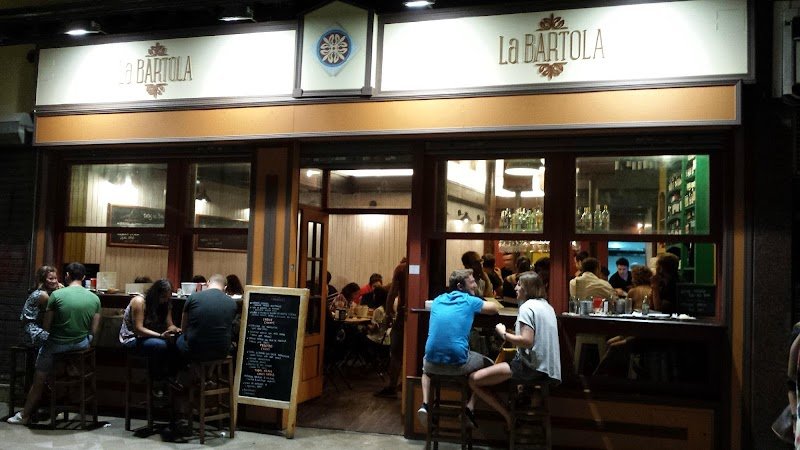
La Bartola

La Bartola

4.6 (5.6k reviews)
$
LocationC. San José, 24, Casco Antiguo, 41004 Sevilla, Spain
El Librero Tapas Y Quesos

El Librero Tapas Y Quesos

4.6 (4.7k reviews)
$$
LocationPje. Andreu, 4, Casco Antiguo, 41004 Sevilla, Spain
La Malvaloca

La Malvaloca

4.6 (6.2k reviews)
$$
LocationPl. de la Encarnación, 20, Casco Antiguo, 41003 Sevilla, Spain

Accommodations

Morning can be quiet in Seville, streets washed and time drifting. By dusk, pulsing energy fills the plazas. Where travelers calm their nights or meet the day matters. Place shapes mood. Picking the best neighborhood isn’t just about somewhere to sleep. It anchors your whole Seville story. Comfort, food scent on the breeze, noise, and light all mix around you. Every traveler’s perfect base—different.

Neighborhood Overview

  • Santa Cruz: Narrow alleys, orange trees, romance at every turn. Classic old quarter near the cathedral. Great for couples and first-timers who want Seville’s postcard look, but nights can bring some crowds and noise.
  • Arenal: Walkable to top sights, with bullfighting history and riverside tapas bars. Business travelers, arts enthusiasts, and night owls thrive here, but parking—almost impossible.
  • Triana: Soul of flamenco, slower mornings, local flavor. Best for repeat visitors, cultural explorers, and those who love a lived-in urban feel. Don’t expect luxury hotels; it’s about character here.
  • Macarena: Up-and-coming, creative, slightly away from the tourist core. Many young families and boho travelers set up here—less nightlife, more markets and traditional eateries. Quieter, but some streets still feel rougher around the edges.
  • Nervión: Modern shopping and transport links. Well-suited to business travelers and families. Fewer classic sights on your doorstep, but comfort and local life in good supply.

Types of Accommodation

  • Hotels: Grande Dama like Hotel Alfonso XIII cost €350+/night in spring; standard 3-stars average €120-180.
  • Boutique Guesthouses (pensiones, hostales): Charming rooms close to €70-120. La Banda or Corral del Rey are favorites for personality and central location.
  • Short-Term Apartments: Good for families or longer stays. Expect €80-180 per night, more during festivals.

Insider Tips for Booking

Reserve early for Semana Santa and Feria—prices double, places vanish. VAT (tax) nearly always included in quoted rates, but ask. Some city tax may appear on arrival. Air conditioning is essential by June.

Late evening, church bells fade, and windows glow. My favorite stays in Seville always mix calm with the rhythm just beyond the courtyard door. The whole city feels close when you land in the right place.