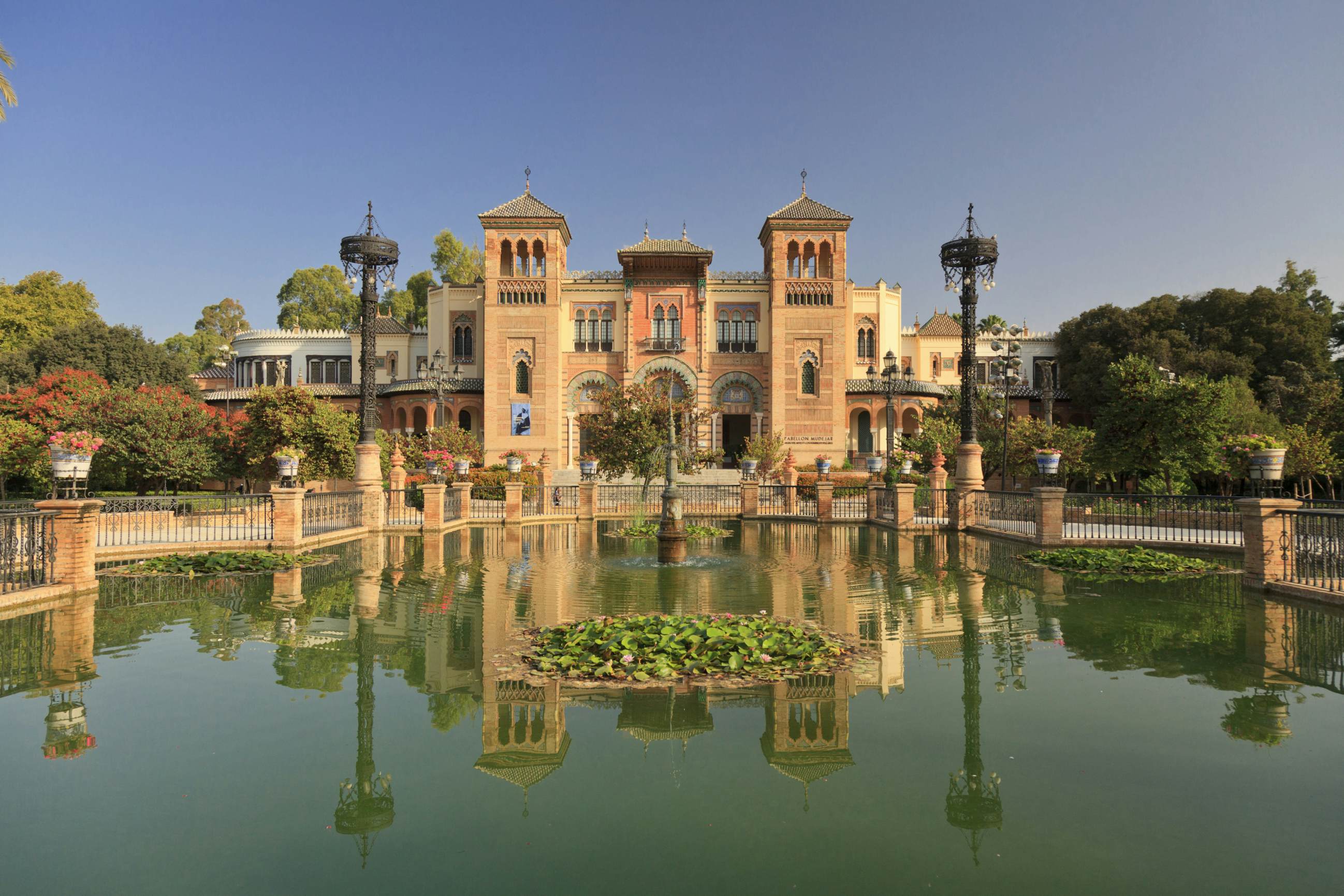
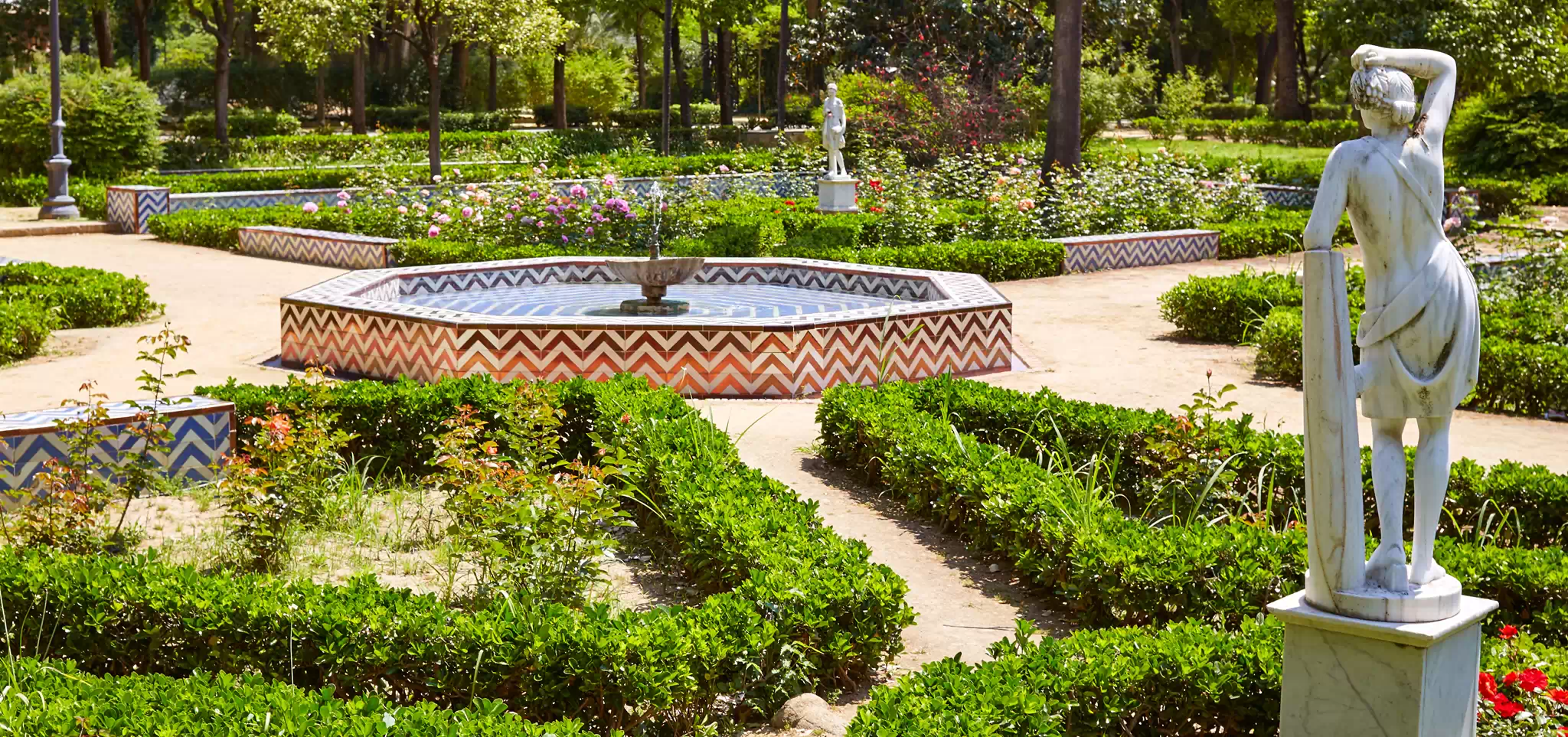
Parque de María Luisa, a lush Seville park with shaded paths, fountains, and vibrant gardens.
Parque de María Luisa, a beautiful green oasis in Seville with trees, flowers, and scenic walkways.

Parque de María Luisa

Seville, Spain
i

Parque de María Luisa, a lush Seville park with shaded paths, fountains, and vibrant gardens.

Lush with ancient palms, fragrant orange trees, and Moorish-inspired fountains, Parque de María Luisa has become the green heart where city life pauses to breathe. Winding walkways draw children, lovers, and artists through a shifting mosaic of gardens and pavilions. Here, history lingers in tiled benches, while everyday moments unfold beneath canopies of whispering leaves. For visitors, the park offers a gentle retreat into beauty, culture, and the lingering magic of old Andalusia—without ever leaving the city’s pulse behind.

Visiting Info

Currency
Entrance fee
Free
Hours
Opening hours
Monday: 8:00 AM – 12:00 AM
Tuesday: 8:00 AM – 12:00 AM
Wednesday: 8:00 AM – 12:00 AM
Thursday: 8:00 AM – 12:00 AM
Friday: 8:00 AM – 12:00 AM
Saturday: 8:00 AM – 12:00 AM
Sunday: 8:00 AM – 12:00 AM

Contact Information

Location
Address
41013 Seville, Spain

Planning your visit

Visiting Parque de María Luisa requires only a little planning, but a few key decisions mean the difference between a busy midday stroll and a tranquil morning escape. The park sits on the southern edge of the city center, easily reached yet sometimes bustling with families, cyclists, and school groups. Most areas welcome all guests for free, with plenty of open space for wandering or resting. Crowds build quickly on weekends or sunny afternoons. Early risers and late walkers discover quieter paths, softened by golden light. Prepare well, and this park becomes not just a stop on the map, but a memorable part of any adventure.

  • Best time to visit: Early morning or late afternoon, especially in spring and fall, for mild weather and fewer crowds.
  • How to get there: Walk from the city center or take tram line T1 to Prado de San Sebastián; several bus lines stop nearby.
  • Accessibility: Wide, paved paths suit strollers and wheelchairs; plenty of benches for seniors; open lawns for children to play.
  • Average visit duration: Two to four hours, depending on pace and interest in nearby museums.

Must see stuff

Parque de María Luisa thrives on variety—from grand monuments, to shaded corners humming with local birds. The centerpiece, Plaza de España, fans out in a sweep of brick, tile, and curving bridges. But step off the main plaza, and quiet gardens, secret ponds, and trails scattered with poetry open up a different world. Art, history, and Andalusian style seem to meet around every turn, making each visit just a little surprising. Key stops emphasize both the park’s iconic sights and its quieter delights.

  • Plaza de España: A sprawling semi-circle lined with tile alcoves for every Spanish province; row a boat in the canal or snap photos beneath ornate towers.
  • Plaza de América: Home to elegant museums—the Archaeological Museum and the Museum of Popular Arts and Customs—framed by peacocks and rose beds.
  • Glorieta de Bécquer: A poetic monument shaded by cypress, famous for its romantic sculptures and tranquil air.
  • Lotus lakes and duck ponds: Quiet spots to watch wildlife, with benches perfect for people-watching or sketching.
  • Forest avenues: Paths lined with jacarandas and palms, ideal for walking or cycling.
  • Photo opportunities: The sunset light on Plaza de España, tiled benches and pavilions, or wide lawns dotted with picnics and street musicians.
  • History corner: The park was gifted to the city in 1893, and redesigned for the 1929 Ibero-American Exhibition, blending Spanish, Moorish, and Art Deco touches throughout the grounds.

Tips for your visit

A few well-timed tips smooth any visit and reveal local gems often missed by hurried tourists. While the park is safe and family-friendly, summer afternoons can turn humid and hot. Vendors sell snacks, but locals tend to bring a picnic or grab churros from nearby cafes. In the quieter corners, musicians may play Spanish guitar or flamenco, offering unexpected moments of art. Watch the signs: some lawns are for walking, others are protected gardens. Keep an eye on bikes and scooters sharing the wider paths—especially on weekends. Brief showers do happen in spring, so light rain jackets mean less interruption. Small drawbacks—a lack of shade in some plazas, occasional crowds—are easy to work around with a little local savvy.

  • Best times to avoid crowds: Weekday mornings or during siesta hours (2–5 pm).
  • What to bring: Water bottle, sun hat, comfortable shoes, camera or sketchbook.
  • Local etiquette: Respect posted rules about walking on grass or feeding birds; keep noise volume low near monuments.
  • Comfort and safety: Stay alert near cyclists; seek out shaded benches in warm weather; wear sunscreen all year.