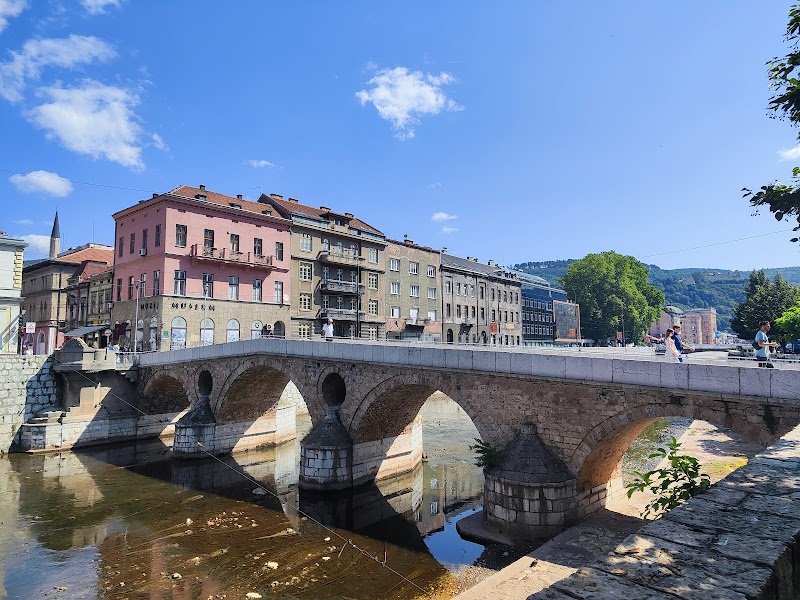
Google Places photo

Latin Bridge

Sarajevo, Bosnia and Herzegovina
i

Google Places photo

Photo by Google Places

Spanning the gentle waters of the Miljacka River, Latin Bridge stands as one of Europe’s most evocative small landmarks—legendary not for its size, but for the way history lingers on its stone arches. The bridge blends Ottoman architecture and deep-rooted local stories, set against a vibrant old town atmosphere. Countless visitors arrive with a rough idea of its fame, only to find that experiencing Latin Bridge in person delivers far more: both a sense of place and the feeling of standing at a crossroads in time.

Visiting Info

Currency
Entrance fee
Free
Hours
Opening hours
Monday: Open 24 hours
Tuesday: Open 24 hours
Wednesday: Open 24 hours
Thursday: Open 24 hours
Friday: Open 24 hours
Saturday: Open 24 hours
Sunday: Open 24 hours

Contact Information

Location
Address
Obala Kulina bana 71000, Sarajevo 71000, Bosnia and Herzegovina

Planning your visit

Charting a trip to Latin Bridge proves straightforward for most travelers, but a little preparation helps unlock the best experiences. The bridge nestles right in Sarajevo's historic Baščaršija neighborhood, putting it within reach of lively market streets and traditional coffee houses. While crowds remain modest outside of peak hours, midday can feel busy during festival season or public holidays, and summer brings a steady flow of passersby. Visiting early or late rewards with tranquil light, local walkers, and a sense of the bridge’s quieter daily rhythm. No tickets or advance reservations are needed, making Latin Bridge ideal for flexible wanderers or families with young explorers. Local trams and buses run frequently nearby, and the area remains mostly navigable for seniors and those with strollers, with cobblestones as the main challenge. Most find that an hour or two allows for unhurried appreciation and plenty of photos, but nearby attractions tempt lingering longer.

  • Best time to visit: Spring or autumn for pleasant weather; early morning or late afternoon for fewer crowds and softer light.
  • How to get there: Walk from central Sarajevo (10 minutes from Sebilj Fountain); tram route 1 stops nearby; taxis available, with ride-share options like Moovit or Bolt.
  • Accessibility: Well-suited for families; seniors should mind uneven stones; steps to access riverside walks may limit wheelchair access.
  • Average visit duration: 30-90 minutes.

Must see stuff

Latin Bridge compels visitors to slow down and soak up its many layers, with each view offering something new. The bridge itself draws the eye—four sturdy arches of age-softened stone reach across the water, offering different moods in shifting weather. Historic plaques and small displays explain both Ottoman engineering and the bridge’s most notorious historical moment. Just steps away, the actual street corner where Archduke Franz Ferdinand met his fate sparks curiosity about the world-changing events of 1914. Across the river, the bustling Ferhadija promenade and the Gazi Husrev-bey's Bezistan market call to those who want to dive deeper into Sarajevo's social fabric. Yet far from being only a historical site, Latin Bridge serves as a popular gathering spot for musicians and Sunday strollers, drawing in both visitors and locals. Many linger to photograph the reflections on the river or simply watch city life unfold, framed by medieval towers and red rooftops in the distance.

  • Key sights: The bridge arches and their elegant Ottoman details; the engraved memorial plaque marking the assassination site; the quiet riverside benches on both banks.
  • Unique experiences: Informal walking tours led by local history enthusiasts; street music on summer evenings; browsing nearby market stalls for fresh somun bread or wildberry jam.
  • Photo-worthy spots: The view from the northwest riverbank at sunrise or sunset; reflections beneath the arches on a calm day; the vibrant street scene on the adjacent corner.
  • Cultural or historical facts: Latin Bridge is one of Sarajevo’s oldest surviving bridges; the assassination of Franz Ferdinand here in 1914 triggered World War I; the area once marked the Ottoman-Latin (Catholic) quarter divide.

Tips for your visit

Making the most of a Latin Bridge visit means thinking like a local and walking with curiosity. Early arrivals may encounter local artists and fewer visitors, while an evening walk brings out Sarajevo’s easygoing social buzz. During winter or after rain, the stones become slick, so sturdy shoes add comfort and confidence. Travelers snapping photos benefit from bringing a wide-angle lens to capture river reflections, especially when the city’s hills glow in the background. Snack-seekers should look for local pastry shops nearby, where freshly-baked burek or baklava pair perfectly with a strong Bosnian coffee, sipped slowly on a riverside bench. While the bridge and nearby areas feel safe by local standards, pickpocketing can occur during big events or national celebrations. While relaxed dress fits right in, showing respect for local customs—like stepping aside for elders crossing or keeping noise low near memorial plaques—wins a warm smile from neighbors. And above all, allow time to simply pause and let the scene settle in; this is a place made for unrushed discovery.

  • Best times to avoid crowds: Before 9 a.m. or after 6 p.m., especially outside of summer holidays.
  • What to bring: Camera or phone; good walking shoes; small change for market snacks.
  • Etiquette: Greet shopkeepers; avoid climbing on bridge railings; check before photographing locals, especially elders.
  • Safety: Mind slippery stones in wet weather; keep valuables secure in crowds; cross streets carefully, as traffic can be unpredictable near the bridge.
Latin Bridge – Tickets, Hours & Visitor Guide