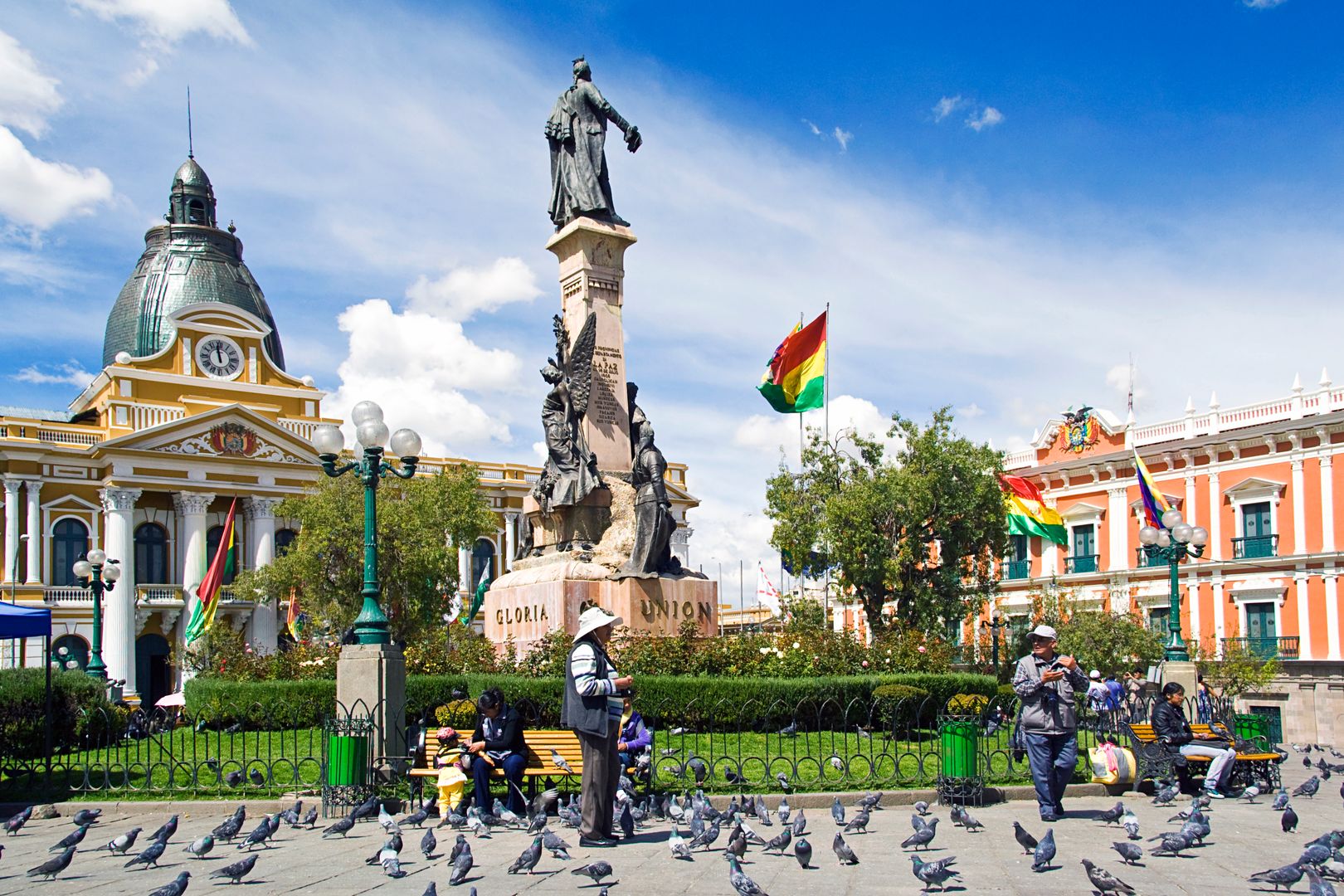
Beautiful view of Plaza Murillo

Plaza Murillo

La Paz, Bolivia
i

Beautiful view of Plaza Murillo

In the heart of Bolivia’s bustling capital stands Plaza Murillo, a gathering place with a story in every stone. Plaza Murillo combines elegant colonial buildings, spontaneous street performances, and the endless pulse of La Paz. Passersby drift between politics and play, history and daily life, creating a patchwork of energy that never stands still. The moments here are framed by grand facades and leafy trees, all under the high-country sky.

Visiting Info

Currency
Entrance fee
Free
Hours
Opening hours
Monday: Open 24 hours
Tuesday: Open 24 hours
Wednesday: Open 24 hours
Thursday: Open 24 hours
Friday: Open 24 hours
Saturday: Open 24 hours
Sunday: Open 24 hours

Contact Information

Location
Address
GV38+PH8, Socabaya, La Paz, Bolivia

Planning your visit

For travelers seeking to visit Plaza Murillo, choosing the right time and planning a smooth trip improves the experience. The square often fills with locals, so time of day affects the mood—early mornings are quiet, while afternoons bring impromptu rallies or student gatherings. Most visitors don’t need tickets or reservations, but weekday government business can draw extra crowds. The sloping streets around the plaza are full of city life, with shops and attractions all within walking distance. Parents will find shaded benches for resting, while seniors might prefer the calmer pace before lunch.

  • Best time to visit: Weekday mornings for a peaceful scene; late afternoons offer lively crowds and street vendors.
  • How to get there: Walk from the central La Paz neighborhoods, take any taxi to "Plaza Murillo," or use the Teleférico (cable car) Red or Blue lines for a short uphill walk.
  • Accessibility: Easily accessed by foot, but some walkways are uneven. Ramps aren’t common, so strollers or wheelchairs may need extra help.
  • Average visit duration: 1 to 2 hours, longer if exploring surrounding museums or taking extended people-watching breaks.

Must see stuff

The drama of Plaza Murillo unfolds along every edge. Stand beneath the shadow of the Palacio Quemado (Presidential Palace) or listen to schoolchildren reciting poems near the National Congress. Pigeons flock to the marble monument of Bolivia’s independence leader, Pedro Domingo Murillo. Locals gather for photo ops by the Steps of the Cathedral, where the bells sometimes compete with debate and folk music. From grand to quirky, the plaza’s attractions mix tradition with everyday Bolivian life.

  • Key sights or features: The Neoclassical Cathedral, with ornate doors; Palacio Quemado, seat of government; monument to Pedro Domingo Murillo with detailed bas-relief.
  • Unique experiences: Watching political protests or impromptu folk dancing, joining chess games near the fountains, or speaking with artists selling paintings directly on the square.
  • Photo-worthy locations: In front of the green lamps lining the Plaza, the colonial balconies, and the view looking up Calle Comercio stringed with flags.
  • Cultural or historical facts: Plaza Murillo was the site of Bolivia’s independence declaration; its name honors the leader burned at the stake here. Grand buildings survived revolutions, and the plaza remains the country’s public stage for civic life.

Tips for your visit

Making the most of Plaza Murillo means blending into the local flow. Crowds can gather quickly, especially if a protest or parade begins. Vendors sell tasty snacks, but pickpockets sometimes take advantage of distracted visitors. Photography is allowed in most areas except inside some government buildings; always ask permission before close-ups of locals. On sunny days, bring sunscreen—at 3,600 meters, the Andean sun burns fast. Taking small bills makes buying souvenirs or snacks easier, as change is rarely given. Above all, patience rewards careful explorers, opening doors to spontaneous music and friendly chatter.

  • Best times to avoid crowds: Visit before 10 a.m. on weekdays or after 6 p.m. in the evening golden hour.
  • What to bring: Water, a light jacket (weather changes quickly), and a camera. Comfortable walking shoes help with uneven cobbles.
  • Local etiquette or rules: Avoid loud conversation during political speeches, and do not photograph military guards. Respecting elders is essential; make way for older residents stepping onto or off benches.
  • Safety or comfort advice: Watch bags and pockets closely; avoid displaying expensive electronics. Take breaks in the shade if the altitude leaves you winded.