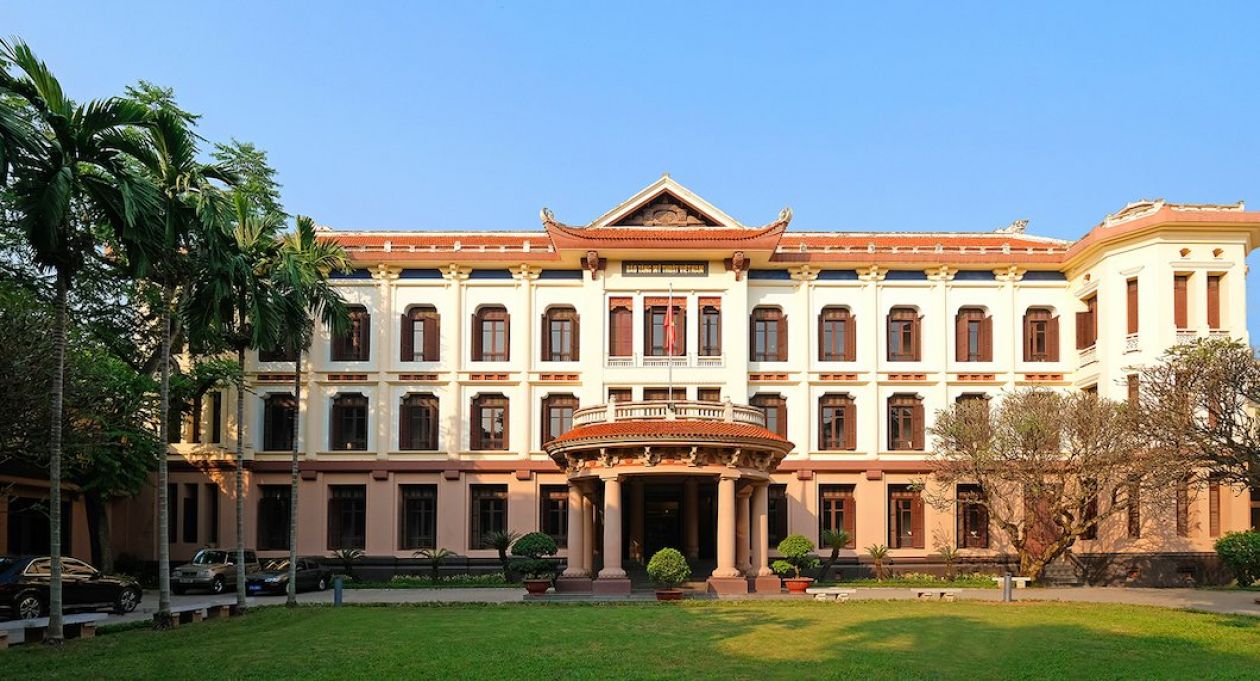
Beautiful view of Vietnam National Fine Arts Museum

Vietnam National Fine Arts Museum

Hanoi, Vietnam
i

Beautiful view of Vietnam National Fine Arts Museum

Vietnam National Fine Arts Museum stands as a quiet giant among the country’s cultural treasures. Home to centuries of creative spirit, this museum weaves together stories from ancient dynasties, French colonial influences, and bold modern brushstrokes. Stepping inside, visitors trade Hanoi's lively streets for a journey through Vietnam’s soul, told in lacquer, stone, silk, and canvas.

Visiting Info

Currency
Entrance fee
40000 VND
Hours
Opening hours
Monday: Closed
Tuesday: 8:30 AM – 5:00 PM
Wednesday: 8:30 AM – 5:00 PM
Thursday: 8:30 AM – 5:00 PM
Friday: 8:30 AM – 5:00 PM
Saturday: 8:30 AM – 5:00 PM
Sunday: 8:30 AM – 5:00 PM

Contact Information

Location
Address
66 P. Nguyễn Thái Học, Điện Biên, Ba Đình, Hà Nội, Vietnam

Planning your visit

Planning a trip to the Vietnam National Fine Arts Museum usually proves straightforward, yet a smooth experience requires a bit of forethought. The museum, set just across from the Temple of Literature, is easy to combine with other nearby sights. Mornings bring quieter halls and softer daylight for admiring artwork, while afternoons see small crowds—mainly art students and inquisitive travelers. Tickets are inexpensive and sold at the front gate, with no need for advance booking unless joining a larger group. While signage in English is available, guided tours offer more context for those eager to dig into the stories behind the art.

  • Best time to visit: Weekday mornings for fewer crowds and cooler temperatures. Spring and autumn offer the most comfortable weather.
  • How to get there: A quick taxi or ride-share from Hoan Kiem Lake takes about ten minutes. Bus routes 02 and 23 stop nearby. Scooter parking is available at the entrance.
  • Accessibility: The first floor is accessible via ramps, though upper stories require stairs. Families with strollers will find the entrance wide but some halls a bit snug.
  • Average visit duration: Allow 1-2 hours for a full but unrushed tour.

Must see stuff

The museum’s galleries showcase far more than old paintings on quiet walls. Here, ancient Champa stone carvings stand near delicate silk portraits, while powerful wartime posters share space with abstract experiments by modern artists. Each floor covers a chapter in Vietnam’s visual storytelling. Unmissable stops include the lacquer painting rooms, glowing with mysterious depth, and the dimly lit Buddhist sculpture gallery, where wooden Bodhisattvas radiate serenity. For those with an eye for detail, the embroidered textiles and folk art ceramics offer gentle reminders of Vietnam’s rural past. Cameras are allowed, and bright courtyard corners often spark spontaneous sketching sessions among students.

  • Key sights or features: Ancient Buddhist wood sculptures, Champa sandstone carvings, French-influenced oil paintings, and the signature lacquer art collection.
  • Unique experiences: Join a brief guided tour for deeper insights; try spotting local art students at work or resting in peaceful side rooms.
  • Photo-worthy locations: The open-air inner courtyards, spiral staircase views between floors, and the sunlit lacquer galleries on the top floor.
  • Cultural or historical facts: Many exhibits show how artists responded to war, peace, and change—from centuries past to Vietnam’s rapid modernization after 1986.

Tips for your visit

Most visitors wander the museum in quiet reflection, but a few useful habits boost comfort and enjoyment. Early arrivals can stroll empty galleries, while later in the day, quick breaks in the breezy courtyard help tired feet. The museum’s shop, housed in a cool atrium, sells decent art books and printed scarves—great for souvenirs. While the air conditioning works well most days, the wooden floors in older wings can creak and echo, especially when groups pass through. Friendly staff give directions but rarely linger, so map out favorite sections before starting. Light snacks are allowed in the courtyard, but food and drink stay outside gallery rooms.

  • Best times to avoid crowds: Visit before 10 a.m. or after 3 p.m. for the calmest experience.
  • What to bring: A water bottle, notebook for sketching or notes, and a fully charged camera or phone.
  • Local etiquette or rules: Speak softly, keep a respectful distance from artworks, and ask before photographing local students or staff.
  • Safety or comfort advice: Wear comfortable shoes and consider bringing a light sweater, as the air conditioning can sometimes be chilly in quieter halls.