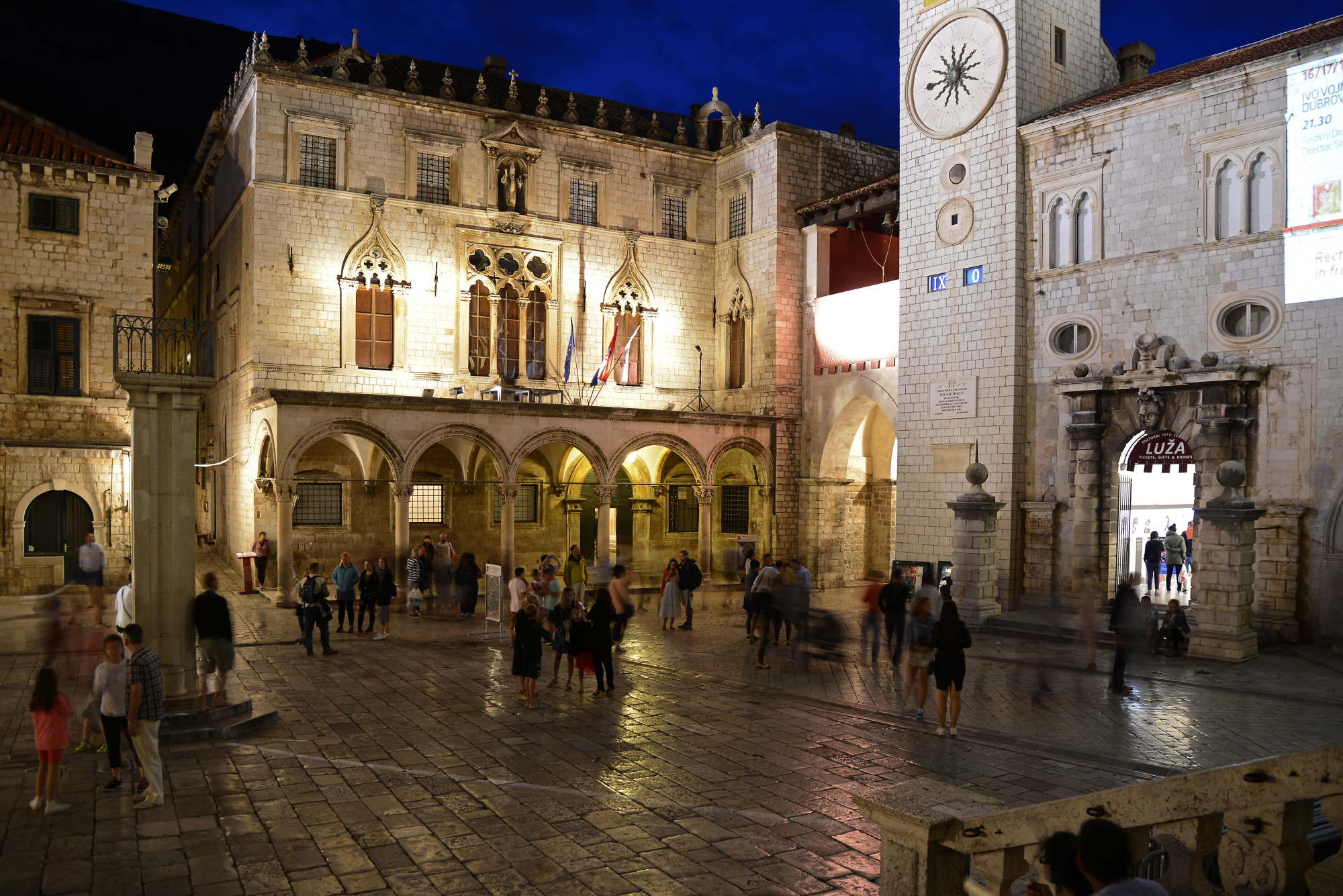
Sponza Palace, a beautifully preserved Dubrovnik landmark with Gothic-Renaissance architecture.

Sponza Palace

Dubrovnik, Croatia
i

Sponza Palace, a beautifully preserved Dubrovnik landmark with Gothic-Renaissance architecture.

Stone arches reach toward sunlight while centuries-old walls echo with history. Sponza Palace stands as a living memory of Dubrovnik’s golden past—one part Gothic, one part Renaissance, and entirely captivating. Behind the grand façade, traces of merchants, artists, and statesmen fill its echoing corridors. Today, vibrant exhibits and lively gatherings create a unique blend where the past feels close enough to touch.

Visiting Info

Currency
Entrance fee
Free
Hours
Opening hours
Monday: 9:00 AM – 3:00 PM
Tuesday: 9:00 AM – 3:00 PM
Wednesday: 9:00 AM – 3:00 PM
Thursday: 9:00 AM – 3:00 PM
Friday: 9:00 AM – 3:00 PM
Saturday: 9:00 AM – 3:00 PM
Sunday: Closed

Contact Information

Location
Address
Stradun 2, 20000, Dubrovnik, Croatia

Planning your visit

Planning a trip to Sponza Palace rewards the curious and organized alike. The landmark sits near Dubrovnik’s main entrance, just minutes from the iconic Pile Gate. Summers often attract heavy crowds, especially around noon when cruise groups sweep into the Old Town. Quieter mornings mean softer light and time to savor the details. No tickets are needed for the ground floor, but special exhibitions may require a small entry fee. Strollers and wheelchairs fit through wide doors, although certain older rooms have a few small steps.

  • Best time to visit: Early mornings or late afternoons from April to June and September to October avoid the thickest crowds and hottest weather.
  • How to get there: On foot from the Pile Gate; city buses stop nearby, and taxis drop at the Old Town gate.
  • Accessibility: Flat entry and spacious ground floor; assistance needed for upper levels due to steps.
  • Average visit duration: 30 minutes to an hour, longer for guided tours or special exhibits.

Must see stuff

Sponza Palace impresses at first glance, but details matter most. The elegant stone courtyard opens into smaller exhibits, each with their own story. Vaulted ceilings and patterned windows frame shafts of Mediterranean light. Locals still come here for civil ceremonies or to browse the grand old archives. Cameras linger on carved pillars and the legendary clock tower. Beyond the famous architecture, special exhibitions by Dubrovnik’s artists or the haunting memorial to fallen defenders offer rare insight into the city’s soul.

  • The Inner Courtyard: Known for photogenic colonnades and frequent performances during festivals.
  • City Archives: Some displays span seven centuries of historic documents, open for viewing with permission or during tours.
  • War Memorial Room: Poignant, personal photos and stories from the 1990s Homeland War.
  • Clock Tower Pointe: A hidden vantage point for unique photos of Old Town rooftops.
  • Inscribed Pillars: Look for carved graffiti left by visitors—and soldiers—over hundreds of years.

Tips for your visit

To make the most of Sponza Palace, patience and preparation help. Mornings before 10am see fewer tour groups, but sudden rain can make marble floors a little slippery. Local etiquette keeps voices low out of respect for archives and memorials. Small bags and cameras are welcome, but flash photography is often forbidden in exhibition rooms. The palace’s open-air courtyard cools quickly in the afternoon breeze, so a light layer comes in handy during spring and fall. Free concerts sometimes pop up with little warning, rewarding those who linger, while the stone benches in the shade offer a spot for quiet reflection away from Dubrovnik’s busy streets.

  • Best times to avoid crowds: Before 10am or after 5pm; weekdays outside peak summer.
  • What to bring: Water bottle, camera (without flash), light sweater, and comfortable shoes for variable paving.
  • Local etiquette: Keep noise to a minimum—archives are working offices, and memorials deserve quiet respect.
  • Safety or comfort advice: Watch for slick floors after rain, and children should be supervised in the open courtyard.