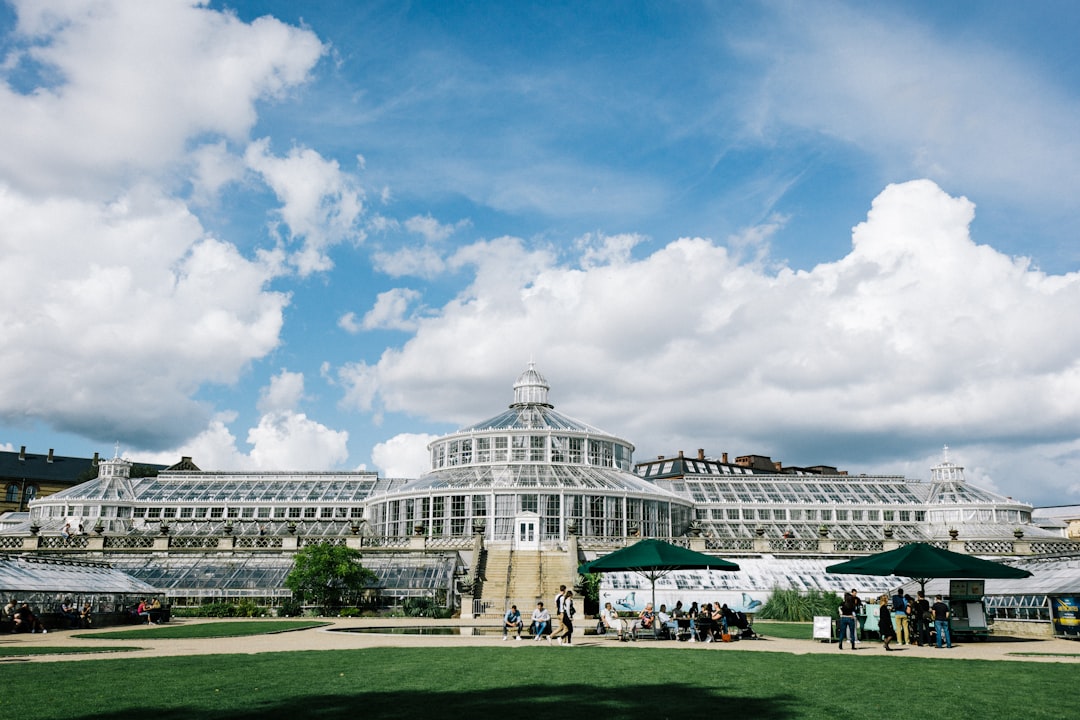
people walking on green grass field near white building under blue and white cloudy sky during

Botanical Garden

Copenhagen, Denmark
i

people walking on green grass field near white building under blue and white cloudy sky during

Photo by Kristijan Arsov

Green spaces in city centers can feel rare, but a few offer much more than just a place to rest. Botanical Garden, Copenhagen, invites travelers into a living museum, where every leaf and flower tells a story stretching across continents and centuries. With its peaceful ponds, soaring glasshouses, and winding paths, this garden gives visitors a chance to slow down and discover treasures from around the world—without ever leaving the heart of the city.

Visiting Info

Currency
Entrance fee
60 DKK
Hours
Opening hours
Monday: 8:30 AM – 4:00 PM
Tuesday: 8:30 AM – 4:00 PM
Wednesday: 8:30 AM – 4:00 PM
Thursday: 8:30 AM – 4:00 PM
Friday: 8:30 AM – 4:00 PM
Saturday: 8:30 AM – 4:00 PM
Sunday: 8:30 AM – 4:00 PM

Contact Information

Location
Address
Gothersgade 128, 1123 København K, Denmark

Planning your visit

Visiting Botanical Garden, Copenhagen, works best with a little preparation. Central yet tranquil, the gardens welcome guests year-round, but each season offers distinct experiences: blossoming cherry trees in spring, lush greenery in summer, fiery leaves in autumn, and quiet frost-laced paths in winter. Entry is free to the outdoor gardens, though special exhibitions or entry to the historic Palm House may require a ticket. The garden’s location, adjacent to the Natural History Museum and within walking distance from Nørreport Station, makes it easily accessible by foot, bike, or public transportation. Strollers and wheelchairs navigate main paths with ease, while benches provide plenty of rest spots for everyone. Families will find space for picnics, while botany enthusiasts can linger among rare plants and tall ferns for hours, even on a rainy day.

  • Best time to visit: Late spring to early autumn, mornings for fewer crowds.
  • How to get there: Just steps from Nørreport Station via S-train, Metro, or local buses. Bike racks at all entrances.
  • Accessibility: Wheelchair- and stroller-friendly, with accessible restrooms. Main areas feature broad, level paths.
  • Average visit duration: 1 to 2 hours, though plant lovers often stay much longer.

Must see stuff

Spanning over 10 hectares, the Botanical Garden reveals a collection both impressive and intimate. At its heart, the 19th-century Palm House glows with tropical heat and towering palms, while outdoors, flower beds and themed gardens introduce rare Arctic plants, old Danish roses, and herbs used in ancient remedies. The Rococo-style greenhouses, with arched glass ceilings and spiral staircases, create memorable photo opportunities—especially when sunlight streams through dewy windows. Quiet water lilies bloom on the central pond, and hidden benches reward those who wander off the main paths. Enthusiastic guides lead seasonal tours, sharing stories about odd medicinal plants or the origins of ancient trees. For visitors seeking something unique, the Alpine garden’s whispering groves or the living “seed bank” provide glimpses into projects focused on preserving species at risk.

  • The Palm House: Victorian-era greenhouse with exotic plants and a sky-high walkway overlooking rainforest canopies.
  • Greenhouses: Tropical butterflies (in summer), orchids, succulents, and more in specialized glasshouses.
  • The Lake: Calm water perfect for reflection photos, surrounded by old-growth trees and aquatic plants.
  • Alpine Garden: Rare mountain plants, surprisingly vibrant even in the Danish climate.
  • Guided Tours: Themed walks uncover history, biodiversity efforts, and even ghost stories linked to the garden’s past.
  • Historical facts: Established in 1874, the garden houses over 13,000 species and supports major conservation research in Scandinavia.

Tips for your visit

While the Botanical Garden offers peaceful escapes, smart planning ensures a truly relaxed experience. Early mornings or weekday afternoons mean fewer visitors and quieter paths. During rainy spells, the glasshouses provide warmth and tropical vibes—but can get humid, so light clothing helps. Photography is encouraged, though tripods may need special permission, and picking flowers or plants is not allowed. Quiet voices keep the atmosphere gentle, especially as students from nearby universities often use the garden for study breaks. Food must be enjoyed on designated lawns or benches, and feeding the ducks is frowned upon, for the health of both birds and plants. For those interested in learning, stopping by the information desk in the welcome center yields maps highlighting seasonal blooms and events. Occasional construction or maintenance can close small sections, but detours are well signed.

  • Best times to avoid crowds: Early morning or after 4 p.m., especially on weekends.
  • What to bring: Comfortable shoes, camera or smartphone, water bottle, and a light jacket.
  • Local etiquette: Walk only on marked paths, be respectful of quiet zones and research areas, no picking plants.
  • Safety and comfort: Main paths are smooth, but some gravel trails may be tricky with wheels. Greenhouses can be humid—dress in layers. Toilets and drinking water available onsite.