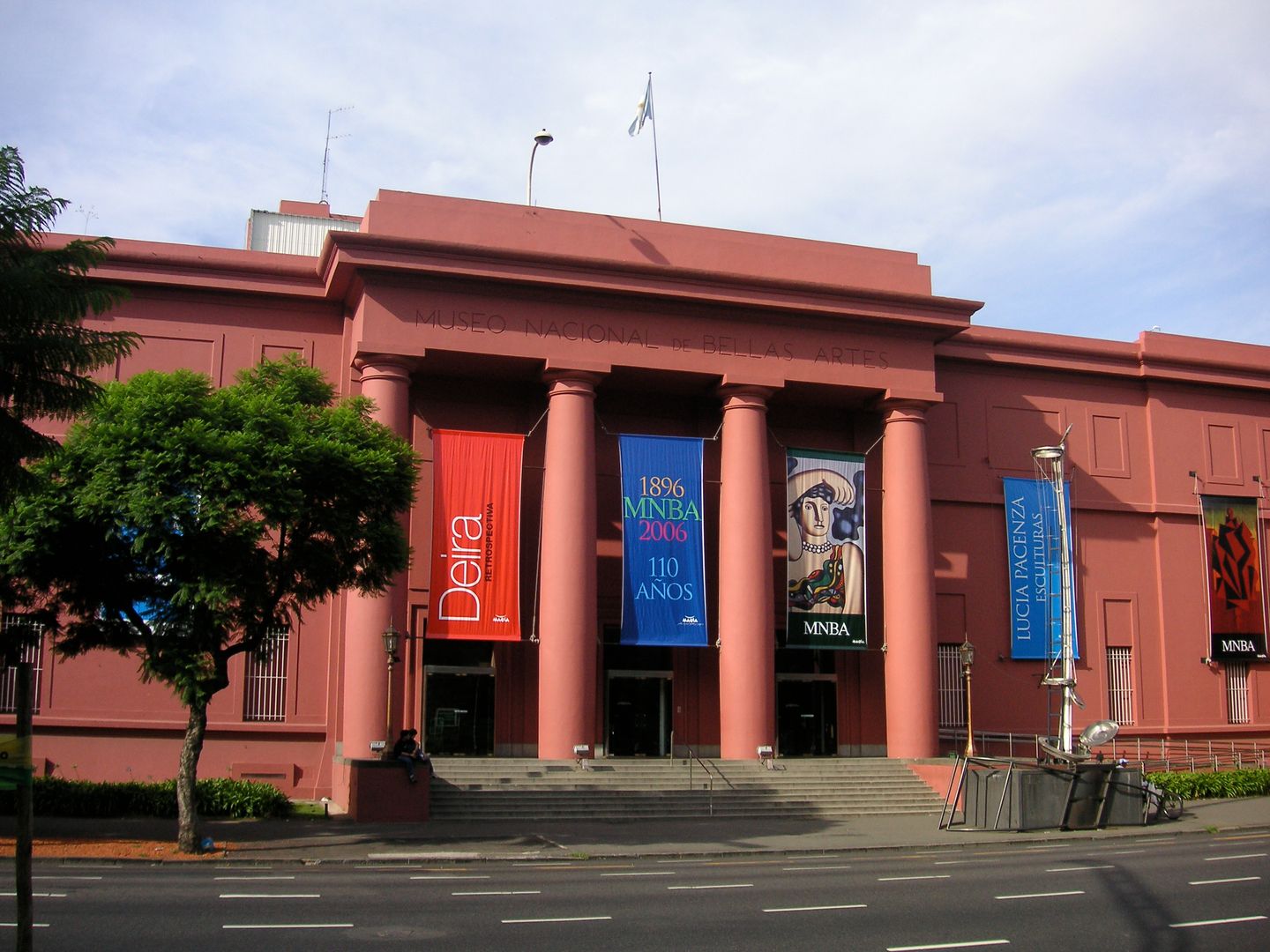
Beautiful view of Museo Nacional de Bellas Artes

Museo Nacional de Bellas Artes

Buenos Aires, Argentina
i

Beautiful view of Museo Nacional de Bellas Artes

Art tells the story of a nation in ways words rarely can. At Museo Nacional de Bellas Artes, the conversation between old masters and bold new voices unfolds across floors and centuries. Each gallery invites visitors to linger, discover, and connect with Argentina’s deep artistic roots and vibrant creativity.

Visiting Info

Currency
Entrance fee
Free
Hours
Opening hours
Monday: Closed
Tuesday: 11:00 AM – 7:30 PM
Wednesday: 11:00 AM – 7:30 PM
Thursday: 11:00 AM – 7:30 PM
Friday: 11:00 AM – 7:30 PM
Saturday: 10:00 AM – 7:30 PM
Sunday: 10:00 AM – 7:30 PM

Contact Information

Location
Address
Av. del Libertador 1473, C1425 Cdad. Autónoma de Buenos Aires, Argentina

Planning your visit

Organizing a day around Museo Nacional de Bellas Artes, nestled in Buenos Aires’ La Recoleta district, rewards both seasoned art lovers and newcomers. No matter the season, crowds fill the elegant halls, but with a bit of planning, every visitor can carve out personal moments with masterpieces. The museum is free, but special exhibitions sometimes require tickets. Weekday mornings, especially in spring and fall, offer quieter hallways and softer light through the tall windows, ideal for soaking in colors and brushstrokes undisturbed.

  • Best time to visit: Mid-morning or early afternoon on weekdays; spring and fall offer milder weather.
  • How to get there: Subte Line H stops nearby at Facultad de Derecho; several buses run along Avenida del Libertador. Taxis and rideshares know the museum well.
  • Accessibility: Elevators and ramps make most galleries accessible; baby strollers are welcome. Benches invite longer visits for seniors.
  • Average visit duration: Two to three hours gives enough time to see both permanent collections and special exhibits, with energy left for the museum shop.

Must see stuff

The museum’s blush-pink façade leads into a world where European classics live beside uniquely Argentine visions. Permanent galleries on the ground floor gather crowd-pleasers: Rembrandt’s light-filled portraits and Renoir’s dancing brushwork bring the past alive. The upper floors highlight Latin American and Argentine artists rarely seen outside the continent, inviting visitors to discover a wider view of world art. Even the museum’s airy central halls—often filled with echoes of children’s laughter—are a draw in themselves. Photography buffs love the sculpture garden’s angles and light, while history hunters lose track of time in the contemporary art wing exploring the city’s more recent stories.

  • Key sights or features: European masters gallery (Goya, Van Gogh, Monet), Argentine art from the 19th and 20th centuries, the tranquil sculpture courtyard.
  • Unique experiences: Guided thematic tours (in Spanish and English), interactive family workshops on select weekends, and impromptu classical music performances in the foyer.
  • Photo-worthy locations: Marble staircases, oversized murals in the main hall, and the lush greenery visible from the upper floor balconies.
  • Cultural or historical facts: The museum’s original collection began with just 163 works in 1896; today, over 12,000 pieces chart the story of Argentina’s artistic growth.

Tips for your visit

A well-planned visit means more energy for art and less time lost in lines. Entry is free for standard exhibits, but arriving closer to opening time helps for special shows or on rainy days (these bring extra crowds). The café is small; nearby Recoleta cafés make excellent backup options when hunger strikes. Galleries can feel chilly even on sunny days, especially beneath the vaulted ceilings—smart visitors pack an extra layer. And while photos are encouraged, flash and tripods are not. Brief conversations in hushed tones preserve the museum’s peaceful mood for all who wander its halls.

  • Best times to avoid crowds: Early on weekday mornings, or late afternoons one hour before closing.
  • What to bring: Comfortable shoes for marble floors, a refillable water bottle (water fountains available), a light sweater.
  • Local etiquette or rules: Respect ‘no photography’ signs in select areas; keep voices low, especially during guided tours.
  • Safety or comfort advice: Watch for unmarked steps between gallery levels; keep valuables zipped away—central Buenos Aires can get busy.