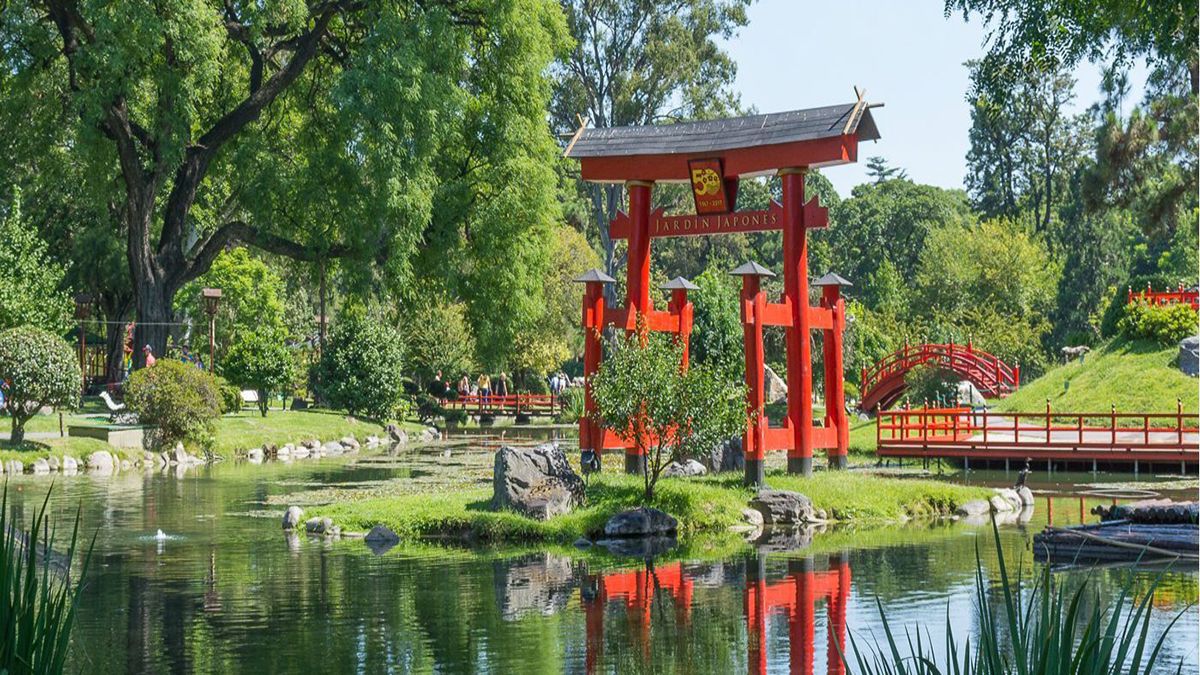
Beautiful view of Jardín Japonés

Jardín Japonés

Buenos Aires, Argentina
i

Beautiful view of Jardín Japonés

Strolling beneath arching cherry blossoms, listening to the gentle ripple of koi-filled ponds, and watching red wooden bridges curve between bamboo groves—these are the scenes that await at Jardín Japonés. Nestled in the heart of Buenos Aires’ Palermo neighborhood, this oasis blends landscape artistry with living culture, offering a tranquil escape from city bustle. Whether seeking contemplation, a family outing, or a taste of Japan’s elegance, visitors will find both celebrated highlights and quiet corners perfect for lingering.

Visiting Info

Currency
Entrance fee
1500 ARS
Hours
Opening hours
Monday: 10:00 AM – 6:45 PM
Tuesday: 10:00 AM – 6:45 PM
Wednesday: 10:00 AM – 6:45 PM
Thursday: 10:00 AM – 6:45 PM
Friday: 10:00 AM – 6:45 PM
Saturday: 10:00 AM – 6:45 PM
Sunday: 10:00 AM – 6:45 PM

Contact Information

Location
Address
Av. Casares 3450, C1425EWN C1425EWN, Cdad. Autónoma de Buenos Aires, Argentina

Planning your visit

The best experience at Jardín Japonés starts with a smooth plan. Entry requires a modest fee and, while weekends fill quickly, quieter moments appear on weekdays or during the early hours. The main entrance welcomes travelers just off Avenida Figueroa Alcorta, making the garden surprisingly accessible by bus, taxi, or even bicycle from central Palermo. Wide paths suit wheelchairs and strollers, while polite, friendly staff help with queries in English and Spanish. On busy days, patient lines can form at the ticket booth, but shaded benches offer a place to unwind while waiting. The garden seldom feels crowded thanks to its open design.

  • Best time to visit: Weekday mornings or late afternoons in spring (September-November) for blooming flowers and fewer people.
  • How to get there: Public bus lines 67, 92, and 130 stop nearby. Many choose a taxi or the Ecobici public bike system. Palermo train station is a 20-minute walk away.
  • Accessibility: Paved paths and ramps accommodate wheelchairs, strollers, and those with limited mobility. Restrooms and a café are available onsite.
  • Average visit duration: Two hours for full enjoyment; shorter visits suit those with tight schedules.


Must see stuff

Within the garden’s gates, wonders unfold at every turn. Vibrant koi dance in clear ponds below the gracefully arched Taiko-bashi (drum bridge), while the vermilion hexagonal pavilion emerges as a favorite snapshot spot. Bonsai collections, carefully tended, sit beneath willow trees, and turtles sun themselves on decorative stones. Several statues honor historical connections between Japan and Argentina, adding depth to the visual feast. Children enjoy the small yet lively fish feeding stations, while adults gravitate toward peaceful tea ceremonies or shaded reading corners. Don’t miss the Japanese bookstore, a haven for curious minds seeking more than pretty views.

  • Key sights or features: Taiko-bashi bridge, lantern-lined walking paths, vast carp pond, bonsai gallery, and the cultural exhibit hall.
  • Unique experiences: Attending a weekend tea ceremony demonstration, joining a traditional calligraphy class, or spotting turtles basking in secluded corners.
  • Photo-worthy locations: The red bridge mirrored in water, under blooming cherry or wisteria, and from the steps of the pagoda-style pavilion.
  • Cultural or historical facts: Opened in 1967 as a symbol of peace and friendship, the garden frequently hosts Japanese festivals, martial arts shows, and Ikebana floral art exhibits.

Tips for your visit

Extra thought pays off at Jardín Japonés. Early morning light provides gentle shadows for photography, while afternoon tea in the garden’s café delivers both comfort and culture. Shoes with good grip help on dewy bridges, especially after rain. The koi love bits of fish food available for sale, but garden etiquette asks visitors not to feed them anything else. Picnicking on lawns is politely discouraged—reserve meals for the café, which serves delicate sushi, green tea, and sweet mochi. Some events (especially workshops) require advance sign-up at the front desk. While mosquitoes are rare, light repellent can help if visiting mid-summer. Tranquility matters here; phone calls and loud voices are best minimized to keep the serene atmosphere alive. Small setbacks—occasional wait times at the café, or loud groups passing by—are quickly outweighed by moments of quiet beauty.

  • Best times to avoid crowds: Arrive before 11 a.m. or after 4 p.m., skip national holidays if seeking a quieter stroll.
  • What to bring: Water bottle, camera, sunhat, and lightweight jacket in spring or fall.
  • Local etiquette or rules: No climbing on rocks or sculptures, walk bikes instead of riding them, and take photos respectfully during ceremonies.
  • Safety or comfort advice: Beware of slippery paths after rain, and carry small cash for souvenir stalls or event tickets.