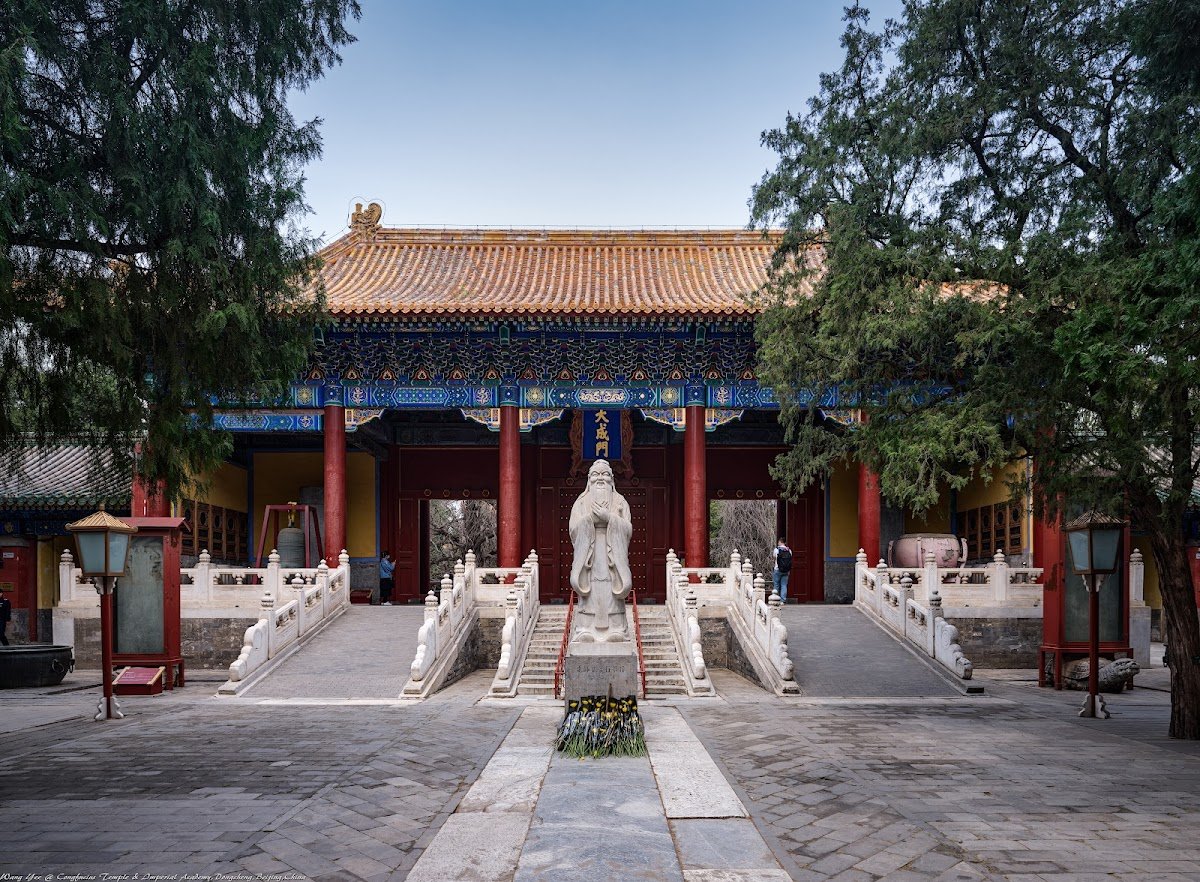
Beijing Temple of Confucius

Confucius Temple

Beijing, China
i

Beijing Temple of Confucius

Photo by Yee WANG (Architecte)

Among Beijing’s most intriguing historical treasures, the Confucius Temple reveals layers of tradition and learning shaped over centuries. Here, Confucianism’s quiet wisdom echoes through painted eaves and ancient pines. A visit offers not just picturesque courtyards and wonders in stone, but also stories of scholars, ceremonies, and the pursuit of virtue—woven carefully into every carved gate and memorial tablet.

Visiting Info

Currency
Entrance fee
20 USD

Contact Information

Location
Address
15 Guo Zi Jian Jie, 国子监 Dong Cheng Qu, Bei Jing Shi, China, 100011

Planning your visit

Travelers hoping to explore the Confucius Temple should plan with both history and comfort in mind. Tucked into the city’s old Dongcheng District, this site typically draws smaller crowds than Beijing’s bustling palaces, yet busy weekend mornings can get a bit lively. Spring and autumn are best for wandering among the temples, as oppressive midsummer heat or winter’s chill may challenge comfort in the open courtyards. The shady, tree-lined avenues make a midday visit appealing, but the soft afternoon sun highlights the intricate details of the main halls.

  • Best time to visit: Late April to early June, or September to October. Early mornings or late afternoons for fewer crowds.
  • How to get there: Subway Line 2 or Line 5 to Yonghegong (Lama Temple) Station, then a five-minute walk. Several city buses also stop nearby.
  • Accessibility: Pathways are mostly flat, suitable for strollers and wheelchairs, though a few steps are unavoidable at certain halls. Benches are scattered for resting, making it friendly for seniors and families.
  • Average visit duration: 1 to 2 hours, depending on interest in the museum and slow strolls through the grounds.

Must see stuff

The Confucius Temple gathers visitors into a peaceful world just steps from busy city roads. High red walls shield neat courtyards shaded by cypresses, while rows of stone tablets line quiet alleys. Old incense burners stand before the main halls, where visitors pause to read ancient stories or watch pale sunlight dance across calligraphy. A blend of pagoda-style buildings and smaller, tucked-away pavilions creates both grandeur and moments of quiet reflection. Among Beijing’s heritage sites, this temple stands out for honoring not royalty, but the enduring power of education and respect.

  • Key sights or features: The Dacheng Hall, centerpiece of the complex, houses a towering statue of Confucius. Stone ‘jinshi’ tablets in the Stele Pavilion list names of scholars who passed the rigorous imperial exams. The Gate of Great Accomplishment, with its elaborate designs, sets the stage for the sacred complex.
  • Unique experiences: Watch locals practice calligraphy in quiet corners, or catch a rare, traditional worship ceremony on special festival dates. Explore the attached Imperial College (Guozijian) with its detailed Ming and Qing architecture—a lesser-visited gem where China’s brightest brains once studied.
  • Photo-worthy locations: The main ceremonial archway at the southern entrance, decorated ceiling beams in the Hall of Great Perfection, and tranquil lotus ponds near the rear pavilions.
  • Cultural or historical facts: Built in 1302, the temple is the second-largest Confucian temple in China, after the original in Qufu. Inside, over 190 carved tablets span nearly 700 years of history, recording everything from imperial exam results to Confucian quotes still recited in schools today.

Tips for your visit

Mornings at the Confucius Temple promise a slower pace, as tour groups often linger at nearby Lama Temple before wandering here. The atmosphere inside encourages quiet—some halls even request whispers, in respect for ongoing cultural activities. This isn’t a spot for food vendors or souvenir stalls, so bringing a bottle of water and perhaps a snack proves smart for hungry travelers. Comfortable walking shoes protect against cobblestones, and a camera with a zoom lens helps capture distant roof details. For those seeking unique insight, a local guide can share stories not found on display boards, but even self-guided travelers will absorb the palpable sense of history tucked among the old cypresses.

  • Best times to avoid crowds: Weekday mornings or late afternoons outside major public holidays, especially during school term.
  • What to bring: Refillable water bottle, camera, sun hat in summer, and comfortable, closed-toe shoes.
  • Local etiquette or rules: Quiet voices are valued in all halls. Photography is usually allowed, but avoid flash inside exhibition rooms. Signs guide respectful behavior near altars.
  • Safety or comfort advice: Cobblestone paths can be slippery after rain. Limited shelter exists during heavy storms. Public toilets are available, though occasionally basic in style.

Similar Attractions