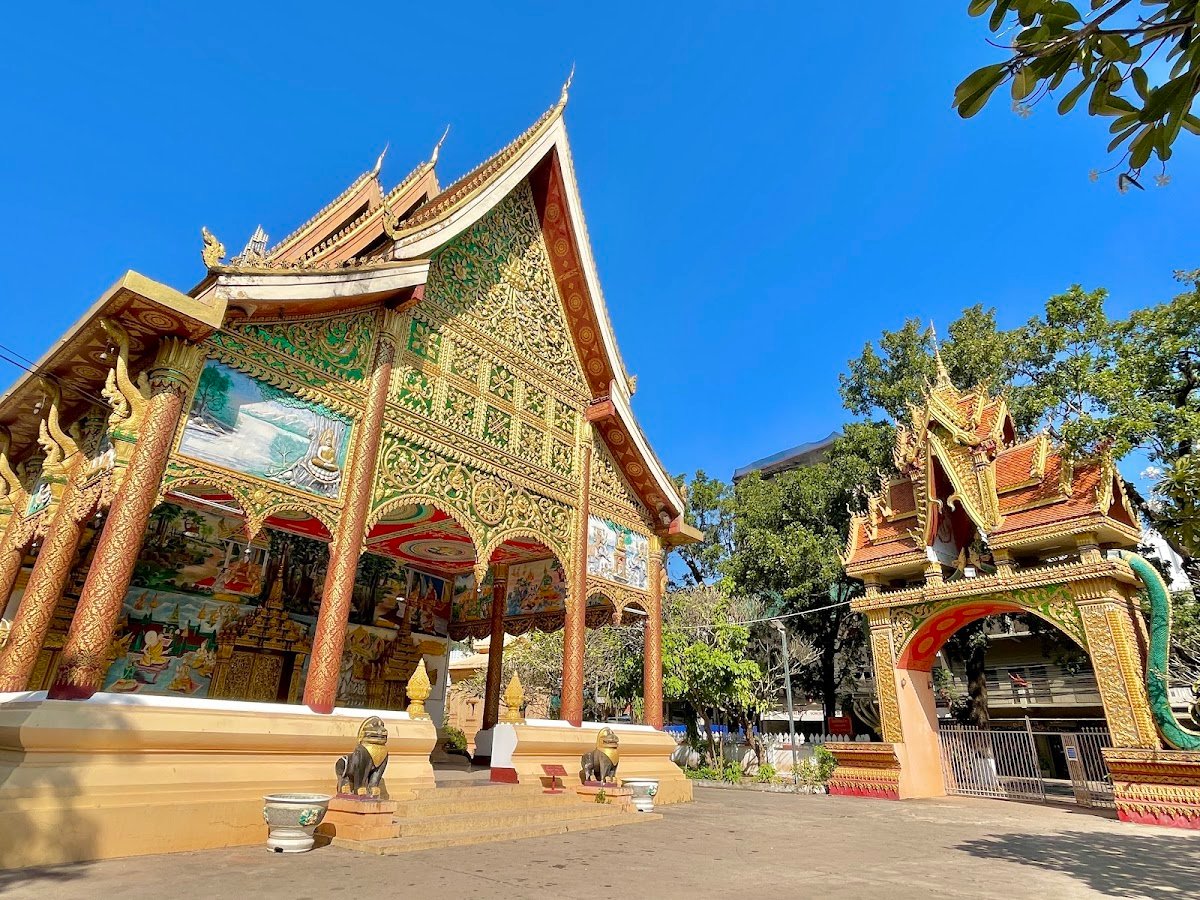
Wat Inpeng

Wat Inpeng

Vientiane, Laos

In a quiet lane shaded by frangipani and tamarind trees, Wat Inpeng rises behind crimson walls and golden naga statues. Beyond tourist hotspots and busy markets of Vientiane, this small Buddhist temple welcomes visitors seeking art, history, and serenity. Wat Inpeng does not shout for attention. It invites, quietly, with stories layered in mural and mosaic. Here, bells and prayer wheels create a gentle soundtrack for exploration. The scent of incense and the hum of everyday life make each encounter personal and unique.

Visiting Info

Currency
Entrance fee
Free
Hours
Opening hours
Monday: 4:30 AM – 8:30 PM
Tuesday: 4:30 AM – 8:30 PM
Wednesday: 4:30 AM – 8:30 PM
Thursday: 4:30 AM – 8:30 PM
Friday: 4:30 AM – 8:30 PM
Saturday: 4:30 AM – 8:30 PM
Sunday: 4:30 AM – 8:30 PM

Contact Information

Location
Address
XJ82+JWG, Rue Setthathilath, Vientiane, Laos

Planning your visit

Wat Inpeng sits tucked among riverside streets, a short stroll from the Mekong and downtown's leafy boulevards. Travelers should plan ahead: the temple opens most days, but midday heat and occasional ceremonies bring lulls in activity. Late mornings glow, while early afternoons run quieter—ideal for those eager to observe, sketch, or meditate. Expect no ticket booth, but a small donation box stands near the entrance. Shoes come off at the door, and quiet conversation fits the pace of monastic life. Helpful locals often answer questions, and signs in both Lao and English keep confusion away.

  • Best time to visit: Early morning for cool air and calm, late afternoon for warm sunlight and fewer people.
  • How to get there: Walk from the city center, cycle along the river, or hire a tuk-tuk for a short ride south from the Night Market.
  • Accessibility: Modest stairs at the entrance; manageable for families, though those with mobility concerns should be aware of uneven paths.
  • Average visit duration: 30 to 60 minutes for most, longer for art lovers and those interested in meditation.

Must see stuff

Every corner of Wat Inpeng tells a different part of its story. Ornate archways and painted ceilings reflect a blend of local and Siamese design. Monks and novices crossing the courtyard add movement to the tranquil scene. Signs explain restoration efforts and highlight key features, inviting visitors to look closer. Many travelers arrive for a quick photo, then linger longer—captivated by quiet details and unexpected treasures.

  • The Main Sim: Marvel at the central prayer hall, where golden stencils brighten ceiling beams and delicately carved windows frame rare Buddhist murals.
  • The Viharn: Visit this smaller worship hall filled with gilded pillars and offerings of fragrant marigold and lotus petals.
  • Naga Staircase: Admire two serpent guardians at the temple's entrance, a classic motif in Lao sacred architecture.
  • Mural Gallery: Trace the life of the Buddha through colorful frescos lining the outside gallery, each vignette explained with both text and imagery.
  • Monk’s Quarters and Community Garden: Step quietly into the back garden, where locals tend herbs and monks tend orchids, a living reminder of tradition and sustainability.
  • Photo-worthy locations: Capture golden afternoon light streaming over prayer wheels, reflections in polished tile floors, and the leafy courtyard alive with bird calls.
  • Historical note: The temple was rebuilt in the early 20th century, yet traces its foundations to the 16th century—a reminder of Vientiane’s changing fortunes and resilience across wars, floods, and occupation.

Tips for your visit

Every thoughtful traveler knows the hidden joys and occasional annoyances of visiting sacred sites. Wat Inpeng rewards patience and respect. The temple sometimes feels lively, with school groups or community prayers, but more often the peaceful grounds outshine minor drawbacks. Mosquitoes may appear at dusk, and a few corners could use extra care. Still, the vibe remains warm and inviting—locals smile, monks greet outsiders with quiet nods, and everyone moves at an unhurried pace. Advance preparation smooths the way for a more memorable day.

  • Best times to avoid crowds: Skip holidays and festival days unless seeking lively celebration; aim for mid-week mornings or just before closing.
  • What to bring: A small bottle of water, lightweight scarf or sarong for respectful dress, easy slip-on shoes, and a camera. Consider a notebook for sketches or jottings.
  • Local etiquette: Remove hats and shoes before entering indoor spaces, keep voice low, and avoid pointing feet at sacred images or people.
  • Safety and comfort: Watch your step on worn stairs or loose tiles, and use insect repellent in late afternoon.
Wat Inpeng – Tickets, Hours & Visitor Guide