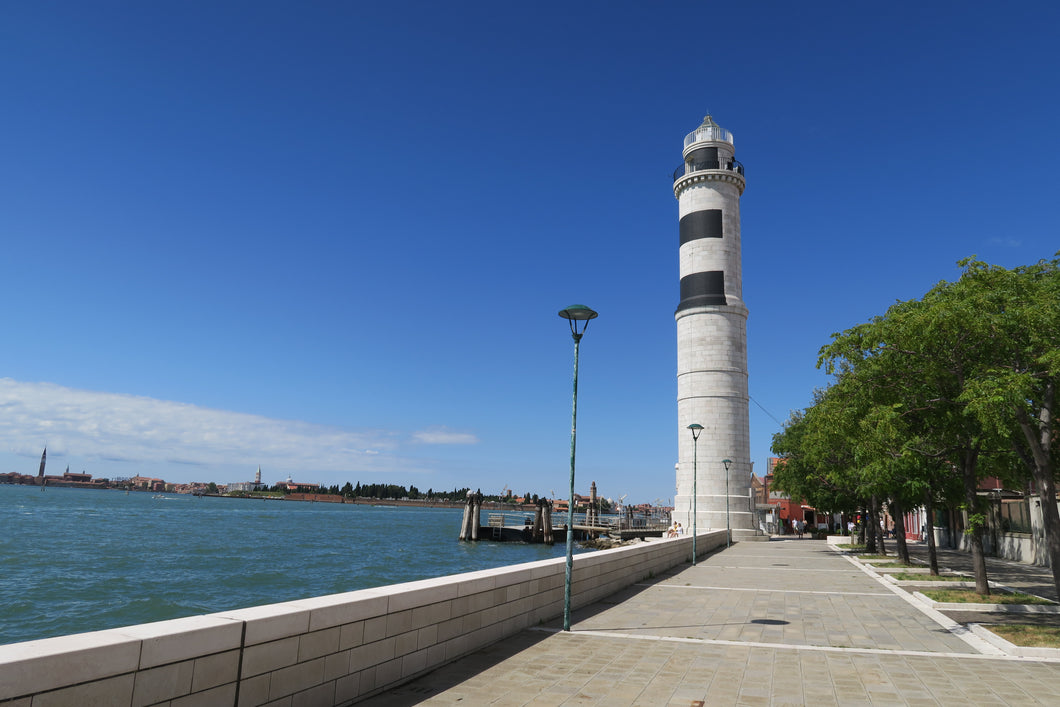
Beautiful view of Faro di Murano

Faro di Murano

Venice, Italy
i

Beautiful view of Faro di Murano

Sea air heavy with salt and a distant clang of boat bells greet every visitor stepping onto Murano's weathered docks. On the skyline, the Faro di Murano stands watch—chalk-white, cylindrical, and unwavering—while glass artisans hurry along narrow canals. This historic lighthouse doesn’t just guide ships: it anchors the rhythms of island life and offers anyone who visits a rare window into Venice’s lesser-seen edges.

Visiting Info

Currency
Entrance fee
Free

Contact Information

Location
Address
Fondamenta Piave F. M., 30141 Venezia VE, Italy
Phone
Phone

Planning your visit

Reaching Faro di Murano takes a little advance thinking, but rewards wait for those who make the journey. The lighthouse sits near Murano’s far eastern tip, away from busier tourist hubs. Most travelers arrive by vaporetto, Venice’s public water bus, feeling the city ease into quieter waters along the way. Mornings feel peaceful. By mid-afternoon, Murano can fill with glass shoppers, though most never wander as far as the lighthouse. The lighthouse itself now remains closed to interior visitors, with no tickets required, but its stone base, panoramic viewpoints, and the canal-side promenade welcome everyone.

  • Best time to visit: Early morning (8–10 a.m.) or golden hour before sunset; spring and fall for pleasant weather
  • How to get there: Vaporetto lines 4.1, 4.2, and 3 from Fondamente Nove (Venice), 20–30 minute ride; get off at "Murano Faro" stop
  • Accessibility: Flat walkways suitable for strollers and wheelchairs, but cobbled paths may be uneven
  • Average visit duration: 30 minutes to 1 hour (longer if exploring nearby glass shops or canals)

Must see stuff

Even from afar, the Faro di Murano rises above the sweep of Murano’s low roofs, its two-tiered, marble facade gleaming. Built in the 1930s to replace older structures, the current lighthouse merges history with silent grandeur. Standing at the base, visitors see fishing boats glide past and hear whispered stories of glassmasters who gave Murano its fame. Local residents often gather along the quay to chat or peer out at the Venetian Lagoon from stone benches. Across the canal, small-craft marinas bustle while nearby bridges frame the lighthouse in endless ways for the eager photographer. Don’t miss the delicate murmur of glassmakers working in neighboring foundries, visible from outside. Occasionally, community art events or glass-blowing demonstrations spill into the open air just steps from the lighthouse.

  • Key sights or features: The white marble tower and stone base, 360-degree views of the Lagoon, antique lamp mechanisms visible from outside grills
  • Unique experiences: Early-morning walks along the canal, sunset watching with views toward Venice, glimpsing ferries and workboats at the busy crossing
  • Photo-worthy locations: From the small bridge west of the lighthouse; canal promenade at sunset; close-ups of the weathered stone steps
  • Cultural or historical facts: The current lighthouse began operation in 1934, replacing a much older structure; its two black rings serve as navigation aids for mariners entering the Lagoon

Tips for your visit

Small flourishes make a trip to Faro di Murano memorable. Avoid the busiest midday hours, when tour groups crowd the main canal. A lightweight jacket may keep cool breezes at bay, especially in spring. Although local snack kiosks tempt with gelato and espresso, tap water remains safe to drink—bring a reusable bottle. Canalside benches serve as happy picnic spots. Stay mindful of fishermen pulling up nets near the tower’s base, and give them space. The lighthouse isn’t open for climbing, but the site’s low walls and wide steps welcome careful climbing for a better view. Most locals appreciate a simple "buongiorno"; showing respect for craft traditions earns smiles.

  • Best times to avoid crowds: Arrive before 10 a.m. or after 4 p.m.
  • What to bring: Water, camera or phone, comfortable walking shoes, sunhat or light scarf for wind
  • Local etiquette or rules: No climbing onto restricted areas; respect local glassmakers’ privacy in open studios; greet store owners and artisans politely
  • Safety or comfort advice: Beware of slick canal steps after rain; supervise children by the water’s edge; avoid leaving valuables on benches