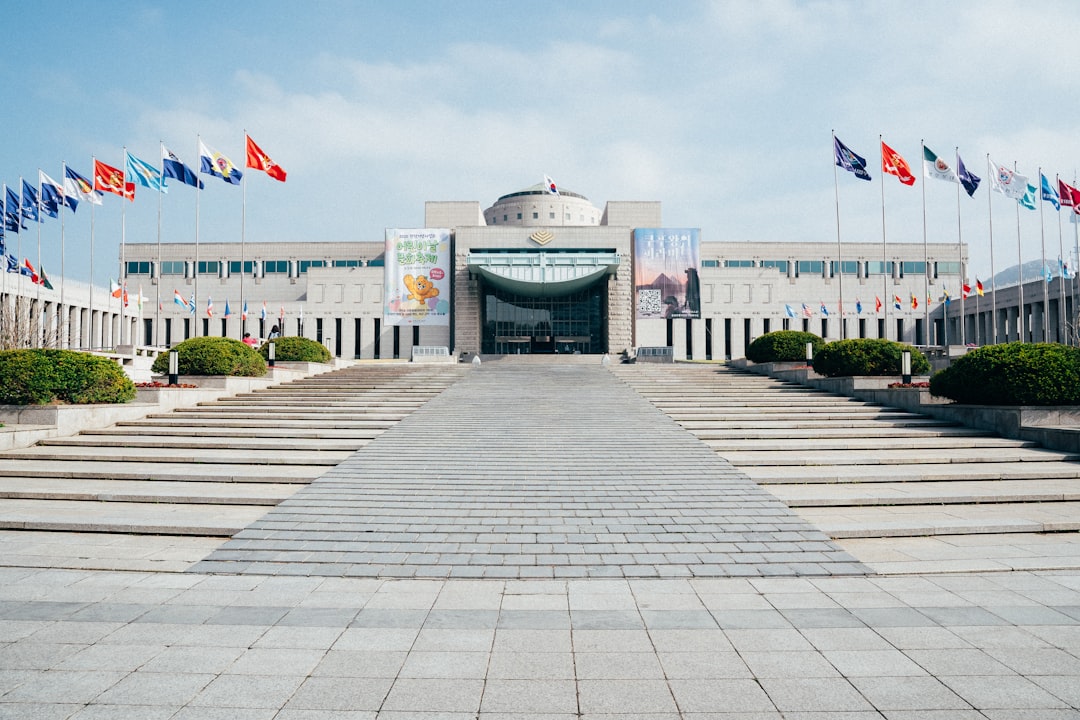
A grand building and pathway with flags.

War Memorial of Korea

Seoul, South Korea
i

A grand building and pathway with flags.

Photo by Danish Puri

Stories of courage, sacrifice, and peace come alive at the War Memorial of Korea. Sprawling and solemn, this major landmark holds heavy history within its walls and grounds. Designed to honor lives lost and hopes regained, the site invites visitors to remember, reflect, and learn. The past feels close here, woven through modern halls and outdoor displays, inviting all who come to understand Korea’s challenging journey.

Visiting Info

Currency
Entrance fee
Free
Hours
Opening hours
Monday: Closed
Tuesday: 9:30 AM – 6:00 PM
Wednesday: 9:30 AM – 6:00 PM
Thursday: 9:30 AM – 6:00 PM
Friday: 9:30 AM – 6:00 PM
Saturday: 9:30 AM – 6:00 PM
Sunday: 9:30 AM – 6:00 PM

Contact Information

Location
Address
29 Itaewon-ro, Yongsan District, Seoul, South Korea

Planning your visit

Organizing a trip to the War Memorial of Korea requires a little attention to timing and travel details, but the payoff is worth it. The best season brings mild weather and shifting sunlight that casts dramatic shadows across tanks and jet fighters. Located in Seoul’s Yongsan district, the site is served by fast public transport. Crowds ebb and flow—the halls fill up especially on weekends or during school holidays. Most galleries sit under free admission, but some temporary exhibits ask for a small fee. Expect respectful energy and school groups, but always enough space for quiet thought.

  • Best time to visit: Weekdays during spring (April–June) or early autumn (September–October); mornings are quietest.
  • How to get there: Subway Line 4 brings you to Samgakji Station, a short walk from the front gate. Buses stop close by. Several taxi stands line the main road for easy departure.
  • Accessibility: Wide, gently sloping paths and elevators suit families, wheelchair users, and seniors. Stroller access is straightforward.
  • Average visit duration: Two to three hours, more for thorough explorers.
Must see stuff

Visitors quickly realize the War Memorial offers more than its name suggests. Main exhibition halls stretch across several floors, filled with maps, uniforms, records, and video displays. Outside, weaponry from tanks to fighter planes dominates the open plaza, creating one of Korea’s largest collections of military hardware. Not all moments are solemn—families snap photos under towering aircraft wings, and children scramble over weathered cannons. Nearby, the poignant Statue of Brothers stands as a symbol of connection and loss, while tucked-away memorial corners offer rare moments for solitude and personal tribute.

  • Key sights or features: The imposing Peace Plaza, UN Forces Monument, and six themed exhibition halls (prehistory to present-day operations).
  • Unique experiences: Guided English-language tours (hourly), interactive VR simulations of key battles, quiet time at the Memorial Hall of Fallen Soldiers.
  • Photo-worthy locations: Reflected jets and helicopters in the outdoor fountain, the Statue of Brothers at golden hour, memorial corridors lined with names.
  • Cultural or historical facts: The memorial opened in 1994 as both tribute and educational center, and includes exhibits on international participation in the Korean War—a detail often missed by casual visitors.

Tips for your visit

Small details can make or break a day at such a sprawling landmark. Weekends sometimes bring noisy school groups, but patience yields quiet corners and reflective moments. Long walks around outdoor displays call for comfortable shoes and a water bottle. Photography is allowed almost everywhere, but remember to lower your voice in somber halls. As at similar sites, food options stay basic—vendors nearby offer snacks, but few seats indoors for dining. Restrooms and elevators work reliably, but can get busy during peak hours. Be prepared for emotional content, especially in halls with personal items and witness accounts.

  • Best times to avoid crowds: Mornings before 10 a.m., or after 4 p.m., especially on regular school days.
  • What to bring: Camera, water, sunhat for outdoor areas, and walking shoes.
  • Local etiquette: Speak in hushed tones, avoid eating in galleries, and observe moments of silence at memorial spaces.
  • Safety or comfort advice: Wide walkways ease access, but weather changes quickly—an umbrella can be useful during summer storms or light showers.