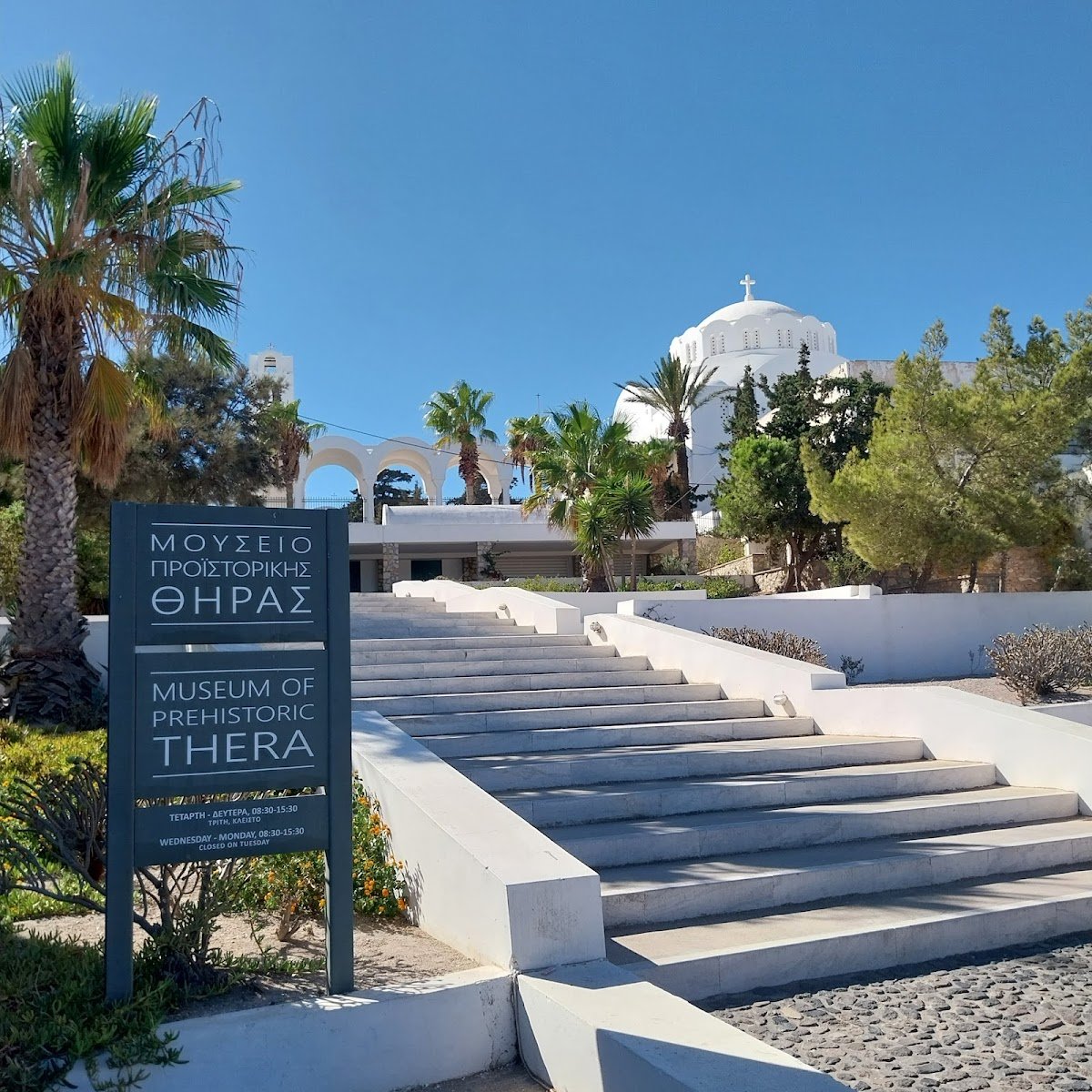
Museum of Prehistoric Thera

Museum of Prehistoric Thera

Santorini, Greece
i

Museum of Prehistoric Thera

Photo by Monika Pülz

Walking into the Museum of Prehistoric Thera feels like stepping through thousands of years in an instant. Sheltered from the Cycladic sun, shelves and glass cases reveal secrets from Santorini’s volcanic past—showing not just remains, but vivid clues into ancient daily life. For anyone with a spark for history, or just a wish to imagine another world, this museum offers a story you can almost touch.

Visiting Info

Currency
Entrance fee
6 EUR
Hours
Opening hours
Monday: 8:30 AM – 3:30 PM
Tuesday: Closed
Wednesday: 8:30 AM – 3:30 PM
Thursday: 8:30 AM – 3:30 PM
Friday: 8:30 AM – 3:30 PM
Saturday: 8:30 AM – 3:30 PM
Sunday: 8:30 AM – 3:30 PM

Contact Information

Location
Address
Fira 847 00, Greece

Planning your visit

Before arriving at the Museum of Prehistoric Thera, some planning helps pave the way for a smooth visit. Located in the lively town of Fira, the museum sits close to cafés, shops, and cliffside views but remains easy to overlook on busy summer days. Although crowds usually gather during cruise ship stops, quieter mornings and off-season months offer space to linger by the displays. The entrance has few steps, with flat areas making it easy to navigate for strollers or wheelchairs. Tickets are affordable, and lines rarely last too long except during peak tourist times.

  • Best time to visit: Early mornings or late afternoons; April–early June and late September–October avoid most crowds and heat.
  • How to get there: Central Fira location, five minutes’ walk from the central bus station; taxis and rental cars can park in nearby lots (paid street parking fills quickly in summer).
  • Accessibility: The single-story building is mostly level, suitable for families with strollers and visitors with limited mobility. Accessible restrooms are available.
  • Average visit duration: Most visitors spend one to two hours exploring at a relaxed pace.

Must see stuff

Inside the Museum of Prehistoric Thera, connections to the Bronze Age city of Akrotiri become clear in every corner. Displays bring ancient frescoes to life, bits of pottery show off Minoan artistry, and even the smallest clay figure tells a bigger story. Each room connects visitors to a vanished way of life, shaped by the volcano and shaped again by the hands of archaeologists who dug up these treasures. Several pieces are genuine icons of Cycladic art, while lesser-known finds reveal a more intimate daily world from centuries ago.

  • Key sights or features: Delicately preserved wall frescoes, such as the "Blue Monkeys" and the famous "Spring Fresco"—originals rescued from Akrotiri’s ruins; expertly reconstructed pottery and cooking tools; a striking gold ibex figurine shown in a climate-controlled display.
  • Unique experiences: Study centuries-old burnt seeds that helped date Santorini’s cataclysmic eruption; compare cleverly reconstructed storage jars with their battered original fragments; admire jewelry pieces almost mystical in their detail.
  • Photo-worthy locations: The main fresco gallery’s bright murals offer vibrant, Instagram-friendly backgrounds; sunlight streaming through the entrance hall illuminates ceramics and statue displays, making shadowy, moody photos possible.
  • Cultural or historical facts: The Akrotiri settlement thrived in the Bronze Age, its people building multi-storied houses and vibrant arts before being frozen in time by volcanic ash around 1600 BCE—hundreds of years before Pompeii.

Tips for your visit

Visits become more rewarding with a few simple preparations. While the museum stays cool throughout the day, crowds can swell in summer after tour groups arrive. Informational signs appear in English and Greek, but a small illustrated guidebook from the gift shop provides deeper background. Museum staff value quiet, respectful behavior, with no food, drinks, or flash photography inside. Benches allow for breaks, but seating is limited during rush hours. Gift shop options for local art books or Akrotiri-inspired souvenirs offer worthwhile browsing before heading out.

  • Best times to avoid crowds: Arrive early (9–10am) or an hour before closing; on days with fewer cruise ship arrivals, visitors linger in comfort.
  • What to bring: A water bottle for after your visit (drinks aren’t allowed); a camera for entrance photos and courtyard snapshots; comfortable shoes, especially if walking around Fira’s hilly streets after your visit.
  • Local etiquette or rules: Stay behind display ropes; always silence phones in galleries; use quiet voices and move in small groups when possible.
  • Safety or comfort advice: Watch for uneven floors in older sections; staff may ask for large backpacks to be stored in lockers. The museum stays cool, but light layers can help if stepping outside into mid-day heat.
Museum of Prehistoric Thera – Tickets, Hours & Visitor Guide