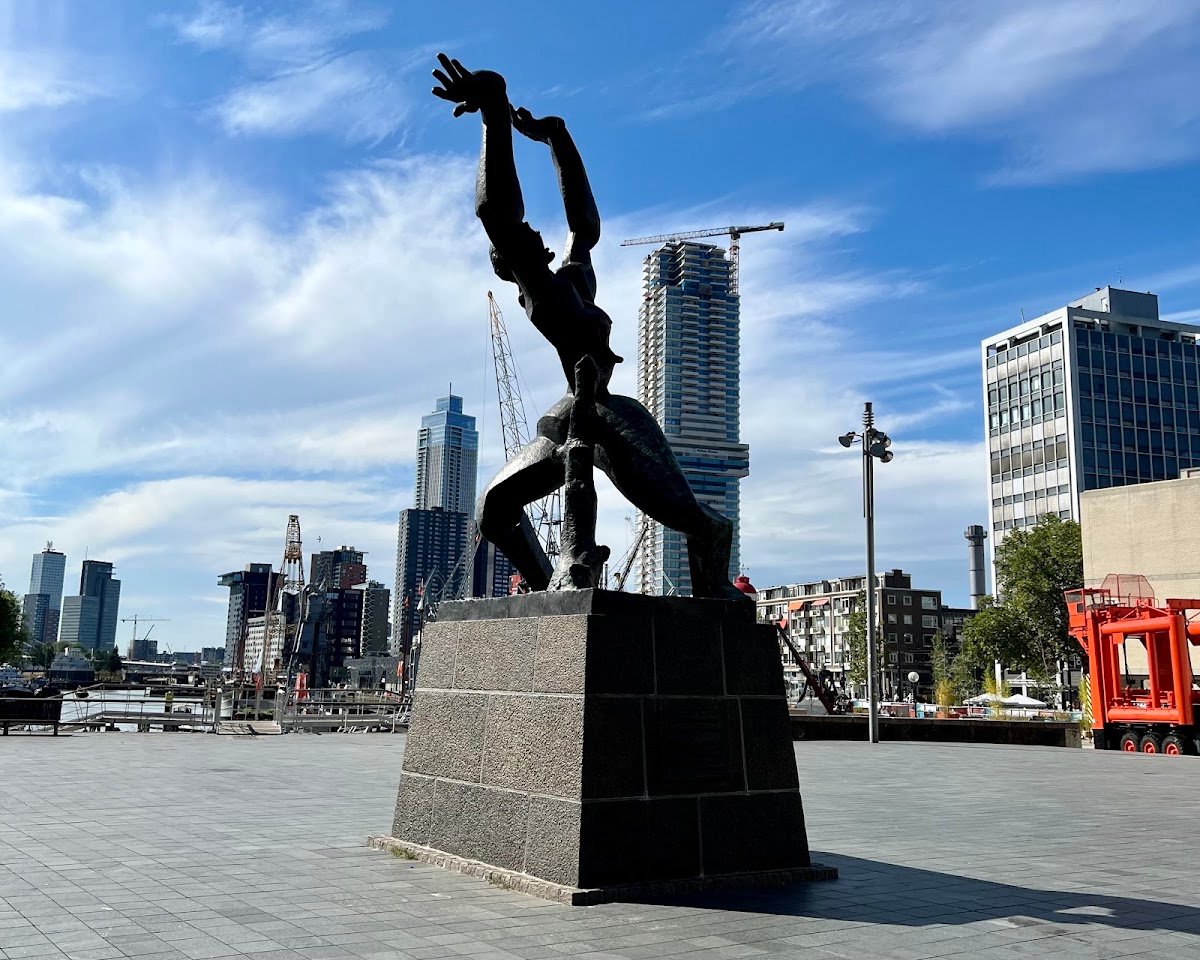
statue The Destroyed City by Ossip Zadkine

The Destroyed City

Rotterdam, Netherlands
i

statue The Destroyed City by Ossip Zadkine

Photo by Bogdan Klimowicz

Stories of resilience rise from the middle of Rotterdam. The Destroyed City stands as a symbol, more than art, showing visitors the scars and strength woven into a modern Dutch city. Here, people pause—not only to remember a tragic past, but to see how a community built hope where ruins once lay. Surrounded by busy life, this landmark draws travelers who want to understand the city’s heart, one dramatic sculpture at a time.

Visiting Info

Currency
Entrance fee
Free
Hours
Opening hours
Monday: Open 24 hours
Tuesday: Open 24 hours
Wednesday: Open 24 hours
Thursday: Open 24 hours
Friday: Open 24 hours
Saturday: Open 24 hours
Sunday: Open 24 hours

Contact Information

Location
Address
3011 TA Rotterdam, Netherlands

Planning your visit

Thoughtful planning brings more meaning to a trip to The Destroyed City. The monument sits in Rotterdam’s city center, easy to spot among sleek new towers. The area welcomes visitors nearly all year, but atmosphere changes with each season. Spring afternoons glow with soft Dutch sunlight, while autumn evenings cast deeper shadows across its bronze face. No ticket is required, which makes entry simple but can mean school groups may crowd the square now and then. Most people spend less than an hour, using the extra time to explore surrounding streets or nearby museums.

  • Best time to visit: Spring or early fall, especially weekday mornings for quiet reflection
  • How to get there: Walk five minutes from Rotterdam Blaak train station; trams and buses stop at Churchillplein or Beurs
  • Accessibility: Flat, paved ground suitable for strollers and wheelchairs
  • Average visit duration: 30–45 minutes

Must see stuff

At first glance, The Destroyed City is impossible to ignore—a dramatic figure leaning under the sky, the heart ripped from its chest. This is Ossip Zadkine’s memorial to Rotterdam’s devastation during the Second World War. On closer inspection, the location itself reveals stories. Towering office buildings echo the past’s destruction and present’s ambition. For travelers, blending in among locals resting at the base or children chasing pigeons can provide a true taste of Rotterdam’s daily rhythm. Sunsets, when city lights begin to glow, bathe the statue in warm, reflective bronze, making for stunning photos and quiet contemplation. Visiting here provides not only historical insight, but also a moment of personal reflection within the city’s ongoing story.

  • Key sight: The 6.5-meter-tall bronze sculpture, its gaping chest, and expressive figure
  • Unique experience: Visit during Rotterdam’s Liberation Day when flowers and notes cover the monument’s base
  • Photo-worthy spot: Stand in front of the sculpture with Rotterdam’s new skyline framing the background
  • Cultural fact: Zadkine’s statue sparked heated debate in the 1950s but now stands as one of the city’s most loved public artworks

Tips for your visit

A few simple steps help visitors enjoy The Destroyed City to the fullest. Mornings give the best chance for peaceful exploration, with fewer crowds and gentle light. Bring water if the weather is warm; cafes nearby offer a place to rest and reflect. Some travelers arrive expecting a museum, but the open-air site has no exhibitions—just honest public memory. A respectful tone is key, especially if ceremonies are underway. Surrounding streets can feel busy, so keep an eye out for swift cyclists and trams. Most of all, wearing comfortable shoes makes the walk pleasant for visitors of any age.

  • Best time to avoid crowds: Before 10 am or after 7 pm, especially outside of public holidays
  • What to bring: Water, camera, an umbrella in spring or fall, comfortable walking shoes
  • Local etiquette: Keep noise low; avoid climbing or touching the sculpture
  • Safety and comfort: Watch for bikes and trams when crossing near the plaza
The Destroyed City – Tickets, Hours & Visitor Guide