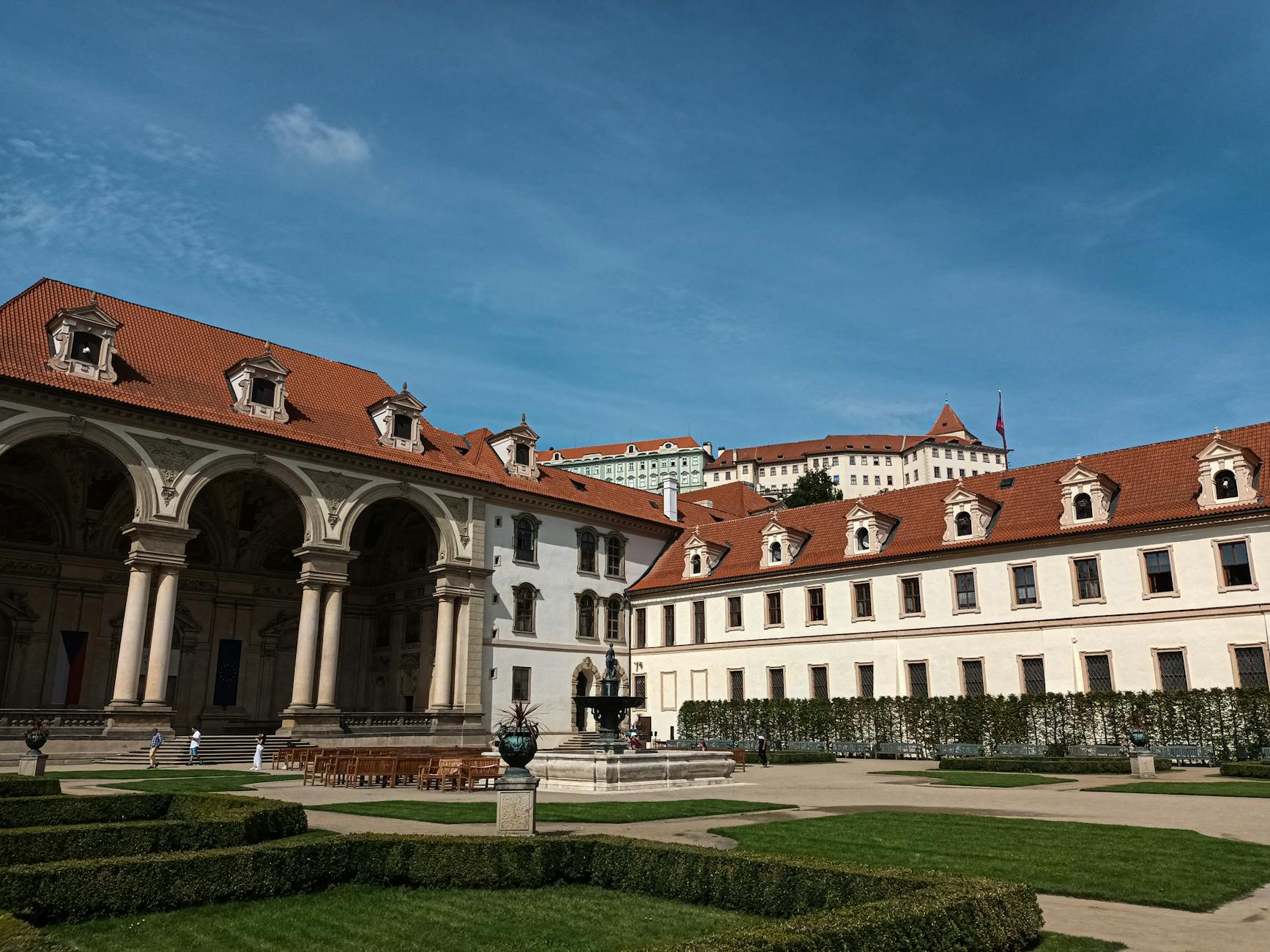
Explore beautiful Baroque architecture in a serene European courtyard, showcasing historical charm and elegance.
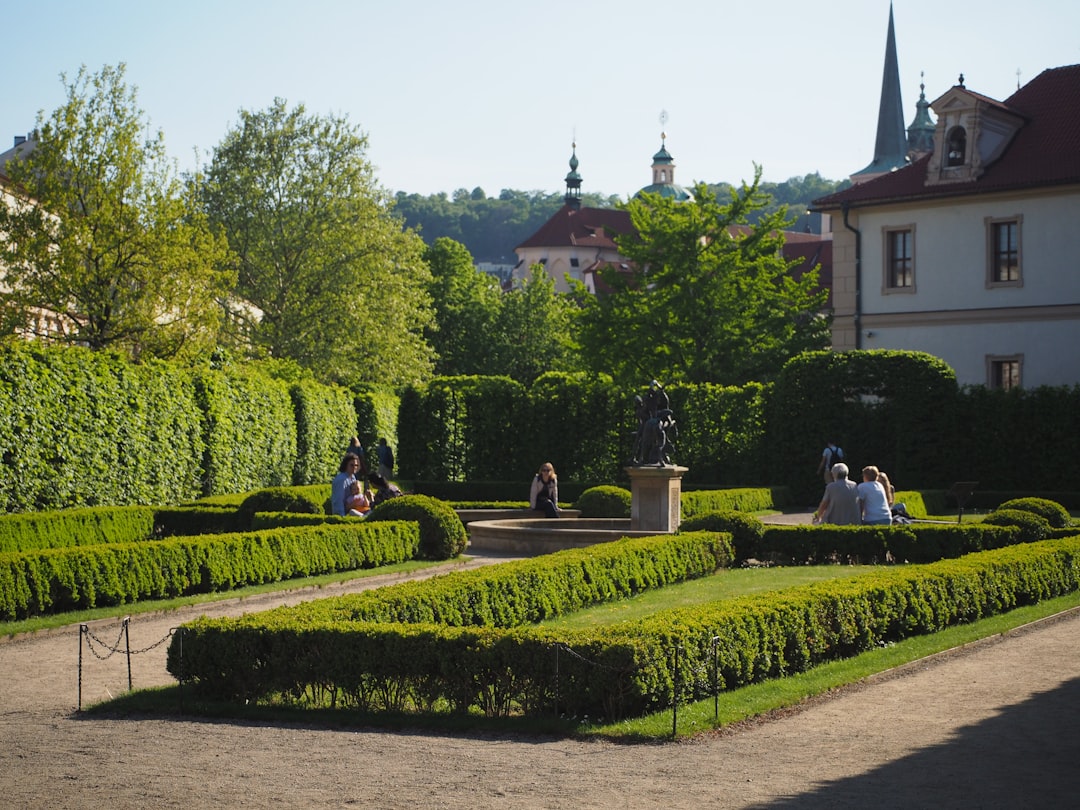
People relax in a manicured garden with a statue.

Wallenstein Garden

Prague, Czech Republic
i

Explore beautiful Baroque architecture in a serene European courtyard, showcasing historical charm and elegance.

Photo by Barbara Light

Green shadows slide across limestone peacocks. Carved stone giants keep watch as fountains murmur and white doves scatter beneath rustling chestnut branches. In the heart of Prague’s historic core, Wallenstein Garden offers a rare tranquility—a well-tended patchwork of elegance and hidden stories, bordered by Baroque facades and the slower rhythm of a living city. Here, centuries-old artistry and natural beauty meet in harmony, welcoming locals and travelers alike.

Visiting Info

Currency
Entrance fee
Free

Contact Information

Location
Address
Letenská 123/4, 118 00 Malá Strana, Czechia

Planning Your Visit

Visiting Wallenstein Garden calls for a little forethought—especially for those hoping to enjoy its calm without the company of large crowds. The garden lies just below Prague Castle, tucked behind the imposing Wallenstein Palace in Mala Strana. Because entrance is free, guests can come and go, making it easy to plan around other sites in the city center. However, seasonal closures and peak tourist flows are worth considering when choosing the best time for your visit.

  • Best time to visit: Late spring (April–June) or early autumn (September), when flowers are in full bloom and midday crowds are thinner. Early mornings offer soft light and relative peace.
  • How to get there: Take Metro Line A to Malostranská (exit towards Valdštejnská Street); trams 12, 15, 20, or 22 also stop nearby. The entrance sits just across from the Czech Senate building.
  • Accessibility: Flat gravel paths make the main areas accessible for wheelchairs and strollers. A few side alleys have steps or uneven paving but most sections remain manageable for most mobility levels.
  • Average visit duration: Most guests spend about 30 to 60 minutes here, longer if stopping to relax on benches or attending a summer concert on the grounds.
Must-See Stuff

The Wallenstein Garden unveils its treasures in layers. Visitors first notice the tall, clipped hedges and smooth green lawns, perfectly symmetrical. Deeper in, eye-catching Baroque statues, artificial grottoes, and soothing ponds pull the curious onward. Children pause for the sinuous, jewel-colored carp in the main pool; art lovers linger beneath the playful, mythic stonework. Every corner has its own secret. Local couples regularly come to watch the resident peacocks strut past mossy sculptures, their feathers reflecting Prague’s rich palette.

  • The Sala Terrena: An opulent, three-arched hall at the south end, shaded by frescoes and open to cooling breezes. Here, summer concerts and theater performances bring history to life.
  • The Aviary and Peacocks: Peacocks wander freely, but the aviary also showcases rare European birds. Both delight children and photographers.
  • The Artificial Stalactite Wall: Just east of the main garden, this surreal limestone wall mimics natural grotto formations, complete with hidden faces and animal figures.
  • Main Pond: A round pool dotted with lilies and bronze statues, including Hercules battling a dragon—prime photo territory, especially at sunset.
  • Czech Senate Gardens: During parliamentary sessions, part of the adjoining grounds may be open, revealing well-tended flower beds and more sculpture.
  • Historical fact: General Albrecht von Wallenstein, a powerful and dramatically ambitious nobleman, commissioned the garden in the early 1600s as a rival to royal architectural projects—its sheer size and grandeur still impress today.

Tips for Your Visit

Visitors find Wallenstein Garden easy to enjoy, but several insider tips help make the most of each visit. Morning sunlight best reveals the sculpted hedges and tranquil ponds, while the late afternoon can bring more local crowds after work. Picnic meals are not allowed, and the palace itself is almost always closed to the general public, except during special cultural events. Apart from the main gravel avenues, some areas have slippery stone in wet weather.

  • Best times to avoid crowds: Visit before 10 a.m. or after 5 p.m. for fewer tour groups and better photo opportunities.
  • What to bring: A camera or phone for photos, a water bottle (no fountains available inside), and comfortable walking shoes. Lightweight jackets or umbrellas help on windy or rainy days.
  • Local etiquette: Keep noise down, especially during school group visits or performances. Feeding peacocks or birds is not permitted.
  • Safety/comfort: Watch for uneven ground by the grotto. Although generally safe, keep an eye on small children near the pond and statues.