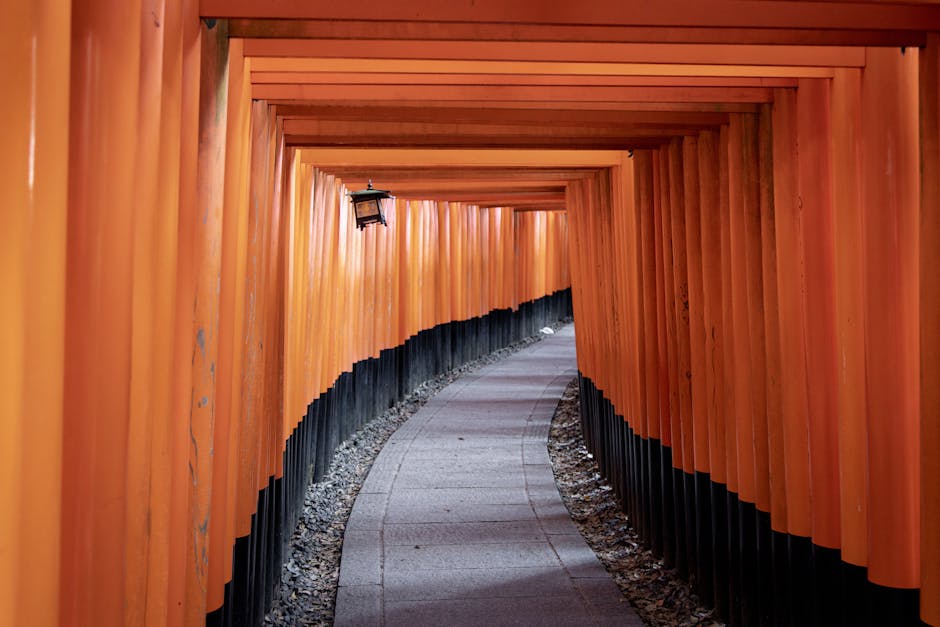
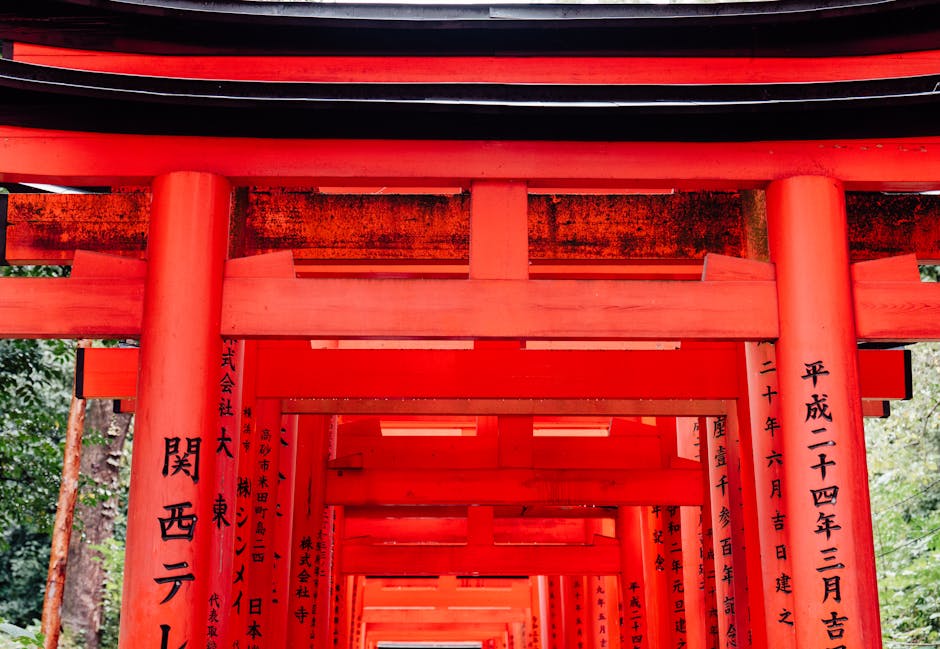
Stunning perspective of a torii gate tunnel at Fushimi Inari Taisha in Kyoto, Japan.
fushimi inari-taisha shrine, kyoto, japan, culture, shrine, famous, japanese, landmark, traditional, attraction, spiritual, architecture, asia, oriental, temple, red, religious, sightseeing, tourism, walkway, forest, green culture
Explore the vibrant red Torii gates of Fushimi Inari Taisha in Kyoto, Japan, an iconic cultural landmark.

Fushimi Inari Taisha

Kyoto, Japan
i

Stunning perspective of a torii gate tunnel at Fushimi Inari Taisha in Kyoto, Japan.

Photo by Tomáš Malík

You step under the first of thousands of vermilion torii gates, the buzz of Kyoto dwindling into a soft, murmurous background. Around you, the air is cooler, slightly misty, carrying whispers of incense and the earthy, welcoming aroma of damp cedar wood. You're not just visiting Fushimi Inari Taisha; you're stepping into a timeless dance of spirituality, nature, and the deep breaths of history. This magnetic, and might I add, exhausting climb through seemingly endless gates makes a unique page in the travel diary. Whether it's your first visit or your fifth, Fushimi Inari Taisha never loses its allure.

Visiting Info

Currency
Entrance fee
Free
Hours
Opening hours
Monday: Open 24 hours
Tuesday: Open 24 hours
Wednesday: Open 24 hours
Thursday: Open 24 hours
Friday: Open 24 hours
Saturday: Open 24 hours
Sunday: Open 24 hours

Contact Information

Location
Address
68 Fukakusa Yabunouchicho, Fushimi Ward, Kyoto, 612-0882, Japan

Planning Your Visit

Coordinating a visit here is straightforward but demands some strategic thinking, especially if you aim to dodge the heavy tourist currents. Mornings, just after sunrise, offer a mystic, less crowded experience. Hop on a train from Central Kyoto—it's a comfortable ride and the simplest way to reach the shrine's base. The site opens its enigmatic paths 24 hours a day, with no entry fee, affording flexibility. This accessibility means it swells quickly with crowds as the day progresses.

  • Best time to visit: Early morning or late afternoon
  • How to get there: Direct train to Inari Station, right at the shrine's base
  • Accessibility: Path is steep, so may challenge those with limited mobility
  • Average visit duration: 2-3 hours

Must See Stuff

Each of the gates, or 'torii', you pass under is a donation from a grateful or hopeful soul, making your hike a journey through countless stories. The main shrine complex at the base beckons with its detailed architectural beauty, while the pathway up Mount Inari-san is dotted with smaller shrines, serene rest spots, and panoramic city views. Once at Yotsutsuji intersection, roughly halfway, many take a needed breather to enjoy Kyoto's sprawling cityscape below.

  • Key sights or features: Main shrine, trail of torii gates, sub-shrines
  • Unique experiences: Night visits for a completely different atmosphere
  • Photo-worthy locations: The Senbon Torii (thousands of gates) path
  • Cultural or historical facts: Each gate donated as a form of prayer or thanksgiving

Tips for Your Visit

For those planning to trek the full pathway, sturdy shoes are a must. Despite the heavy draw of tourists, pockets of tranquility exist; find these in early mornings or during dusk. Water is another essential, as there are few spots to purchase refreshments once past the halfway mark. Remain respectful—this is a spiritual site for many, so quiet contemplation and polite behavior are appreciated.

  • Best times to avoid crowds: Early morning or evenings
  • What to bring: Comfortable walking shoes, water, camera
  • Local etiquette or rules: Be quiet and respectful, especially during ceremonies
  • Safety or comfort advice: Prepare for extensive walking; pace yourself