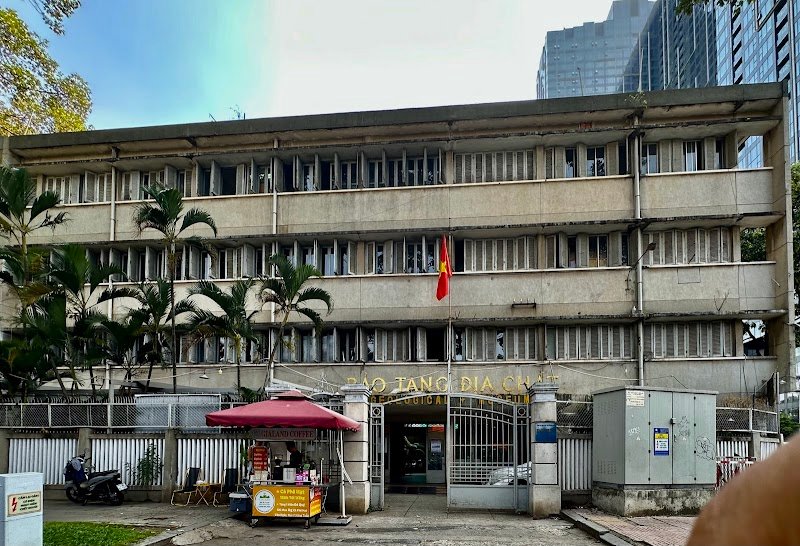
Google Places photo

Geological Museum of Vietnam

i

Google Places photo

Photo by yen asi

In the heart of southern Vietnam’s urban buzz, a quiet institution draws curious minds eager to chart the country’s long history through its rocks and minerals. The Geological Museum of Vietnam, tucked in the leafy District 1 near sprawling government buildings, brings the planet’s story alive with a nationally significant collection, local stories, and hands-on treasures for visitors of all ages.

Visiting Info

Currency
Entrance fee
30000 VND
Hours
Opening hours
Monday: 8:00 AM – 12:00 PM, 1:00 – 4:30 PM
Tuesday: 8:00 AM – 12:00 PM, 1:00 – 4:30 PM
Wednesday: 8:00 AM – 12:00 PM, 1:00 – 4:30 PM
Thursday: 8:00 AM – 12:00 PM, 1:00 – 4:30 PM
Friday: 8:00 AM – 12:00 PM, 1:00 – 4:30 PM
Saturday: Closed
Sunday: Closed

Contact Information

Location
Address
2 Nguyễn Bỉnh Khiêm, Bến Nghé, Sài Gòn, Hồ Chí Minh, Vietnam

Planning your visit

The Geological Museum of Vietnam sits close to downtown Ho Chi Minh City and pairs well with other historic spots in the area. The museum operates on a modest schedule, often with fewer crowds than more famous attractions, though school groups may fill the halls on weekday mornings. Tickets can be bought easily onsite for a symbolic fee. The museum’s compact size allows for a flexible visit—linger among gems or breeze through displays in under an hour. Families and anyone eager to avoid the city’s heat will enjoy the comfortably air-conditioned galleries.

  • Best time to visit: Weekday afternoons, when groups have left, or early in the morning before the midday sun rises.
  • How to get there: The museum sits on Le Duan Boulevard; ride-share apps, taxis, and city buses all serve District 1. Saigon Central Post Office is a helpful nearby landmark.
  • Accessibility: Entry is step-free, but upper galleries require stairs. The core exhibits stay accessible for strollers and visitors with limited mobility.
  • Average visit duration: Plan for 45 minutes to 1.5 hours, depending on your interest in reading placards and interactive displays.

Must see stuff

The museum’s main draw lies in how it frames Vietnam’s geological riches alongside centuries of history. Laid out across a handful of rooms, the exhibits start with the beginnings of Earth, guiding visitors through fossil records, ancient rock samples, and local mining history. Even for those not usually drawn to geology, vibrant mineral displays and hands-on samples provide a surprising amount of color and engagement. Don’t miss the Vietnam-only finds, such as rare gemstones unearthed in the Central Highlands, or the map room, which traces the tectonic origins of the land beneath Saigon. Throughout, helpful English explanations add context, and the friendly museum staff often share their own stories with a bit of luck.

  • Key sights: Glowing gemstone cases, fossilized prehistoric fish slabs, and a genuine meteorite section.
  • Unique experiences: Touch-friendly displays letting visitors feel dinosaur bone imprints, and analog scientific instruments revealing how rocks are studied.
  • Photo-worthy locations: The rainbow-stacked mineral shelves near the front; a model of Vietnam’s ancient geological map.
  • Cultural or historical facts: Stories of mining communities, rare stones tied to Vietnamese myths, and photos of local quarrying traditions.

Tips for your visit

While the museum offers a reprieve from the city’s bustle, a few simple choices can make time inside even more meaningful. The galleries stay cool, but benches are rare; visitors who need a rest should pace themselves. Although some exhibits show signs of age, the charm lies in their old-school presentation, best savored at a leisurely pace. Photography is allowed, but flash should be avoided to respect fragile specimens. For those keen on souvenirs, pick up a simple pamphlet or a pocket stone from nearby vendors. The staff’s local pride shines—starting a conversation about your favorite mineral can spark special anecdotes if time allows.

  • Best times to avoid crowds: Early afternoons, just after lunch, when school groups are gone.
  • What to bring: A camera, water for before and after (no bottles allowed in galleries), and comfortable shoes.
  • Local etiquette: Keep voices low, don’t touch fragile displays unless marked interactive, and thank staff with a smile or brief “cam on.”
  • Safety and comfort: The halls stay cool, but stairs to upper rooms may be steep; wear shoes with good grip.