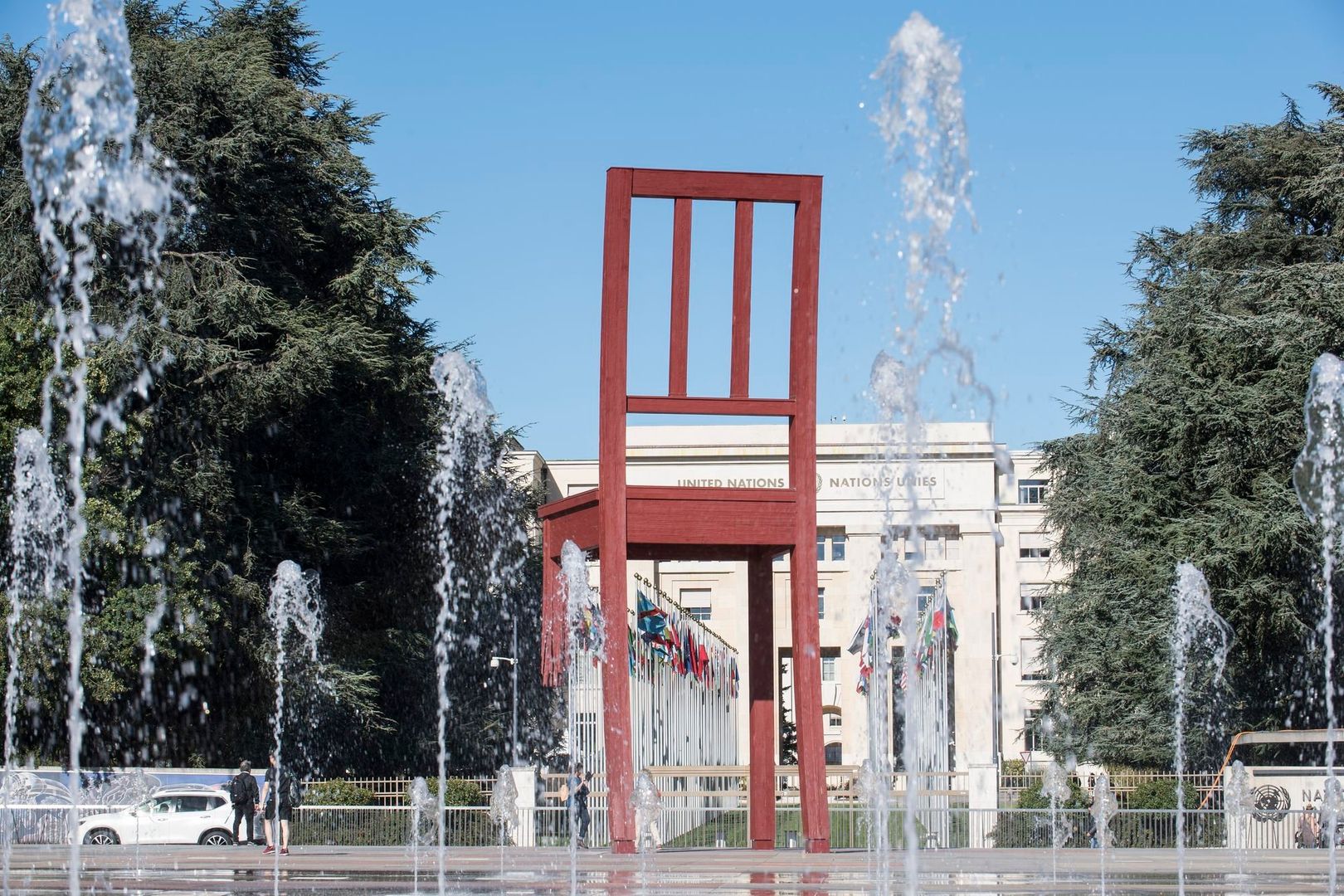
Broken Chair, iconic sculpture symbolizing opposition to landmines and violence.

Broken Chair

Geneva, Switzerland
i

Broken Chair, iconic sculpture symbolizing opposition to landmines and violence.

At the edge of Place des Nations, Broken Chair stands tall. With its towering height, missing leg, and bold silhouette, this sculpture blends striking art with political meaning. The landmark both welcomes and warns, inviting people to reflect on the struggles and hopes found in Geneva’s international quarter. For travelers seeking awe, conversation, and unexpected inspiration, Broken Chair offers a fresh perspective on public art and the legacy of peace that shapes its surroundings.

Visiting Info

Currency
Entrance fee
Free
Hours
Opening hours
Monday: Open 24 hours
Tuesday: Open 24 hours
Wednesday: Open 24 hours
Thursday: Open 24 hours
Friday: Open 24 hours
Saturday: Open 24 hours
Sunday: Open 24 hours

Contact Information

Location
Address
1202 Geneva, Switzerland

Planning your visit

Getting to Broken Chair is an easy journey, thanks to Geneva’s efficient transport and wide avenues. The public square, framed by the United Nations building and rows of waving flags, buzzes with life most days. No tickets or passes are needed, which makes visiting relaxed and spontaneous. Early mornings and late afternoons offer quieter moments, but expect visitors at almost any hour, especially during diplomatic events. There are benches for resting, open spaces for taking photos, and street vendors serving coffee or snacks along the square.

  • Best time to visit: Spring and Fall, or early evening for gentle light and fewer crowds.
  • How to get there: Tram lines 13, 15, or buses number 5 and F stop at Nations; 10-minute ride from Cornavin train station.
  • Accessibility: Flat, paved walkways suit strollers, wheelchairs, and those with mobility needs.
  • Average visit duration: Allow 30–45 minutes for photos, reflection, and nearby sights.

Must see stuff

The sheer scale of Broken Chair surprises even returning visitors. Crafted from 5.5 tons of wood, the sculpture stretches twelve meters high, symbolizing both strength and the fragility of peace. The best views catch the sculpture backdropped by the huge United Nations building and country flags, creating a powerful statement. Nearby, the Place des Nations hosts lively gatherings, peaceful protests, or spontaneous art displays—each adding something extra to the experience. While the main draw is the sculpture itself, small details like engraved plaques and the international crowd give depth and context. Stand close to the splintered leg, or step back for wide-angle photos. Either way, the story comes alive in person.

  • Key sights or features: Broken Chair sculpture, Place des Nations square, row of national flags, UN headquarters exterior.
  • Unique experiences: Catching golden-hour sunlight on the wooden chair, watching daily gatherings, viewing temporary outdoor art or protest installations.
  • Photo-worthy locations: Directly beneath the chair’s missing leg, wide-angle shot with the UN and flags, candid street scenes along Avenue de la Paix.
  • Cultural or historical facts: Built in 1997 by artist Daniel Berset for Handicap International; symbolizes support for victims of landmines and anti-war efforts.

Tips for your visit

For those who want to enjoy Broken Chair fully, a few practical tips go a long way. Early risers will appreciate quiet corners, while sunset seekers can capture the sculpture in dramatic, golden-light photos. While some cafes open nearby, busy days mean lines can get long—packing a small snack often helps. Respecting the peaceful atmosphere is key, especially if demonstrations are underway. And, as always in busy squares, keeping bags zipped and belongings close ensures peace of mind. While weather rarely dampens the landmark’s impact, a windbreaker or umbrella comes in handy for Geneva’s sudden changes.

  • Best times to avoid crowds: Before 10 a.m. or after 5 p.m. on weekdays.
  • What to bring: Camera or phone, light jacket, water bottle, sunglasses.
  • Local etiquette or rules: Respect protest areas, keep voices low during rallies, avoid sitting on the sculpture.
  • Safety or comfort advice: Watch for trams and bikes when crossing streets, check the weather, use crosswalks near busy intersections.