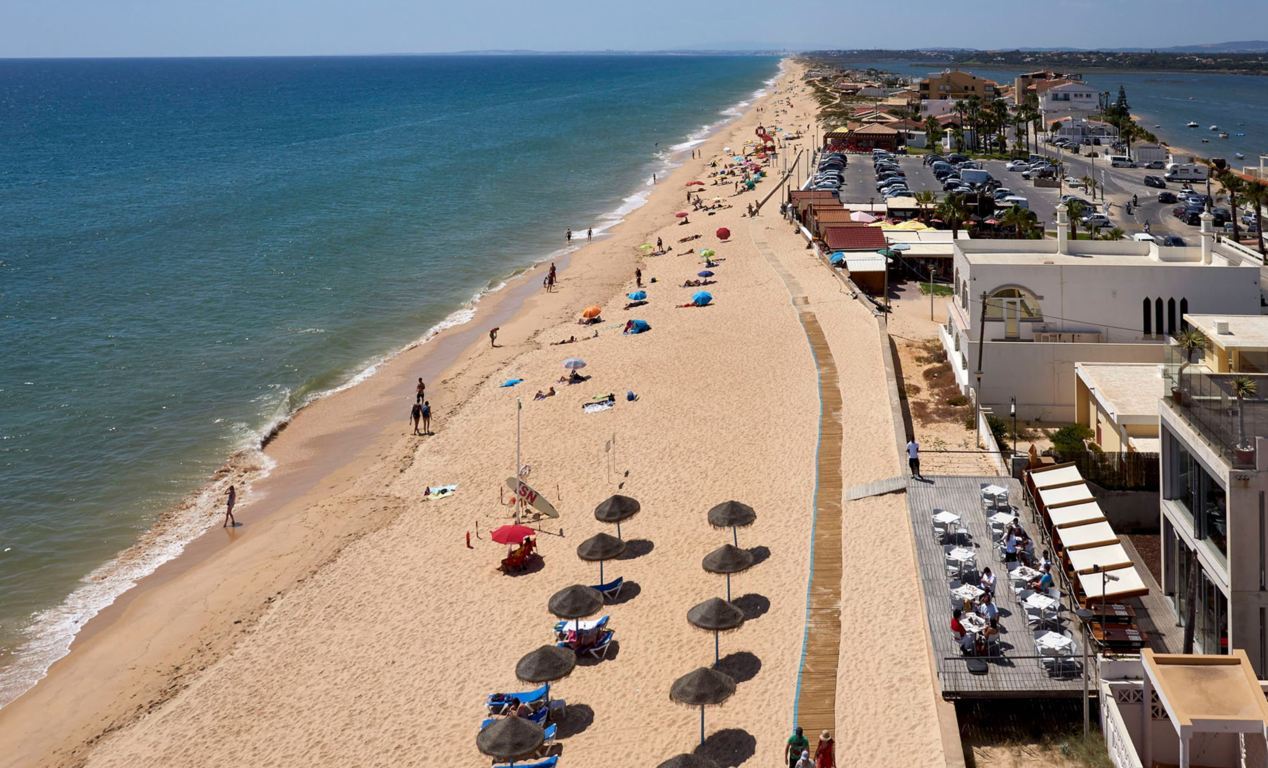
Beautiful view of Praia de Faro

Praia de Faro

Faro, Portugal
i

Beautiful view of Praia de Faro

Salt air drifts in from the Atlantic while sunbathers settle into golden sand. Gulls circle above turquoise waves, and the laughter of families mixes with the soft clink of cutlery from beachfront cafés. Praia de Faro, a sandbar barrier beach across the lagoon from Faro, draws everyone from local fishermen to curious travelers. Here, rippling dunes, briny breezes, and a hint of untamed wildness paint a picture that is pure Algarve—relaxed but vibrant, modern while still shaped by tides and tradition.

Visiting Info

Currency
Entrance fee
Free

Contact Information

Location
Address
Praia de Faro, Faro, Portugal

Planning your visit

Before stepping onto the long boardwalk that leads to Praia de Faro’s shore, visitors should map out their journey. The beach fills quickly in the summer, and getting there involves crossing a narrow road bridge, sometimes slowed by traffic or busy buses. Praia de Faro’s relaxed vibe means there’s rarely need for tickets or strict planning, yet a few thoughtful choices can turn a day trip into a truly memorable outing. Expect plenty of space to stretch out, but also regular bursts of activity from festivals, local parties, and weekend crowds.

  • Best time to visit: Late spring or early autumn delivers warm water, fewer crowds, and milder weather. Early morning and late afternoon are comfortably cool even in July or August.
  • How to get there: From Faro city center, bus line 16 runs regularly, or taxis cross the Ponte de Faro bridge. Adventurous visitors can cycle the flat causeway or walk if traffic is light. In summer, a seasonal ferry glides across the lagoon.
  • Accessibility: The nearest parking is tight and fills fast in peak hours. Entry ramps help strollers and wheelchairs reach the boardwalk, but sandy patches still challenge wheels.
  • Average visit duration: Day trippers often stay three to five hours; sunset lovers linger until the last light slips behind the dunes.

Must see stuff

Praia de Faro stretches over five kilometers, but a handful of spots and experiences define the visit. The western end boasts lively beach bars, volleyball nets, and surf schools, while the eastern stretch slips into nature reserve peace, with fewer crowds and wilder scenery. Every visitor should experience both—the vibrant café life and the silent, sweeping expanse where only nesting birds and steady waves break the calm.

  • Key sights or features: The old fishermen’s houses painted white and blue; the multi-colored wooden boardwalks; the gentle Lagoa de Faro with its calm shallows for swimming.
  • Unique experiences: Watch plane landings just overhead from the nearby airport; take a stand-up paddleboard lesson on the lagoon; or order grilled sardines from a shack with sand beneath the tables.
  • Photo-worthy locations: The bridge at sunset, boardwalk views lined by wildflowers, and the raised viewpoint near the eastern edge where the Rio Formosa meets the sea.
  • Cultural or historical facts: Praia de Faro’s community started as a cluster of fishermen’s shacks; some families still return each summer, keeping old Algarve traditions alive. The area is also part of the Ria Formosa Natural Park—a haven for wildlife and migratory birds.

Tips for your visit

Small details can transform a simple beach day into a smooth, enjoyable adventure at Praia de Faro. While the sun can be intense, gentle sea breezes make the climate pleasant—yet sunburn sneaks up, and strong tides sometimes surprise swimmers. Beachfront restaurants compete for space with ice cream trucks and local kiosks, so options abound for snacks. The easygoing mood means shoes come off, but sandy floors can feel hot or rough on tender feet. For those heading east, remember: services thin out, so come prepared if you’re exploring the wild side.

  • Best times to avoid crowds: Arrive before 10 a.m. or after 5 p.m., especially on weekends in July and August.
  • What to bring: Sunblock, hats, refillable water bottles, and a towel. Bring cash if you want to try small local cafés, as not all accept cards. Water shoes help with hot sand.
  • Local etiquette or rules: Respect quieter areas where fishermen’s families relax. Only swim within flagged safety zones; lifeguards monitor popular areas during summer.
  • Safety or comfort advice: Keep an eye on children—tide changes can create undertows near the channel. Secure your belongings, as a busy beach also means busy crowds.