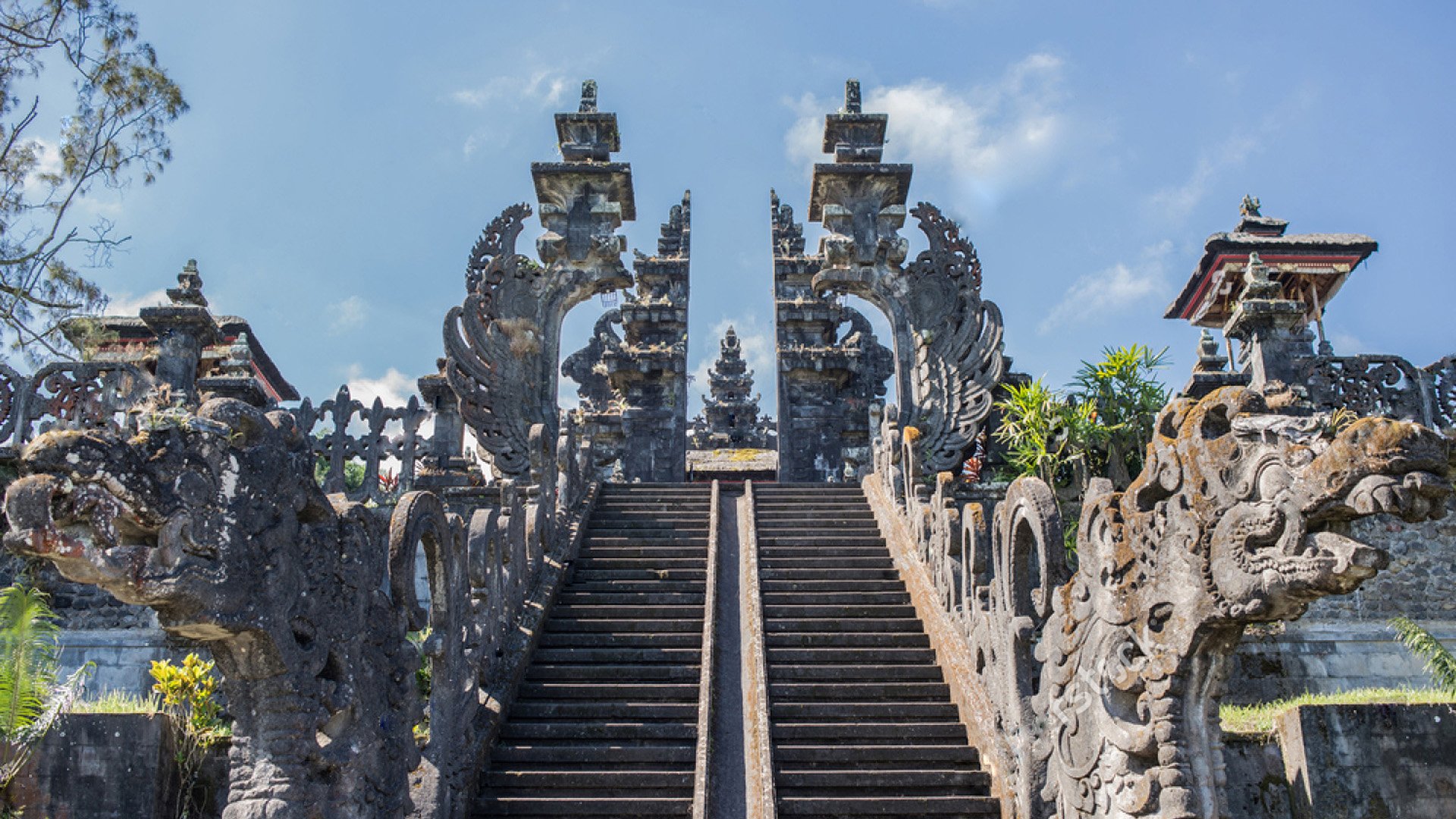
Beautiful view of Besakih Great Temple

Besakih Great Temple

Bali, Indonesia
i

Beautiful view of Besakih Great Temple

Beneath the shadow of sacred Mount Agung, the Besakih Great Temple rises from lush slopes, cloaked in clouds and legend. Known as Bali’s Mother Temple, Besakih welcomes pilgrims and travelers alike into a world where shrines, stone stairways, and rituals weave history into daily life. The complex’s spires and courtyards have watched over generations, remaining a vital center of faith and tradition on the island. Visitors here discover not just centuries-old architecture, but the living heartbeat of Balinese Hinduism in vivid ceremony and humble offerings.

Visiting Info

Currency
Entrance fee
60000 IDR
Hours
Opening hours
Monday: 7:00 AM – 6:00 PM
Tuesday: 7:00 AM – 6:00 PM
Wednesday: 7:00 AM – 6:00 PM
Thursday: 7:00 AM – 6:00 PM
Friday: 7:00 AM – 6:00 PM
Saturday: 7:00 AM – 6:00 PM
Sunday: 7:00 AM – 6:00 PM

Contact Information

Location
Address
Besakih, Rendang, Karangasem Regency, Bali 80863, Indonesia

Planning your visit

To visit Besakih Great Temple with ease, a bit of advanced planning helps capture both the grandeur and intimacy of the experience. Mornings wrap the temple in gentle light and keep temperatures cool, while small crowds drift in before buses arrive from midday tours. Most guests stay one to two hours, lingering longer if a ceremony fills the air with gamelan and flower scent. Roads wind from Ubud or Southern Bali, taking about two hours by taxi, car hire, or group tour; private drivers can also pause at scenic viewpoints along the way. Inside the temple grounds, broad steps and pathways suit most ages, but those with mobility concerns may wish to pace themselves, as some areas are steep and uneven. Sensible shoes and modest dress are required—sarongs are available at the entrance.

  • Best time to visit: Early morning (before 9 a.m.) or late afternoon; May-September for dry weather
  • How to get there: Hire a car with driver from Ubud, Kuta, or Sanur (2 hours); join a guided tour; or rent a scooter for the adventurous
  • Accessibility: Moderate—broad stairs and uneven paths, manageable for most families and active seniors, but less suited for wheelchairs
  • Average visit duration: 1.5 to 2 hours

Must see stuff

Besakih’s vast temple complex unfolds across cluster after cluster of courtyards and shrines. Built over a thousand years, its 80-plus structures stretch up the hillside in layered terraces, each with detailed stonework and black thatched roofs reaching skyward. Pura Penataran Agung, the largest temple, forms the beating heart of the site, where ceremonies fill the main courtyard with color and movement. Wander up the central staircase for sweeping views of Mount Agung and rice terraces below. Wind through smaller temples like Pura Batu Madeg or Pura Kiduling Kreteg, often less busy and rich with quiet history. On festival days, locals dressed in bright sarongs bring offerings, making every corner bright with flowers, fruit, and spirit.

  • Pura Penataran Agung: Main temple, focal point for major ceremonies, with a grand staircase and nine towering roofed shrines
  • Panoramic viewpoints: Steps and upper terraces offer photo-worthy vistas of Mount Agung and sprawling countryside
  • Lesser-known shrines: Hidden temples like Pura Basukian (believed to be the original foundation of Besakih) for more private moments
  • Ceremony observation: Witness festivals, especially during Galungan or the Eka Dasa Rudra (every century), when the complex hums with processions, incense, and music
  • Stone carvings and gates: Intricate guardian statues, lotus ponds, and classic Balinese split gates for close-up photos
  • Guided tours: Local guides share stories of gods, history, and daily worship that deepen understanding

Tips for your visit

A few simple strategies can turn a good trip to Besakih into a great one. While crowds ebb and flow with tour buses, early birds catch quiet courtyards and the softest light for photos. Vendors line the entrance road offering sarongs and trinkets—polite but firm "no thank you" often works, though buying a water or snack supports local families. Modest dress is more than a rule; it’s a sign of respect. Throughout the complex, respectful behavior matters, including stepping aside during prayers and never sitting higher than the priests. Shade is rare, and slopes can be slippery after rain, so sturdy shoes and a hat or umbrella help keep energy up for steep climbs. Most guides will approach at the gate; agreeing on a price beforehand avoids confusion. Some areas remain closed for religious ceremonies, but the best views and courtyards usually stay open to visitors.

  • Best times to avoid crowds: Arrive before 9 a.m. or after 3 p.m.
  • What to bring: Water, camera, hat, sunscreen, sturdy walking shoes; sarong for entry (can be rented or loaned)
  • Local etiquette: Dress modestly (shoulders and knees covered); do not disturb ceremonies; always ask before photographing people
  • Safety and comfort: Watch for slippery stones, keep valuables close, and pace yourself on steps; expect some persistent souvenir sellers near the parking area
Besakih Great Temple – Tickets, Hours & Visitor Guide